The decoupling of parameter count from active compute via sparsity means intelligence is becoming a software optimization problem as much as a hardware one.
Audit your agentic workflows for turn efficiency rather than just cost per token.
In a world of infinite tokens, the winner is the one who can verify the truth the fastest.
The Macro Pivot: The transition from LLMs as chat interfaces to LLMs as logic engines. As models move from text prediction to logic execution, the value moves from the model itself to the verification systems surrounding it.
The Tactical Edge: Audit the stack. Prioritize the integration of agentic coding tools like Jules to shorten the feedback loop between ideation and deployment.
The Bottom Line: Code is the only medium where AI can self-correct and scale without human intervention. The next 12 months will be defined by who can turn raw model power into reliable, self-healing code.
The Macro Transition: We are moving from "fire-and-forget" prompts to durable execution environments where state is as important as the model itself.
The Tactical Edge: Wrap your existing tool calls in the `useStep` function to gain instant retry logic and execution history.
The Bottom Line: Reliability is the primary moat in the agent market. Builders who adopt durable workflows will move to production while others are still debugging local scripts.
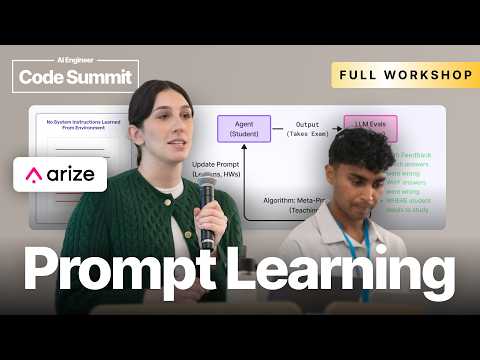
The move from manual prompt engineering to automated prompt learning. As models become commodities, the proprietary loop that refines them becomes the moat.
Implement a Train-Test Split for your prompts. Use a subset of failure data to generate new rules and validate them against a separate holdout set to ensure the logic holds.
Reliability is the only metric that matters for agent adoption. If you are not using a feedback loop to update your system instructions, you are building on sand.
The move from industrial management to creative inspiration. As AI automates routine tasks, the only remaining value is high-variance human creativity.
Apply the Keeper Test today. Ask your leads which team members they would fight for and provide generous exits for the rest to reset your talent bar.
Scaling doesn't require more rules. It requires better people. If you can maintain talent density, you can run fast while your competitors choke on their own handbooks.
Deficit Tailwinds: Persistent global fiscal deficits are expected to continue fueling appreciation in risk assets, including cryptocurrencies.
Stablecoin Tsunami: Stablecoins are not just a crypto niche but a fundamental disruptor to the traditional banking system, with significant investment flowing into leaders like Circle, despite valuation concerns.
App-Layer Alpha: Value is increasingly found in specific applications (like Pump.Fun) and companies leveraging crypto (like Galaxy Digital's AI/crypto blend), sometimes even diverting attention from base-layer L1 tokens.
ETH's Narrative is Shifting: From "tech stock" to "digital oil" and "store of value," clarifying its multifaceted value.
Supply Squeeze Imminent: Capped issuance plus rising demand driven by network activity and institutional adoption points to a strong supply-demand imbalance.
Massive Re-rating Potential: If ETH achieves a similar status to other global reserve assets, its price could see exponential growth from current levels.
**RLUSD Rising:** Ripple's ambition is clear: make RLUSD a top 3-4 stablecoin by leveraging strategic acquisitions for mass distribution, potentially issuing billions through platforms like Hidden Road.
**Acquisition = Distribution:** Ripple is effectively purchasing its market share by acquiring businesses like Hidden Road and Metaco, creating an embedded network to push RLUSD adoption.
**Stablecoin Selects:** The future stablecoin landscape will likely feature 5-7 major players, not just two, and Ripple is aggressively positioning RLUSD to be one of them.
TradFi Wants In: The success of Circle's IPO demonstrates a massive, untapped demand from traditional markets for regulated crypto exposure, potentially paving the way for a wave of crypto IPOs.
ETH's Dilemma: While Ethereum is the undisputed settlement layer for stablecoins and RWAs, the direct translation of this utility to ETH asset appreciation remains a critical question, hinging on increased on-chain economic velocity.
Apps are Eating: Solana's ecosystem, with stars like Hyperliquid and Pump.fun, shows that "fat applications" can generate enormous revenue and user engagement, potentially capturing more value than the underlying L1s.
Digital Cash, Real Utility: Flipcash aims to make digital money feel like physical cash—instant, easy, and universally acceptable, starting with a seamless USDC experience.
Solana Speed is Key: The app's core "wow" factor of instant transactions relies heavily on Solana's performance, underscoring the blockchain's capability for consumer-facing applications.
Onboarding Solved?: Requiring a small purchase for an account, immediately offset by a USDC bonus, tackles the "empty wallet" problem, driving immediate engagement and demonstrating value.
**Card Networks Disrupted**: Stablecoins are poised to dismantle the high-fee "tax" imposed by traditional card payment systems, with innovators like Stripe leading the charge.
**Internet Re-Incentivized**: Ultra-efficient stablecoin networks (like Radius's vision) could replace the ad-driven "attention economy" with a new model of direct value exchange for digital services, driven by AI agents.
**Currency Cold War Heats Up**: The race for digital currency dominance is on, with USD stablecoins, China's e-CNY, and potentially Bitcoin vying to be the backbone of the next-gen global economy, likely leading to fewer, more standardized global currencies.