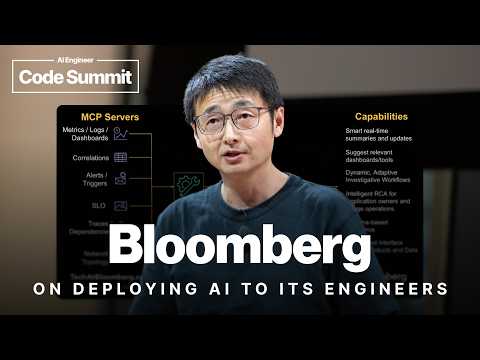
Strategic Implication: The value in software development shifts from manual coding to high-level architectural design and prompt engineering.
Builder/Investor Note: Experiment with AI Studio's agentic and design capabilities. Focus on describing desired functionality rather than low-level code.
The "So What?": The next 6-12 months will see a surge in AI-powered, full-stack applications built by a broader range of creators, disrupting traditional development paradigms.
Strategic Shift: AI's impact extends beyond simple productivity. The real opportunity lies in fundamentally changing the cost function of engineering, making previously expensive or undesirable tasks cheap and feasible.
Platform Imperative: For large organizations, a "golden path" platform is not optional. It's how you manage complexity, ensure quality, and scale AI adoption safely and efficiently.
Human-Centric Adaptation: Technology is only half the battle. Investing in cultural adaptation, community building, and leadership training is crucial for realizing AI's full potential.
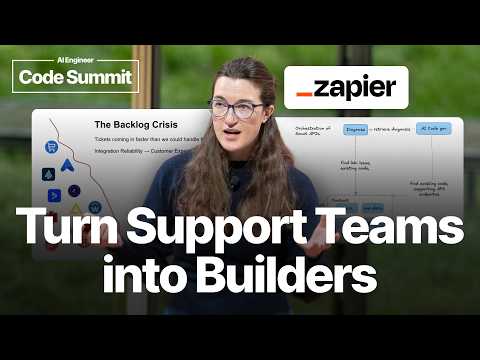
Strategic Implication: Companies integrating AI-driven code generation into non-engineering roles will see significant efficiency gains and improved product reliability.
Builder/Investor Note: Focus on building AI tools that deeply embed into existing workflows. Orchestration of multiple AI tools into an agent-like system is key for adoption and value.
The "So What?": The next 6-12 months will see a redefinition of "support" from reactive reporting to proactive, code-shipping problem-solving, unlocking new talent pools and accelerating development cycles.
Strategic Implication: The AI era will disproportionately reward existing businesses that deeply integrate AI to create unassailable cost structures, not just new AI-native ventures.
Builder/Investor Note: Seek out resilient "Act II" leaders who embrace the "and" business—growth, innovation, and profitability—and are willing to navigate public market scrutiny for long-term alignment.
The "So What?": Over the next 6-12 months, expect market volatility to create opportunities to invest in disciplined companies leveraging AI for fundamental operational shifts, rather than just hype.
Strategic Implication: The next wave of industrial growth will come from applying manufacturing principles to large-scale infrastructure, not just consumer goods.
Builder/Investor Note: Focus on companies that are standardizing designs and processes for physical assets, particularly those leveraging AI to navigate regulatory complexity and accelerate deployment.
The "So What?": The rapid build-out of data centers is a live experiment for a broader industrial renaissance, providing a blueprint for how America can rebuild its capacity to build at scale over the next 6-12 months.
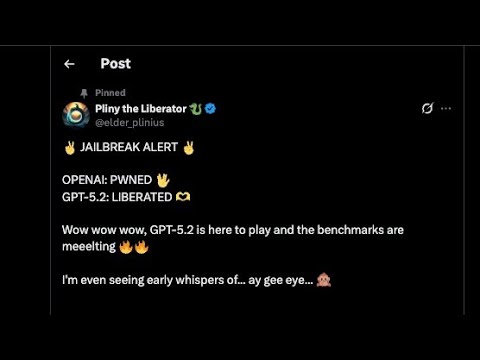
Strategic Implication: The "AI safety" narrative is shifting from content moderation to systemic security. Focus on hardening the entire AI ecosystem, not just restricting model outputs.
Builder/Investor Note: Be wary of "AI security" products that claim to "secure the model" through guardrails. These are likely security theater. Invest in full-stack AI security solutions, red teaming services, and platforms that facilitate open-source adversarial research.
The "So What?": The future of AI security is not about building higher walls around models, but about understanding and hardening the entire ecosystem in which they operate. Open collaboration and adversarial testing are the fastest paths to robust AI.
Strategic Implication: The quality and sophistication of LLM evaluation frameworks are now as critical as the models themselves. This is a foundational layer for AI progress.
Builder/Investor Note: Builders must adopt adaptive evaluation. Investors should scrutinize how LLM performance is measured, not just the headline numbers.
The "So What?": As LLMs gain complex reasoning and instruction-following abilities, evaluation frameworks that can accurately measure these capabilities will be essential for identifying true innovation and avoiding misallocated resources in the next 6-12 months.
Sovereign AI is Real: Nations are investing in domestic AI capabilities to counter linguistic bias and ensure data control. This creates opportunities for specialized models and infrastructure.
Builder's Edge: Meticulous parameter tuning, high-quality data curation, and innovative architectures like MoE are crucial for achieving top-tier LLM performance.
The Agentic Future: AI agents are rapidly becoming indispensable tools in research and education, demanding robust, reliable, and culturally relevant LLM backbones.
Strategic Implication: The future of AI code generation hinges on dynamic, robust evaluation systems that adapt to evolving model capabilities and detect sophisticated exploitation.
Builder/Investor Note: Invest in or build evaluation infrastructure that incorporates dynamic problem sets, LLM-driven hack detection, and granular, human-centric metrics.
The "So What?": Relying on static benchmarks is a losing game. The next 6-12 months will see a push towards more sophisticated, real-world-aligned evaluation methods, separating genuinely capable models from those that merely game the system.
Authenticity Over Algorithms: Ditch the generic social media playbook; your genuine interest in a specific crypto niche is your most potent growth tool.
Niche Down to Blow Up: Become the go-to source for your specific passion (e.g., memecoins, DeFi protocols) by sharing your unique process and insights.
The Audience Knows: Users can "sniff out" disingenuous content. Real interest and transparent sharing build trust and attract a loyal following.
**Risk Re-Priced**: Post-2022, understanding and mitigating counterparty and correlated risk is paramount; high returns often masked these dangers.
**TradFi Rails Accelerate Crypto**: Publicly traded vehicles and ETFs are becoming key on-ramps, channeling traditional capital into crypto and reshaping market dynamics, notably compressing volatility.
**Fundamental & On-Chain Focus**: Durable value (on-chain credit, strong L1s like Solana, revenue-generating protocols) and innovative on-chain derivatives platforms (like Hyperliquid) are prime areas of growth and investor interest.
App Revenue as a Current Yardstick: For now, L1 "GDP" (market cap / app revenue) offers a more stable cross-chain valuation tool than direct fees, providing an "apples-to-apples" comparison.
The Inevitable Value Shift: Expect a future where applications, not L1s, capture the lion's share of value, as app take rates and business models mature. L1 valuations may compress as app valuations expand.
L1s Must Innovate to Retain Value: Blockchains like Solana are actively strategizing (e.g., application-specific sequencing) to keep successful apps within their ecosystems, highlighting the growing pressure on L1s to prove their enduring value proposition beyond basic infrastructure.
Treasury Strategies: High-Risk, Short-Term Plays: These vehicles are built for quick flips, not lasting value, with a high chance of premiums vanishing and values dropping below NAV.
Beware the "Mania": The proliferation of treasury vehicles with increasingly lax terms signals a speculative fever; MicroStrategy is an outlier, not the rule.
VCs Bet on Endurance: True crypto investing, from a venture perspective, demands patience and a focus on fundamental, long-term growth, distinct from chasing fleeting treasury premiums.
**Scale is King:** Sub-$3 billion valuation companies will struggle for analyst attention and institutional investment post-IPO.
**SaaS Sells:** Crypto firms with predictable, recurring revenue (like Fireblocks, Chainalysis) have a stronger IPO narrative than those riding crypto price waves.
**Trust is Currency:** For select businesses like Anchorage, an IPO isn't just about capital; it’s a strategic move to bolster their fundamental value proposition—trust.
Solana's ETF = Major Validation: If approved, a Solana ETF isn't just another fund; it's a significant nod to Solana's legitimacy and a big win for its community.
Beyond Single Assets - Think Indices: The success of individual crypto ETFs (like a potential Solana one) could fuel demand for broader market products, such as crypto index funds on traditional stock exchanges.
Staking in ETFs - Tax Clarity Coming?: Watch for regulatory updates on staking within ETFs. Positive guidance could unlock new product structures and resolve key tax concerns for investors.