Strategic Implication: The next decade will be defined by who builds the core infrastructure for intelligence. This is where the most significant value and influence will accrue.
Builder/Investor Note: Direct capital and talent towards foundational AI components—chips, models, and interoperable systems. Avoid the temptation to only build at the application layer.
The So What?: The window for shaping the future of intelligence is now. Engage in the deepest, most complex challenges to secure a footprint in this new era.
Strategic Implication: The global AI race is a zero-sum game for foundational models. Europe's best strategy is a "smart second mover" approach, focusing on the implementation layer by ensuring interoperability and data portability.
Builder/Investor Note: Invest in AI that achieves true autonomy and enhances expert productivity. Be wary of markets stifled by over-regulation, which can impede AI adoption and growth.
The "So What?": Europe faces a critical juncture. Without embracing AI-driven growth, its demographic and debt problems will worsen, leading to higher interest rates without the corresponding economic expansion.
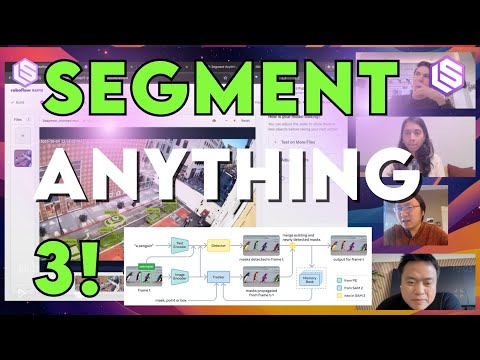
Vision AI Democratization: SAM 3 lowers the barrier for sophisticated vision tasks, making advanced segmentation and tracking accessible for a wider range of applications.
Builder/Investor Note: Focus on domain-specific adaptations and tooling that enhance human-AI interaction for ambiguous visual concepts. The "last mile" of user intent is a key differentiator.
The "So What?": SAM 3 accelerates the development of multimodal AI, particularly in robotics and video analysis, by providing a robust, scalable visual foundation for the next generation of intelligent systems.
Strategic Shift: The next frontier in robotics is less about pure algorithmic breakthroughs and more about building robust, scalable data infrastructure and full-stack product systems that can handle the messy physical world.
Builder/Investor Note: Prioritize companies solving the "boring" but critical data and systems problems. Look for practical, "scrappy" companies deploying robots in specific industrial niches, rather than just those with flashy, general-purpose demos.
The "So What?": The gap between impressive demos and deployable products will narrow over the next 6-12 months as data pipelines mature and product-focused companies gain traction. Expect to see more robust, self-correcting robots performing longer, more complex tasks in controlled environments.
Ecosystem Dominance: NVIDIA's strategy extends beyond hardware; they are building an end-to-end ecosystem of software, open-source models, and direct support, making them indispensable for national AI initiatives.
Builder Opportunity: Leverage NVIDIA's open-source Blueprints for agentic AI and Nemotron models for high-performance, customizable solutions. Prioritize local context in model training and data.
Strategic Imperative: Sovereign AI is a growing global trend. Nations and companies that can build and control AI tailored to their specific cultural, linguistic, and regulatory environments will gain a significant advantage in the coming years.
The democratization of RL fine-tuning will accelerate the development and deployment of more reliable and sophisticated AI agents across industries.
Builders should explore open-source LLMs combined with RL fine-tuning as a cost-effective strategy to achieve specific performance benchmarks, especially where latency and cost are critical.
Platforms abstracting infrastructure complexity and providing integrated tooling for the entire AI development lifecycle are crucial for the next phase of AI agent deployment.
Pre-Training is the New Frontier: The next leap in AI capabilities, particularly for agentic systems, will come from fundamental advancements in pre-training, not just post-training tweaks.
Builders & Investors: Focus on teams rethinking loss objectives, curating high-quality reasoning data, and developing dynamic benchmarks for agentic capabilities. Be wary of "agentic" claims that lack foundational pre-training innovation.
The "So What?": Over the next 6-12 months, expect a push for new benchmarks and data strategies that explicitly train models for multi-step planning, long-form reasoning, and error recovery, moving beyond simple next-token prediction.
Strategic Implication: AI fundamentally changes the economics of software development. Organizations must re-evaluate what constitutes "high-quality" engineering and adapt their processes.
Builder/Investor Note: Prioritize platforms that provide guardrails and guidance for AI tool usage, focusing on deterministic verification and robust testing. Uncontrolled AI deployment risks technical debt.
The "So What?": The next 6-12 months will see a bifurcation: companies that strategically integrate AI into their engineering culture and platforms will gain significant efficiency, while those that don't will struggle with quality and adoption.
Workflow Automation is the New Frontier: The real value of AI in developer tools comes from orchestrating entire workflows, not just individual point solutions.
Embed for Adoption: Tools must integrate seamlessly into existing workflows and IDEs (like Cursor) to achieve high usage.
Support as a Code-Shipping Powerhouse: Empowering non-traditional roles with AI-driven code generation leverages their unique, real-time context, creating significant operational leverage.
**Standardized Scrutiny Arrives:** The Token Transparency Framework introduces a systematic, 18-criteria evaluation, offering a clear benchmark for assessing token projects beyond hype.
**Rewards & Repercussions:** By first celebrating transparent projects (like Jito and Jupiter) and then planning to rate less forthcoming ones, the framework aims to incentivize industry-wide improvements in disclosure.
**Investor Toolkit Boost:** This framework provides investors with a concrete tool for due diligence, moving towards a more informed and transparent crypto investment landscape.
CEXs Go Lean: Exchanges are increasingly opting for lighter on-chain footprints, prioritizing app development on existing chains over building new L1s/L2s, signaling a focus shift to direct user value.
Transparency is Non-Negotiable: The 0xResearch Token Transparency Framework highlights a critical industry need for standardized disclosures, aiming to build trust and attract serious capital by demystifying token projects.
Utility Drives Valuation: Projects like Kamino, despite strong fundamentals and growth, underscore that clear token utility and value accrual mechanisms are essential for market recognition and valuation.
Selective Bets Over Broad Sprees: Forget throwing darts; the crypto market now rewards surgical precision. Focus on projects with strong fundamentals and demonstrable traction, as "hyper dispersion" is the new norm.
Public Equities as a Crypto Proxy: With limited direct, high-quality crypto IPOs, existing listed entities like Circle and Coinbase are soaking up institutional and retail interest, mimicking "alt season" dynamics in traditional markets.
Pragmatism Pays: The industry is shedding ideological baggage. Successful projects will meet existing market needs, provide clear disclosures, and avoid outdated tokenomic "tricks." Prediction markets are an emerging utility to watch.
**Transparency is Now Table Stakes:** Projects neglecting robust disclosure standards, like those promoted by the new Token Transparency Framework, will face escalating investor scrutiny and skepticism.
**Public Markets: Crypto's Current Darling (But For How Long?):** Expect continued capital inflow and outperformance from regulated, publicly traded crypto entities before a potential, broader token market resurgence.
**Real Value is Built on Fundamentals & Community:** Platforms like Hyperliquid, showcasing operational efficiency, potent tokenomics, and community wealth creation, are forging lasting value that transcends fleeting market trends.
Stablecoin Surge: The GENIUS Act is set to unleash trillions in stablecoin value, positioning dollar-backed digital assets as a global financial linchpin and reinforcing US dollar networks.
ETF Explosion Imminent: Prepare for a diversified crypto ETF market in 2025, as assets like Solana and Dogecoin likely gain approval, testing the true depth of institutional appetite.
Super App Showdown: The battle for your financial future is on, with Coinbase and Robinhood racing to build all-in-one platforms blending traditional finance with on-chain crypto services.
**Revenue is King**: The "revenue meta" isn't a meme; it's the future. Invest in applications and protocols generating real cash flow.
**Solana's DeFi Gap is an Opportunity**: Solana needs robust, user-friendly DeFi, especially perps. Building best-in-class products here is a massive opportunity, even if not unseating current L2 leaders.
**IPOs & M&A Signal Maturation**: The success of Circle’s IPO and increasing M&A activity point to a maturing industry where equity value is re-emerging, offering alternative liquidity paths beyond token launches.