The transition from general-purpose LLMs to specialized coding agents that operate on the entire codebase rather than isolated snippets.
Audit your current stack for agentic readiness. Prioritize tools that integrate with Gemini 3 or similar high-reasoning models to automate repetitive pull requests.
Code is the substrate of the digital world. If you control the means of AI code generation, you control the speed of innovation for every other industry.
The move from a singular "Universe" view to a "Multiverse" perspective mirrors the transition from centralized monoliths to fragmented, interoperable ecosystems.
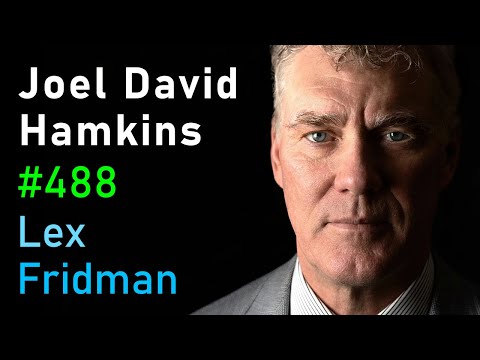
Build systems that fail gracefully when hitting Gödelian limits.
Truth is a vast ocean while proof is a small boat. Your roadmap must account for the reality that your system will eventually encounter truths it cannot verify.
The Macro Pivot: Outcome-Based Intelligence. We are moving from AI as a Service to Results as a Service where software value is tied to revenue generation rather than seat licenses.
The Tactical Edge: Verticalize the Data. Build in sectors with non-public outcome data to create a compounding moat that resists commoditization by foundation models.
The winners of 2026 will be those who use AI to solve core human needs for connection and discovery while building defensible, data-rich business models.
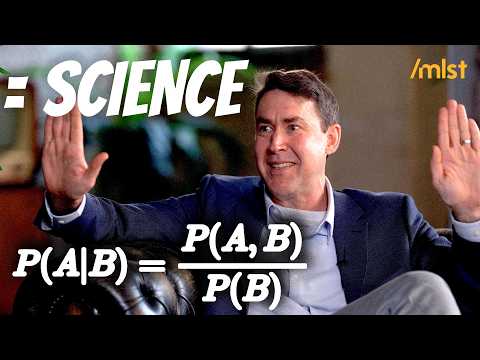
The Macro Transition: Moving from "Big Model" monoliths to "Lots of Little Models" where distributed Bayesian assets represent specific physical objects.
The Tactical Edge: Prioritize "Object-Centered" architectures that track uncertainty. This allows robots to "phone a friend" when encountering novel data.
The LLM era is hitting a wall of implicit representation. The next 12 months belong to those building explicit, causal world models grounded in physics rather than language.
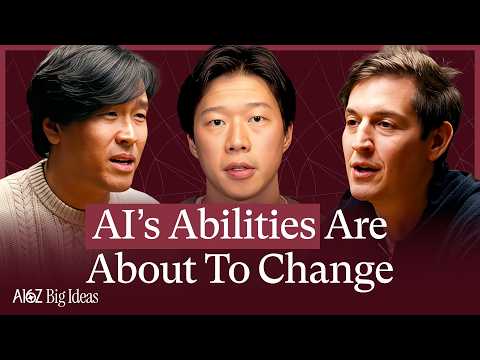
The Macro Trend: The transition from static benchmarks to live human-in-the-loop evaluation. As models saturate fixed tests, the only remaining signal is subjective human preference at scale.
The Tactical Edge: Monitor secret model drops on Arena to spot frontier capabilities before official releases. This provides a lead time advantage for builders choosing their tech stack.
The Bottom Line: Arena is the new kingmaker. If you are building AI products, their expert-tier data is the most reliable map for navigating the frontier.
The move from small models to medium models (15B to 70B) suggests that reasoning capability is outstripping the desire for low-latency edge deployment.
Implement instruction-following re-rankers to prune your context window. This prevents the model from getting confused by irrelevant data.
Stop building toys. The next year belongs to those who can build full agentic systems that handle billions of tokens without losing the plot.
**Standardized Scrutiny Arrives:** The Token Transparency Framework introduces a systematic, 18-criteria evaluation, offering a clear benchmark for assessing token projects beyond hype.
**Rewards & Repercussions:** By first celebrating transparent projects (like Jito and Jupiter) and then planning to rate less forthcoming ones, the framework aims to incentivize industry-wide improvements in disclosure.
**Investor Toolkit Boost:** This framework provides investors with a concrete tool for due diligence, moving towards a more informed and transparent crypto investment landscape.
CEXs Go Lean: Exchanges are increasingly opting for lighter on-chain footprints, prioritizing app development on existing chains over building new L1s/L2s, signaling a focus shift to direct user value.
Transparency is Non-Negotiable: The 0xResearch Token Transparency Framework highlights a critical industry need for standardized disclosures, aiming to build trust and attract serious capital by demystifying token projects.
Utility Drives Valuation: Projects like Kamino, despite strong fundamentals and growth, underscore that clear token utility and value accrual mechanisms are essential for market recognition and valuation.
Selective Bets Over Broad Sprees: Forget throwing darts; the crypto market now rewards surgical precision. Focus on projects with strong fundamentals and demonstrable traction, as "hyper dispersion" is the new norm.
Public Equities as a Crypto Proxy: With limited direct, high-quality crypto IPOs, existing listed entities like Circle and Coinbase are soaking up institutional and retail interest, mimicking "alt season" dynamics in traditional markets.
Pragmatism Pays: The industry is shedding ideological baggage. Successful projects will meet existing market needs, provide clear disclosures, and avoid outdated tokenomic "tricks." Prediction markets are an emerging utility to watch.
**Transparency is Now Table Stakes:** Projects neglecting robust disclosure standards, like those promoted by the new Token Transparency Framework, will face escalating investor scrutiny and skepticism.
**Public Markets: Crypto's Current Darling (But For How Long?):** Expect continued capital inflow and outperformance from regulated, publicly traded crypto entities before a potential, broader token market resurgence.
**Real Value is Built on Fundamentals & Community:** Platforms like Hyperliquid, showcasing operational efficiency, potent tokenomics, and community wealth creation, are forging lasting value that transcends fleeting market trends.
Stablecoin Surge: The GENIUS Act is set to unleash trillions in stablecoin value, positioning dollar-backed digital assets as a global financial linchpin and reinforcing US dollar networks.
ETF Explosion Imminent: Prepare for a diversified crypto ETF market in 2025, as assets like Solana and Dogecoin likely gain approval, testing the true depth of institutional appetite.
Super App Showdown: The battle for your financial future is on, with Coinbase and Robinhood racing to build all-in-one platforms blending traditional finance with on-chain crypto services.
**Revenue is King**: The "revenue meta" isn't a meme; it's the future. Invest in applications and protocols generating real cash flow.
**Solana's DeFi Gap is an Opportunity**: Solana needs robust, user-friendly DeFi, especially perps. Building best-in-class products here is a massive opportunity, even if not unseating current L2 leaders.
**IPOs & M&A Signal Maturation**: The success of Circle’s IPO and increasing M&A activity point to a maturing industry where equity value is re-emerging, offering alternative liquidity paths beyond token launches.