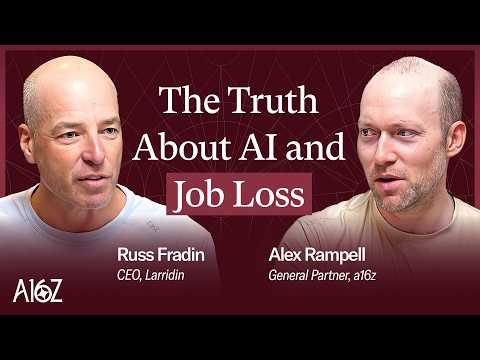
Measure Usage, Not Just Spend. The biggest failure in enterprise AI is tracking software purchases as a proxy for progress. The focus must shift to measuring actual tool usage correlated with output.
Solve for Fear, Not Features. Employee adoption hinges on psychological safety. The most powerful tools will fail if users are afraid of looking incompetent or getting fired for making a mistake.
Competition Drives Augmentation, Not Unemployment. The "AI will take our jobs" narrative is a red herring. Companies will reinvest AI-driven productivity gains to crush competitors, not just to cut headcount.
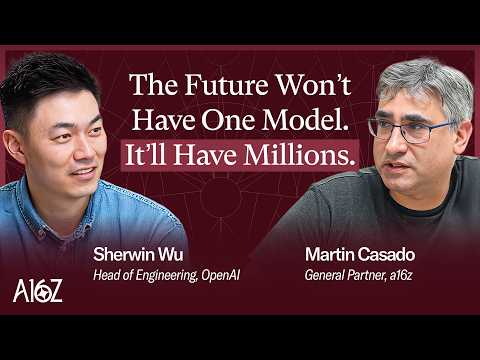
**The "One Model" Thesis Is Dead.** The future belongs to a portfolio of specialized models. This creates distinct opportunities for both foundational labs and companies that can leverage proprietary data to build best-in-class models for niche applications.
**Data Is the Ultimate Differentiator.** Reinforcement learning fine-tuning elevates proprietary data from a simple input for RAG systems to the core ingredient for building a defensible, state-of-the-art product.
**Agents Will Specialize.** The agent ecosystem is bifurcating into two primary types: open-ended, creative agents for knowledge work and deterministic, procedural agents designed for enterprise automation where reliability and adherence to standard operating procedures are critical.
Politics Will Trump Tech. Expect a policy pivot ahead of the 2024 election. The administration’s singular focus on AI stimulus is creating populist backlash, forcing a shift toward policies that support the broader labor market to secure votes.
The AI Trade Is Evolving. The "Mag 7" may soon become regulated utilities. The next wave of winners will be legacy companies that successfully integrate AI to boost margins and the overlooked players in the AI supply chain, such as power and commodity providers.
Prepare for a New Monetary Regime. The era of "QE Infinity" is ending. A post-Powell Fed is expected to move credit creation from its own balance sheet back to commercial banks, using deep rate cuts and deregulation to stimulate the economy.
AI Demand Is Not Cyclical; It's Infinite. Forget boom-and-bust. The mission to solve humanity's greatest problems—from disease to space travel—creates limitless demand for intelligence, underpinning a durable, multi-decade investment cycle.
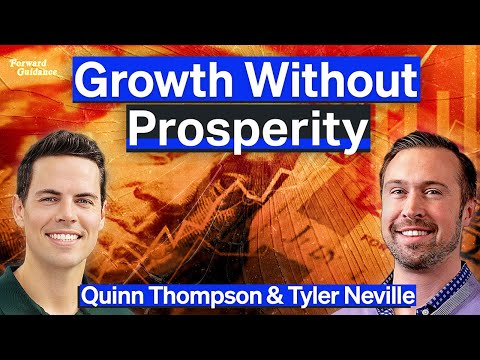
Scrap GDP; Watch Profit Margins. The widening chasm between the astronomical profit margins of tech companies and the rest of the economy is the single most important macroeconomic signal today.
Bitcoin Is the Apex Predator of Moats. In a world where AI can replicate any business model, the only defensible moats are those built on time-tested belief and mathematical scarcity. Bitcoin is the emerging winner for the digital age.
AI's Physical Footprint is Astronomical: Individual AI data centers are now multi-billion dollar megaprojects, with construction timelines accelerating to as little as one year for a gigawatt-scale facility.
Power is a Solvable Problem, Not a Hard Cap: AI firms will pay whatever it takes to secure electricity, making power costs a secondary concern to the price of GPUs. The real constraint is getting chips, not watts.
Open-Source Intelligence Unveils All: By combining satellite imagery, public permits, and news reports, the physical expansion of the AI industry can be tracked in near real-time, providing unprecedented transparency.
AI Isn't a Bubble; It's a Buildout. The market is rational. Massive spending is backed by real revenue from inference. The true bottleneck is the speed at which capital can be deployed to build city-sized data centers.
Brace for Economic Whiplash. A sudden, AI-driven unemployment spike is the most likely trigger for massive government intervention. The political response will be swift, decisive, and potentially radical.
Superintelligence is a Hardware Problem. The path to 2045 runs through physical infrastructure. Progress is gated by the brute-force economics of building data centers, not a quest for a magical algorithm.
**Escape the Architecture Lottery.** The inertia behind Transformers is immense. A new model must be demonstrably superior across the board to justify a paradigm shift.
**Nature's Algorithms are the Next Frontier.** The CTM proves that biologically-inspired principles like neuron synchronization can unlock powerful capabilities like adaptive computation and better calibration naturally.
**Reasoning is Deeper Than Scaling.** The Sudoku Bench benchmark shows that current SOTA models cannot perform the creative, nuanced reasoning humans do. Brute-force scaling has hit a wall against truly complex problems.
Your Data is the New Oil, and You're Giving It Away. Every smart device, social media post, and email you create is a valuable asset used to build multi-billion dollar AI empires, yet you receive no compensation.
The Creator Economy is Facing an Existential Threat. The outcome of lawsuits like *NYT vs. OpenAI* will determine whether creative work remains intellectual property or becomes free raw material for AI, potentially decimating entire professions.
Reclaim Your Digital Sovereignty. Losing control of your data isn't just a privacy issue; it's a slide into "digital feudalism." The podcast champions decentralized technologies as a tool to break these data monopolies and reassert individual ownership.
AI's Debt Rally vs. Fed's Tight Grip. The AI boom is now fueled by credit markets, making it highly sensitive to the Fed's hawkish policy and rising real rates. An epic battle between tech momentum and macro gravity is brewing.
The Fed's Playbook Is Evolving. Forget immediate QE. The Fed is signaling a long-term plan to steepen the yield curve by offloading its long-duration assets. This strategy aims to ease pressure on "Main Street" while making financing more expensive for "Wall Street."
Crypto Is in a Historic Washout. On-chain and ETF flow data paint a picture of extreme capitulation. Both new and old hands are selling heavily, suggesting a major market reset is underway before the next cycle can truly begin.
The Altcoin Graveyard Is Bitcoin's Tailwind. Capital is fleeing "useless" tokens and the defunct VC model, creating steady inflows for Bitcoin. The primary trade is now long BTC, short everything else.
From HODL to Tactical Alpha. The days of 100x returns on random tokens are gone. Generating alpha now requires sophisticated strategies like pairs trading, selling options volatility against spot holdings, and capitalizing on short-term macro events.
S&P is the New Dollar, Bitcoin is the New S&P. As the dollar loses its luster, the S&P 500 has become the default savings vehicle. Bitcoin has cemented its role as the premier risk-on asset within that new paradigm—a bet that “probably won’t” fail.
Wallets are Dead, Long Live Wallets: The future isn't a separate wallet app. It's an embedded, invisible experience inside the consumer apps themselves, just like friend.tech demonstrated.
From Gatekeepers to Curators: Centralized exchanges are becoming obsolete as gatekeepers. The new frontier is building sophisticated curation engines to help users discover signal in a sea of noise.
AI Agents are the Next Big User Base: The most forward-thinking founders aren't just building for humans; they're building for a future where AI agents drive the majority of on-chain trading volume.
**Stop Chasing Max Decentralization.** The market has voted with its volume. Users prioritize performance over ideological purity. "Verifiable Finance"—with centralized sequencers but guaranteed withdrawals—is the pragmatic path forward.
**Market Structure Is Destiny.** Inefficient L1s with toxic MEV force sophisticated teams to build workarounds (like the proprietary AMM Sulfi) or entirely new, controlled environments (like Atlas). The base layer's design dictates the quality of applications built on top.
**The Real Game Is Efficient Markets, Not Memecoins.** The long-term vision for crypto finance depends on building infrastructure that can attract institutional capital with fair, reliable, and highly efficient execution. The current system that incentivizes "bad fills" is a dead end.
Go-to-Market > Tech Specs: In the race between new chains, attracting a single breakout app is more critical than marginal performance gains. Value accrues to whoever owns the user relationship.
Bet on Improvable Niches: The biggest startup opportunities are in high-demand but clunky sectors like prediction markets and memecoin launchpads, where superior UX can create a dominant new player.
Look Forward, Not Sideways: Don't get trapped by the "revenue meta." Successful investing requires a forward-looking view of a project’s potential to capture future value, a lesson exemplified by the early thesis for Solana.
**The Real Bull Case is Boring.** The most significant trend isn't the next memecoin, but the "boring" migration of real-world finance onto blockchains via stablecoins. The winners will be those who solve for on-chain credit and build seamless user experiences, not just hype.
**Tokenization is a Double-Edged Sword.** While providing access to new assets, current tokenized stocks are riddled with counterparty risk, thin liquidity, and opaque structures. They are a step forward but risk backfiring if not communicated with radical transparency.
**The Altcoin Shakeout is Here.** Institutional interest is hyper-focused, leaving most altcoins without a bid. Protocols must now justify their existence with real revenue and utility, as the era of "liquidity-as-a-product" is over.
Tokenized Stocks Are Here, But Imperfect. Major players are live, but the current products are IOUs, not direct equity. The real test will be liquidity, price tracking, and regulatory endurance.
Tom Lee Is Creating the "MicroStrategy for ETH." He's pitching ETH to Wall Street not on decentralist ideals, but as the indispensable settlement layer for the coming stablecoin boom, front-running demand from major banks.
The US Is Pumping Crypto Bags. A massive deficit bill combined with an expected dovish Fed creates a perfect storm for liquidity, positioning assets like BTC and ETH as a necessary hedge against currency debasement.