The AI infrastructure boom is transitioning from speculative buildouts to financially engineered, risk-managed investments, driven by the commodification of compute and memory.
Explore futures and residual value products to de-risk your AI compute procurement or data center investments, securing predictable costs and monetizing hardware lifecycles.
Quantifying future compute demand and hardware value is no longer a luxury, it's a necessity. Over the next 6-12 months, those who integrate financial hedging into their AI strategy will gain a significant competitive advantage in capital allocation and operational efficiency.
Implement compute futures and residual value products to cap future costs or floor future revenue, significantly reducing exposure to spot market volatility and hardware obsolescence.
Ornn's residual value product allows data centers to sell GPUs years in advance, translating to lower financing costs for massive hardware investments.
Ornn's index tracks dynamic marketplace GPU pricing, empowering smaller buyers to avoid overpaying.
Data center operators and large compute buyers should explore Ornn's futures and residual value products to lock in costs, secure future revenue, and access more favorable financing terms.
The Macro Shift: As market complexity and technological disruption accelerate, traditional diversified investing faces increasing headwinds. 3G Capital's micro-level focus on deeply understanding and operating a single, well-moated business, combined with a long-term, owner-operator mindset, provides a robust counter-strategy to extract value where others see only risk.
The Tactical Edge: Cultivate an "owner's mindset" in your team, decentralizing "how" decisions while centralizing "what" goals. Prioritize hiring and promoting individuals who demonstrate exceptional drive and potential, even if they lack traditional tenure, and align their incentives directly with long-term business success.
The Bottom Line: In the next 6-12 months, focus on identifying businesses with strong, direct customer relationships and defensible physical assets. These "boring" businesses, when infused with an owner-operator culture and strategic tech adoption, offer a compelling path to outsized, enduring value, regardless of broader market volatility.
Integrate compute futures and residual value products into your financial planning. This will allow you to hedge against price volatility, secure better financing, and optimize hardware refresh cycles.
The AI compute market is transitioning from an opaque, ad-hoc system to a financially engineered commodity market. This shift will introduce unprecedented transparency and risk management tools, fundamentally altering investment and operational strategies for AI infrastructure.
The ability to quantify future compute demand and hardware value is no longer a luxury; it is a necessity. Over the next 6-12 months, those who adopt these financial instruments will gain a significant competitive advantage, building more resilient and profitable AI operations.
The Macro Shift: As digital disintermediation accelerates, businesses with strong direct-to-consumer relationships and physical moats become increasingly valuable. This counters the "software eats the world" narrative by highlighting the enduring power of tangible assets and customer loyalty.
The Tactical Edge: Cultivate an owner-operator mindset throughout your organization, aligning incentives deeply with long-term value creation. Prioritize hiring and empowering young talent, giving them significant responsibility early, and providing mentorship to maximize their success.
The Bottom Line: In a market where valuations are stretched and capital is abundant, 3G's disciplined, long-term approach to identifying and operating truly great businesses offers a powerful counter-narrative. Focus on enduring business quality and people-driven execution will be the ultimate differentiator for compounding capital over the next decade.
Singular Focus: 3G's model is one investment per fund, backed by significant house capital. This forces extreme patience and a rigorous downside analysis, ensuring capital preservation is paramount before seeking outsized returns.
Operator-Led: 3G partners are seasoned operators, having run large businesses themselves. This hands-on experience allows them to identify and implement operational improvements that pure financial investors might miss, directly impacting value creation.
Disruption Defense: In a tech-driven world, 3G prioritizes businesses that own the customer relationship and are less susceptible to disintermediation. This focus on "atoms" businesses with strong brands and physical components provides a moat against digital upheaval.
The Macro Shift: As digital disruption accelerates, the market increasingly undervalues "boring" businesses with strong physical moats and direct customer relationships. 3G Capital demonstrates that these enduring assets, when paired with intense operational rigor and long-term capital, can generate outsized returns.
The Tactical Edge: Identify businesses where the brand is significantly "bigger than the business" – meaning widespread recognition exists but operational inefficiencies or poor franchising have suppressed its true value. Then, apply an owner-operator model to fix core issues and expand globally.
The Bottom Line: In a world pursuing the next big tech wave, the real alpha might lie in patiently acquiring and meticulously operating established, non-disruptable businesses. Your roadmap should include a focused study of industries with strong customer ties and a focus on building an ownership-driven culture, rather than just seeking growth at all costs.
3G Capital commits to a single investment per fund, deploying significant internal capital alongside partners. This intense focus acknowledges the rarity of truly exceptional businesses and leaders, driving rigorous due diligence and a deep commitment to each asset.
3G instills an ownership culture where leaders act as shareholders, aligning incentives directly with the business's long-term success. This contrasts with traditional management structures, driving decisions that prioritize the company's best interests.
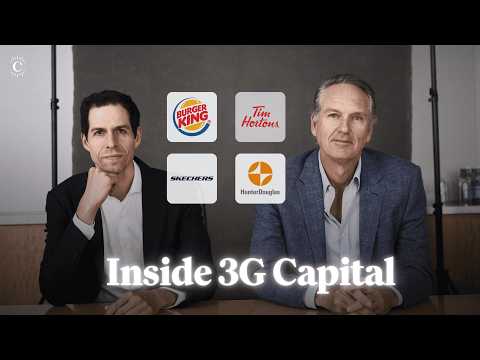
3G prioritizes businesses that own the direct relationship with their end customers, like Burger King or Hunter Douglas. This direct connection reduces disintermediation risk, making the business more resilient to technological shifts or retail power plays.
The Altcoin Graveyard Is Bitcoin's Tailwind. Capital is fleeing "useless" tokens and the defunct VC model, creating steady inflows for Bitcoin. The primary trade is now long BTC, short everything else.
From HODL to Tactical Alpha. The days of 100x returns on random tokens are gone. Generating alpha now requires sophisticated strategies like pairs trading, selling options volatility against spot holdings, and capitalizing on short-term macro events.
S&P is the New Dollar, Bitcoin is the New S&P. As the dollar loses its luster, the S&P 500 has become the default savings vehicle. Bitcoin has cemented its role as the premier risk-on asset within that new paradigm—a bet that “probably won’t” fail.
Wallets are Dead, Long Live Wallets: The future isn't a separate wallet app. It's an embedded, invisible experience inside the consumer apps themselves, just like friend.tech demonstrated.
From Gatekeepers to Curators: Centralized exchanges are becoming obsolete as gatekeepers. The new frontier is building sophisticated curation engines to help users discover signal in a sea of noise.
AI Agents are the Next Big User Base: The most forward-thinking founders aren't just building for humans; they're building for a future where AI agents drive the majority of on-chain trading volume.
**Stop Chasing Max Decentralization.** The market has voted with its volume. Users prioritize performance over ideological purity. "Verifiable Finance"—with centralized sequencers but guaranteed withdrawals—is the pragmatic path forward.
**Market Structure Is Destiny.** Inefficient L1s with toxic MEV force sophisticated teams to build workarounds (like the proprietary AMM Sulfi) or entirely new, controlled environments (like Atlas). The base layer's design dictates the quality of applications built on top.
**The Real Game Is Efficient Markets, Not Memecoins.** The long-term vision for crypto finance depends on building infrastructure that can attract institutional capital with fair, reliable, and highly efficient execution. The current system that incentivizes "bad fills" is a dead end.
Go-to-Market > Tech Specs: In the race between new chains, attracting a single breakout app is more critical than marginal performance gains. Value accrues to whoever owns the user relationship.
Bet on Improvable Niches: The biggest startup opportunities are in high-demand but clunky sectors like prediction markets and memecoin launchpads, where superior UX can create a dominant new player.
Look Forward, Not Sideways: Don't get trapped by the "revenue meta." Successful investing requires a forward-looking view of a project’s potential to capture future value, a lesson exemplified by the early thesis for Solana.
**The Real Bull Case is Boring.** The most significant trend isn't the next memecoin, but the "boring" migration of real-world finance onto blockchains via stablecoins. The winners will be those who solve for on-chain credit and build seamless user experiences, not just hype.
**Tokenization is a Double-Edged Sword.** While providing access to new assets, current tokenized stocks are riddled with counterparty risk, thin liquidity, and opaque structures. They are a step forward but risk backfiring if not communicated with radical transparency.
**The Altcoin Shakeout is Here.** Institutional interest is hyper-focused, leaving most altcoins without a bid. Protocols must now justify their existence with real revenue and utility, as the era of "liquidity-as-a-product" is over.
Tokenized Stocks Are Here, But Imperfect. Major players are live, but the current products are IOUs, not direct equity. The real test will be liquidity, price tracking, and regulatory endurance.
Tom Lee Is Creating the "MicroStrategy for ETH." He's pitching ETH to Wall Street not on decentralist ideals, but as the indispensable settlement layer for the coming stablecoin boom, front-running demand from major banks.
The US Is Pumping Crypto Bags. A massive deficit bill combined with an expected dovish Fed creates a perfect storm for liquidity, positioning assets like BTC and ETH as a necessary hedge against currency debasement.