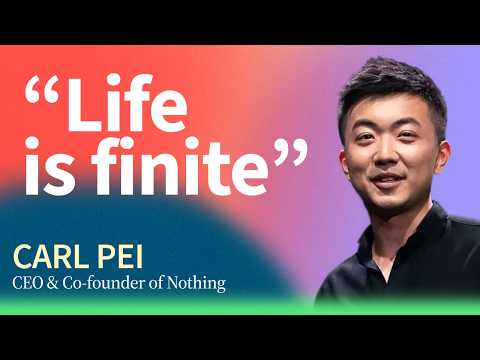
The Macro Shift: Infrastructure Invisibility. As core technologies become background noise, value moves from the pipes to the unique experiences built on top of them.
The Tactical Edge: Reject Mediocrity. Audit your product for average features and replace them with high-conviction improvements that competitors are too lazy to attempt.
The Bottom Line: Building is the only way to ensure the future happens. If you do not create the next version of reality, you are stuck living in an outdated vision.
The transition from hardware specs to emotional hardware where brand identity and OS-native AI become the primary moats.
Prioritize arbitrage opportunities in marketing by finding underpriced attention on platforms like TikTok before they become crowded.
Success in mature markets requires a Genghis Khan method: be a talent scout, stay open-minded to global supply chains, and use design to win the emotional battle for the consumer's pocket.
The transition from centralized cloud training to distributed local inference creates a massive demand for high-bandwidth storage and custom CPUs.
Audit your technical roadmap to prioritize local agentic workflows that reduce latency and data privacy risks.
The next 12 months will favor hardware that enables physical AI and local autonomy. Owning the compute stack is becoming a competitive necessity for builders who want to move faster than the cloud allows.
Intelligence is decoupling from scale. As reasoning becomes a commodity, the value moves from the size of the model to the proprietary nature of the training data.
Use TRL or Unsloth for single-GPU fine-tuning. Prioritize cleaning your instruction sets over increasing your training iterations.
The future belongs to those who own their data pipelines. If you can distill elite reasoning into a 350M parameter model, you win on latency, cost, and privacy.
Software maintenance is moving from a manual craft to an industrial process. As agents handle the toil of migrations and security, human engineers will focus entirely on high-level system design.
Batch by Dependency. Use the OpenHands SDK to visualize your codebase as a graph and deploy agents to solve the leaf nodes first.
Companies that master agent orchestration will clear their tech debt backlogs in weeks instead of years, creating a massive competitive advantage in product velocity.
**App-Chains Are The New End Game.** Successful apps are now launching their own sovereign chains, posing an existential threat to host L1s like Solana. The most valuable real estate is direct user ownership, not just building on the fastest chain.
**Trading Is The New Gaming.** For Gen Z, speculation is a primary form of entertainment. Platforms that successfully blend content with financialization are tapping into a powerful cultural current that moves far beyond traditional "investing" narratives.
**Winners Buy, They Don't Build.** The crypto M&A market is hot. Well-capitalized players (e.g., Monad buying Portal) are acquiring talent and tech to build full-stack platforms, while many 2022-era startups are prime acquisition targets.
A perfect storm of narrative, structural demand, and historical precedent is building for Ether, but its price has yet to reflect this reality, and the underlying technical work remains critical.
The ETH Coiled Spring: A massive disconnect exists between euphoric pro-ETH sentiment—driven by treasury buys and mainstream narratives—and its lagging price. History suggests when ETH moves, it will be explosive, leaving sideline-sitters behind.
Corporate Treasuries are the New Demand Sink: A new class of publicly traded "ETH Treasury" companies is in an arms race to acquire ETH, creating a structural demand shock that could absorb all new issuance and initiate a powerful positive feedback loop.
Your Portfolio Is Bleeding. Unless concentrated in tech (NASDAQ) and crypto (Bitcoin, ETH), your purchasing power is eroding by 8% annually. Assets like the S&P 500 or gold are merely treading water against this relentless tide.
Diversification Is a Wealth Destroyer. In a world dominated by a single macro factor—currency debasement—spreading capital across underperforming assets guarantees a loss of real value. A concentrated portfolio is now the only logical strategy.
Tech Is Winning, But Crypto Is Lapping It. While the NASDAQ beats debasement, it's losing badly to crypto. The NASDAQ is down over 99% against Bitcoin since 2012, making crypto the apex asset for accumulating real wealth.
Stablecoins are the Trojan Horse. They are crypto's killer app, driving real-world utility and legitimizing the space for institutions and mainstream users by solving tangible financial inefficiencies.
Crypto is AI’s Essential Counterbalance. As AI centralizes power and blurs reality, crypto provides the critical infrastructure for decentralization, authentication, and new economic models for creators.
The Regulatory Winter is Over. A friendlier U.S. political climate has opened the door for a new wave of crypto innovation. For investors and builders, this is the signal that it's time to build.
Concentrate, Don't Diversify: In a world driven by a single macro factor (debasement), diversification is a losing strategy. The only assets generating real purchasing power are technology stocks and crypto.
The Business Cycle Is Broken, Not Dead: The old rules of cyclical recessions are on hold. Central banks will print money to prevent any systemic credit event, meaning any dip or crisis is met with more liquidity, further fueling the outperforming assets.
The "Banana Zone" Is Coming: The current market setup, with easing financial conditions and rising global M2, mirrors past explosive cycles like 2017. The stage is set for a significant rally in risk assets, particularly crypto and tech, extending into 2025.
**The SEC's Attack Backfired.** The agency’s attempt to decapitate Ethereum was thwarted by the very decentralization it failed to understand, forcing the ecosystem to legally fortify its position and prove its resilience under extreme pressure.
**Wall Street Wants Credible Neutrality.** Forget the narrative that institutions fear decentralization. They are actively seeking it as the ultimate hedge against counterparty risk, making Ethereum’s core values its most valuable asset in the next wave of adoption.
**The Accumulation Race Is On.** A new institutional playbook is emerging. Corporate treasuries, like Sharplink Gaming’s ETH vehicle, are not just buying and holding ETH. They are aggressively accumulating it and deploying it in staking and DeFi to grow their exposure, signaling a massive race to acquire "high-powered money" in an era of currency debasement.