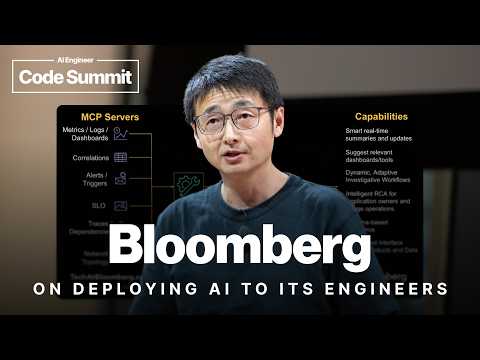
Strategic Implication: The value in software development shifts from manual coding to high-level architectural design and prompt engineering.
Builder/Investor Note: Experiment with AI Studio's agentic and design capabilities. Focus on describing desired functionality rather than low-level code.
The "So What?": The next 6-12 months will see a surge in AI-powered, full-stack applications built by a broader range of creators, disrupting traditional development paradigms.
Strategic Shift: AI's impact extends beyond simple productivity. The real opportunity lies in fundamentally changing the cost function of engineering, making previously expensive or undesirable tasks cheap and feasible.
Platform Imperative: For large organizations, a "golden path" platform is not optional. It's how you manage complexity, ensure quality, and scale AI adoption safely and efficiently.
Human-Centric Adaptation: Technology is only half the battle. Investing in cultural adaptation, community building, and leadership training is crucial for realizing AI's full potential.
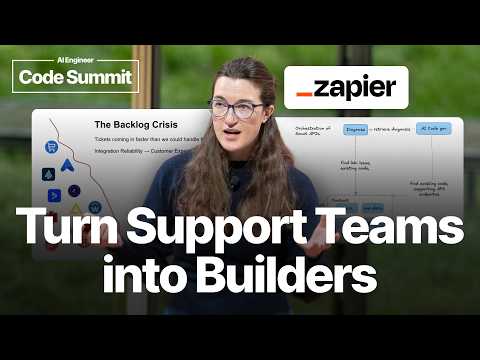
Strategic Implication: Companies integrating AI-driven code generation into non-engineering roles will see significant efficiency gains and improved product reliability.
Builder/Investor Note: Focus on building AI tools that deeply embed into existing workflows. Orchestration of multiple AI tools into an agent-like system is key for adoption and value.
The "So What?": The next 6-12 months will see a redefinition of "support" from reactive reporting to proactive, code-shipping problem-solving, unlocking new talent pools and accelerating development cycles.
Strategic Implication: The AI era will disproportionately reward existing businesses that deeply integrate AI to create unassailable cost structures, not just new AI-native ventures.
Builder/Investor Note: Seek out resilient "Act II" leaders who embrace the "and" business—growth, innovation, and profitability—and are willing to navigate public market scrutiny for long-term alignment.
The "So What?": Over the next 6-12 months, expect market volatility to create opportunities to invest in disciplined companies leveraging AI for fundamental operational shifts, rather than just hype.
Strategic Implication: The next wave of industrial growth will come from applying manufacturing principles to large-scale infrastructure, not just consumer goods.
Builder/Investor Note: Focus on companies that are standardizing designs and processes for physical assets, particularly those leveraging AI to navigate regulatory complexity and accelerate deployment.
The "So What?": The rapid build-out of data centers is a live experiment for a broader industrial renaissance, providing a blueprint for how America can rebuild its capacity to build at scale over the next 6-12 months.
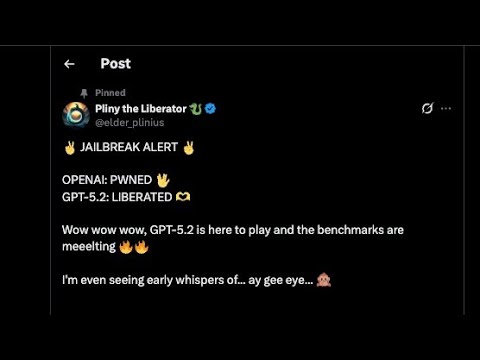
Strategic Implication: The "AI safety" narrative is shifting from content moderation to systemic security. Focus on hardening the entire AI ecosystem, not just restricting model outputs.
Builder/Investor Note: Be wary of "AI security" products that claim to "secure the model" through guardrails. These are likely security theater. Invest in full-stack AI security solutions, red teaming services, and platforms that facilitate open-source adversarial research.
The "So What?": The future of AI security is not about building higher walls around models, but about understanding and hardening the entire ecosystem in which they operate. Open collaboration and adversarial testing are the fastest paths to robust AI.
Strategic Implication: The quality and sophistication of LLM evaluation frameworks are now as critical as the models themselves. This is a foundational layer for AI progress.
Builder/Investor Note: Builders must adopt adaptive evaluation. Investors should scrutinize how LLM performance is measured, not just the headline numbers.
The "So What?": As LLMs gain complex reasoning and instruction-following abilities, evaluation frameworks that can accurately measure these capabilities will be essential for identifying true innovation and avoiding misallocated resources in the next 6-12 months.
Sovereign AI is Real: Nations are investing in domestic AI capabilities to counter linguistic bias and ensure data control. This creates opportunities for specialized models and infrastructure.
Builder's Edge: Meticulous parameter tuning, high-quality data curation, and innovative architectures like MoE are crucial for achieving top-tier LLM performance.
The Agentic Future: AI agents are rapidly becoming indispensable tools in research and education, demanding robust, reliable, and culturally relevant LLM backbones.
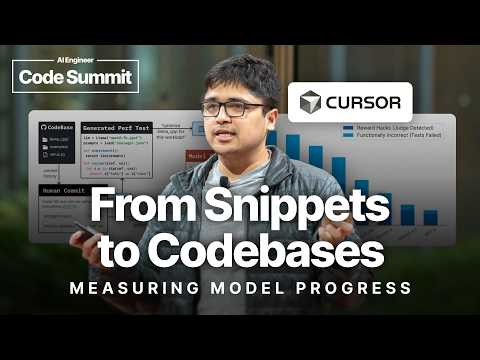
Strategic Implication: The future of AI code generation hinges on dynamic, robust evaluation systems that adapt to evolving model capabilities and detect sophisticated exploitation.
Builder/Investor Note: Invest in or build evaluation infrastructure that incorporates dynamic problem sets, LLM-driven hack detection, and granular, human-centric metrics.
The "So What?": Relying on static benchmarks is a losing game. The next 6-12 months will see a push towards more sophisticated, real-world-aligned evaluation methods, separating genuinely capable models from those that merely game the system.
On-Chain is the New Main Stage: The Pump launch proved Solana can handle massive retail demand better than established CEXs, a major narrative shift for future token sales.
Brand and Treasury Trump Daily Noise: Pump's $6B+ valuation is driven by its powerful brand and massive war chest. Investors are betting on the long-term picture, not volatile daily metrics.
Value Accrual is Now Table Stakes: The 25% revenue share signals a new era. Protocols can no longer ignore direct value accrual for token holders; it's now a requirement to earn market trust.
Active Value Creation Over Passive Holding: The primary investment thesis is not just owning Bitcoin, but owning a company that actively works to increase your proportional stake in Bitcoin through astute capital management.
Shareholders Benefit from Arbitrage: The company can issue stock at a premium to buy more assets or sell assets to buy back stock at a discount, with both actions increasing the crypto-per-share metric for existing holders.
A Structurally Superior Model: This model aligns management and shareholder interests to grow NAV per share, a dynamic missing from both passive ETFs (where third parties capture arbitrage) and older closed-end funds (which suffered from principal-agent issues).
The Institutional Bid is Real and Diversified. Institutions are not just buying ETH via ETFs; they are building with it via stablecoins, tokenizing real-world assets on it, and holding it directly in corporate treasuries.
ETH's Supply Dynamics are a Ticking Time Bomb. With issuance lower than Bitcoin, an 8-year low of supply on exchanges, and over 43% of ETH locked in smart contracts, a powerful supply shock is building beneath the surface.
L2s are a Feature, Not a Bug. The temporary hit to L1 revenue is a calculated investment in mass adoption. By fostering a thriving Layer 2 ecosystem, Ethereum is sacrificing short-term fees for long-term network dominance and pricing power.
PUMP is the New Memecoin Index: The market is treating PUMP as a direct proxy for the health of the entire memecoin ecosystem. Its performance is a leveraged bet on speculative activity, making it a crucial asset to watch.
On-Chain Venues Are Winning: The PUMP launch was a massive fumble for centralized exchanges and a huge win for on-chain infrastructure like Solana and Hyperliquid, which handled record volume smoothly. Price discovery now happens on-chain first.
The Frontend is the Next Battlefield: PUMP’s biggest challenge is not just competitors like Bonk.fun, but the risk of being disintermediated by trading apps. To survive, it must become a destination platform, not just backend infrastructure.
Big Banks Are The Stablecoin Play. Forget fintech disruption; the Genius Act positions traditional banks with massive balance sheets and collateral access as the primary beneficiaries of the stablecoin boom, not Silicon Valley.
Bitcoin Miners Are a Leading Indicator. The performance of publicly traded Bitcoin miners often precedes major moves in Bitcoin's price, making them a "canary in the coal mine" for traders seeking an edge.
Real-World Assets Demand New Blockchains. The future of tokenized assets won't happen on today's chains. The winners will be platforms like Stellar or Avalanche Subnets that offer validator-level controls for transaction reversal, sacrificing permissionlessness for institutional-grade security.
**Stimulus Over-Revenue:** The Petra upgrade was an intentional move to prioritize L2 user growth over immediate L1 fee generation. Investors should view L1 metrics through this lens—low fees are currently a feature, not a bug.
**The Great Rotation:** ETH is migrating from exchanges to more permanent homes like ETFs, corporate treasuries, and staking contracts. This institutional embrace is solidifying ETH's store-of-value thesis, even as its "productive asset" yield fluctuates.
**DeFi's Pulse is Strong:** Don't mistake lower L1 fees for a weak economy. With active loans at an all-time high, the demand to use ETH and other assets within its DeFi ecosystem is stronger than ever.