The Macro Shift: The Great Re-Shoring. National security now depends on domestic production of critical minerals and semiconductors.
The Tactical Edge: Build for Scale. Prioritize manufacturing competence over pure software features to win government contracts.
The Bottom Line: The defense industrial base is being rebuilt from the ground up. The next decade belongs to the builders who can merge Silicon Valley speed with the Pentagon's scale.
The Macro Trend: Biological Sovereignty. As global systems destabilize, the Amazon remains the most critical piece of biological infrastructure on the planet.
The Tactical Edge: Support Jungle Keepers. Direct capital to organizations that convert loggers into rangers to secure land concessions.
The Amazon is a finite asset under active siege. Protecting it requires a blend of primitive survival skills and high-tech surveillance over the next 18 months.
The Macro Pivot: As generative AI masters simulation, the physical world becomes a high-fidelity playground for software.
The Tactical Edge: Invest in the "brain" layer rather than the "limb" layer. Software that can generalize across different hardware forms will capture the most value.
The next decade belongs to embodied AI that reasons in real time. If you are waiting for the hardware to look perfect before paying attention, you will miss the moment the software takes over the physical world.
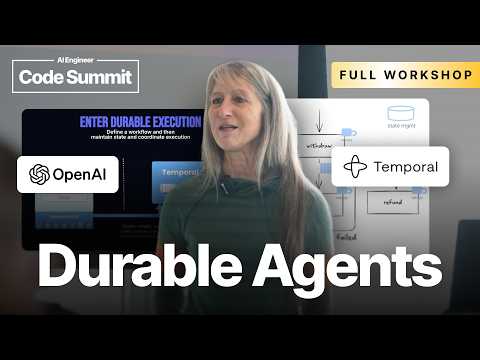
The industry is moving from "Agent as a Script" to "Agent as a Durable Service" where state management is handled by the infrastructure.
Wrap your existing API tools in the `activity_as_tool` function to gain automatic retries and execution history.
Reliability is the only moat in the agentic economy. If your agent cannot survive a server restart during a three-day task, it is not ready for the enterprise.
The Macro Trend: The move from fragmented content libraries to integrated health systems where AI synthesizes biomarkers and movement.
The Tactical Edge: Construct internal LLM tools to categorize qualitative feedback. This turns thousands of raw reviews into a precise roadmap.
The Bottom Line: Building a $100M ARR consumer app requires mastery of both growth loops and product retention. Solve for the daily habit to win the long game.
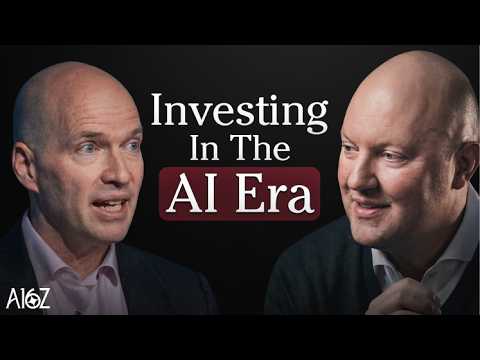
The transition from general-purpose AI to specialized application layers. As foundation models commoditize, value migrates to the "fat tail" of human-centric complexity.
Prioritize building or investing in "DNA of the future" companies that incumbents must eventually acquire to survive. Focus on winning the "point of attack" by staying deep in the technical details.
We are in a unique market where demand growth justifies high valuations. Success over the next year depends on identifying founders who are the absolute best in the world at one specific thing.
On-Chain is the New Main Stage: The Pump launch proved Solana can handle massive retail demand better than established CEXs, a major narrative shift for future token sales.
Brand and Treasury Trump Daily Noise: Pump's $6B+ valuation is driven by its powerful brand and massive war chest. Investors are betting on the long-term picture, not volatile daily metrics.
Value Accrual is Now Table Stakes: The 25% revenue share signals a new era. Protocols can no longer ignore direct value accrual for token holders; it's now a requirement to earn market trust.
Active Value Creation Over Passive Holding: The primary investment thesis is not just owning Bitcoin, but owning a company that actively works to increase your proportional stake in Bitcoin through astute capital management.
Shareholders Benefit from Arbitrage: The company can issue stock at a premium to buy more assets or sell assets to buy back stock at a discount, with both actions increasing the crypto-per-share metric for existing holders.
A Structurally Superior Model: This model aligns management and shareholder interests to grow NAV per share, a dynamic missing from both passive ETFs (where third parties capture arbitrage) and older closed-end funds (which suffered from principal-agent issues).
The Institutional Bid is Real and Diversified. Institutions are not just buying ETH via ETFs; they are building with it via stablecoins, tokenizing real-world assets on it, and holding it directly in corporate treasuries.
ETH's Supply Dynamics are a Ticking Time Bomb. With issuance lower than Bitcoin, an 8-year low of supply on exchanges, and over 43% of ETH locked in smart contracts, a powerful supply shock is building beneath the surface.
L2s are a Feature, Not a Bug. The temporary hit to L1 revenue is a calculated investment in mass adoption. By fostering a thriving Layer 2 ecosystem, Ethereum is sacrificing short-term fees for long-term network dominance and pricing power.
PUMP is the New Memecoin Index: The market is treating PUMP as a direct proxy for the health of the entire memecoin ecosystem. Its performance is a leveraged bet on speculative activity, making it a crucial asset to watch.
On-Chain Venues Are Winning: The PUMP launch was a massive fumble for centralized exchanges and a huge win for on-chain infrastructure like Solana and Hyperliquid, which handled record volume smoothly. Price discovery now happens on-chain first.
The Frontend is the Next Battlefield: PUMP’s biggest challenge is not just competitors like Bonk.fun, but the risk of being disintermediated by trading apps. To survive, it must become a destination platform, not just backend infrastructure.
Big Banks Are The Stablecoin Play. Forget fintech disruption; the Genius Act positions traditional banks with massive balance sheets and collateral access as the primary beneficiaries of the stablecoin boom, not Silicon Valley.
Bitcoin Miners Are a Leading Indicator. The performance of publicly traded Bitcoin miners often precedes major moves in Bitcoin's price, making them a "canary in the coal mine" for traders seeking an edge.
Real-World Assets Demand New Blockchains. The future of tokenized assets won't happen on today's chains. The winners will be platforms like Stellar or Avalanche Subnets that offer validator-level controls for transaction reversal, sacrificing permissionlessness for institutional-grade security.
**Stimulus Over-Revenue:** The Petra upgrade was an intentional move to prioritize L2 user growth over immediate L1 fee generation. Investors should view L1 metrics through this lens—low fees are currently a feature, not a bug.
**The Great Rotation:** ETH is migrating from exchanges to more permanent homes like ETFs, corporate treasuries, and staking contracts. This institutional embrace is solidifying ETH's store-of-value thesis, even as its "productive asset" yield fluctuates.
**DeFi's Pulse is Strong:** Don't mistake lower L1 fees for a weak economy. With active loans at an all-time high, the demand to use ETH and other assets within its DeFi ecosystem is stronger than ever.