The Macro Shift: Context management is the new compute. As models get smarter, the winning architecture will be the one that most efficiently partitions and feeds relevant data to sub-agents.
The Tactical Edge: Prioritize reviewability. When building or using agents, focus on tools that provide clear diffs and tours of changes rather than just raw code generation.
The Bottom Line: The developer's role is evolving from a writer to an orchestrator. Success in the next 12 months depends on mastering the skill of agentic review rather than manual syntax.
The Macro Shift: Engineering is moving from a headcount-driven Opex model to an infrastructure-driven autonomy model where validation is the primary capital asset.
The Tactical Edge: Audit your codebase against the eight pillars of automated validation. Start by asking agents to generate tests for existing logic to close the coverage gap.
The Bottom Line: Massive velocity gains are not found in the next model update. They are found in the rigorous internal standards that allow agents to operate without human hand-holding.
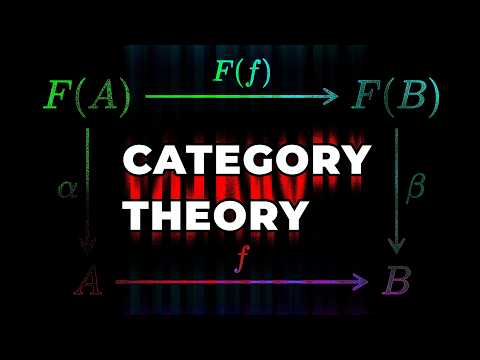
[Algorithmic Convergence]. The gap between symbolic logic and neural networks is closing through category theory. Expect architectures that are "correct by construction" rather than just "likely correct."
[Audit Architecture]. Evaluate new models based on their "algorithmic alignment" rather than just parameter count. Prioritize implementations that bake in non-invertible logic.
The next year will see a shift from scaling data to scaling structural priors. If you aren't thinking about how your model's architecture mirrors the problem's topology, you are just an alchemist in a world about to discover chemistry.
Strategic Implication: The future of software development isn't about *if* we use AI, but *how* we integrate human understanding and architectural discipline to prevent an "infinite software crisis.
Builder/Investor Note: Builders must prioritize deep system understanding and explicit planning over raw generation speed. Investors should favor companies that implement robust human-in-the-loop processes for AI-assisted development.
The "So What?": Over the next 6-12 months, the ability to "see the seams" and manage complexity will differentiate thriving engineering teams from those drowning in unmaintainable, AI-generated code.
Strategic Implication: The market for AI transformation services is expanding rapidly, driven by enterprises seeking to integrate AI for tangible business outcomes.
Builder/Investor Note: Focus on AI solutions with clear, practical applications for mid-market and enterprise clients. Technical talent capable of bridging research with deployment holds significant value.
The "So What?": The next 6-12 months will see increased demand for AI engineers who can implement and scale AI solutions, moving beyond proof-of-concept to widespread adoption.
Compensation Innovation: The traditional compensation playbook for engineers is outdated. New models that directly reward AI-augmented output will attract top talent and drive efficiency.
Builder/Investor Note: Founders should re-evaluate their incentive structures. Investors should seek companies experimenting with these models, as they may achieve outsized productivity.
The "So What?": The productivity gap between AI-augmented and non-AI-augmented engineers will widen. Companies that adapt their incentives will capture disproportionate value in the next 6-12 months.
Strategic Shift: Successful AI integration means identifying and solving *your* organization's specific SDLC bottlenecks, not just boosting code completion.
Builder/Investor Note: Prioritize psychological safety and invest in AI skill development. For builders, this means dedicated learning time; for investors, look for companies that do this well.
The "So What?": The next 6-12 months will separate organizations that merely *adopt* AI from those that *master* its strategic application and measurement, driving real competitive advantage.
Strategic Implication: AI integration is a company-wide transformation, not a feature. Organizations must re-architect processes, tools, and culture to compete.
Builder/Investor Note: Prioritize internal tooling that democratizes AI experimentation. Look for companies establishing "model behavior" as a distinct, cross-functional discipline.
The "So What?": The next 6-12 months will reward builders who bake AI security and user control into product design from day one, recognizing that technical mitigations alone are insufficient.
Escape Velocity Reached: Like the early internet and Bitcoin, BitTensor has survived its infancy. Its ecosystem of 128+ subnets has created a network-effect moat that makes it incredibly difficult to disrupt.
The "Front Door" Is the Next Billion-Dollar Opportunity: The most significant hurdle for BitTensor is its developer-focused user experience. The companies that successfully build simple, consumer-friendly interfaces on top of the subnets will unlock immense value.
Powerful Tokenomics Signal a Supply Shock: TAO's upcoming halving, combined with its built-in utility and high staking rate, is creating a classic supply squeeze. With demand structurally increasing as the network grows, the economics point toward a significant price appreciation for the root token.
The Game Is Rigged, Play Accordingly. Traditional analysis is failing. The winning strategy is "grift arbitrage"—investing in assets that benefit from government spending and political connections.
Bonds are Dead, Long Live Yield. With governments committed to fiscal dominance, bonds offer negative real returns. The hunt for yield is driving capital from fiat junk bonds into Bitcoin and Ethereum.
Hedge for the Inevitable Shakeup. The system is fragile. Key risks like aggressive tariffs or a hawkish Bank of Japan could trigger a sharp sell-off. With volatility low, now is the time to buy cheap protection.
Treasury Vehicles are a Trap. They're the new high-risk, high-reward play, but the danger isn't debt—it's massive shareholder dilution and a rapid, reflexive unwind that will be far quicker and more brutal than Grayscale's.
The Cycle Isn't Dead, It's Rhyming. The market is replaying the classic playbook: BTC runs, ETH surges, and capital spills into retail-favorite alts. Calling a top is a fool's errand, but the exuberance is palpable.
Regulation is a Double-Edged Sword. New laws provide a path for tokens to become commodities but may incentivize projects to launch chains purely for regulatory arbitrage, adding another layer of complexity to the market.
**Ethereum's revival is structural, not speculative.** Unprecedented ETF and corporate treasury inflows are creating sustained buying pressure that could push ETH to $10K and beyond, rendering past cynicism obsolete.
**Regulation is the unlock for institutional crypto.** The Clarity and Genius Acts are not just rules; they are the green light for institutional capital that has been waiting on the sidelines for legal certainty.
**The future of consumer crypto is weird and profitable.** Platforms like Pump.fun prove that the most powerful business models may not fit traditional molds but will win by tapping into raw, unfiltered user demand.
The ETH Treasury Is The New Institutional Bid. The narrative that powered Bitcoin's run is now being replicated for ETH, but with a twist: former Bitcoin miners are leading the charge, creating a powerful, reflexive buy-cycle.
ETH's Supply Squeeze Is Real. The combination of record ETF demand, minimal proof-of-stake issuance, and a re-staking culture means the buy pressure is overwhelming the available sell-side liquidity.
Regulation Is Becoming A Tailwind. The expected passage of the stablecoin bill provides a legitimate foundation for institutional adoption, turning a long-time headwind into a powerful catalyst for growth.
Solana’s Watershed Moment: The smooth on-chain execution for a high-demand event proved that decentralized infrastructure is not just viable but, in this case, superior to its centralized counterparts.
Value Accrual is Non-Negotiable: The era of valueless governance tokens is over. Protocols must now provide clear, tangible mechanisms like revenue sharing or buybacks to build trust and justify their valuation.
The Real Game is the Front-End: While back-end infrastructure plays are viable, the ultimate prize is owning the user relationship. PUMP’s battle with Axiom for the title of the premier consumer-facing crypto app is the key narrative to watch.