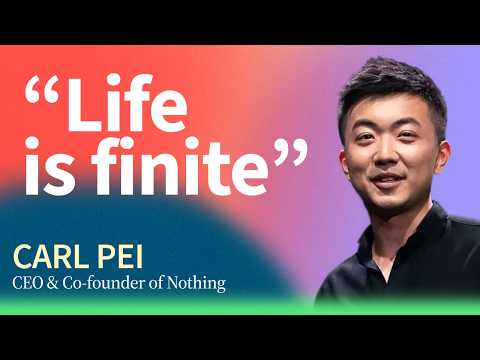
The Macro Shift: Infrastructure Invisibility. As core technologies become background noise, value moves from the pipes to the unique experiences built on top of them.
The Tactical Edge: Reject Mediocrity. Audit your product for average features and replace them with high-conviction improvements that competitors are too lazy to attempt.
The Bottom Line: Building is the only way to ensure the future happens. If you do not create the next version of reality, you are stuck living in an outdated vision.
The transition from hardware specs to emotional hardware where brand identity and OS-native AI become the primary moats.
Prioritize arbitrage opportunities in marketing by finding underpriced attention on platforms like TikTok before they become crowded.
Success in mature markets requires a Genghis Khan method: be a talent scout, stay open-minded to global supply chains, and use design to win the emotional battle for the consumer's pocket.
The transition from centralized cloud training to distributed local inference creates a massive demand for high-bandwidth storage and custom CPUs.
Audit your technical roadmap to prioritize local agentic workflows that reduce latency and data privacy risks.
The next 12 months will favor hardware that enables physical AI and local autonomy. Owning the compute stack is becoming a competitive necessity for builders who want to move faster than the cloud allows.
Intelligence is decoupling from scale. As reasoning becomes a commodity, the value moves from the size of the model to the proprietary nature of the training data.
Use TRL or Unsloth for single-GPU fine-tuning. Prioritize cleaning your instruction sets over increasing your training iterations.
The future belongs to those who own their data pipelines. If you can distill elite reasoning into a 350M parameter model, you win on latency, cost, and privacy.
Software maintenance is moving from a manual craft to an industrial process. As agents handle the toil of migrations and security, human engineers will focus entirely on high-level system design.
Batch by Dependency. Use the OpenHands SDK to visualize your codebase as a graph and deploy agents to solve the leaf nodes first.
Companies that master agent orchestration will clear their tech debt backlogs in weeks instead of years, creating a massive competitive advantage in product velocity.
Escape Velocity Reached: Like the early internet and Bitcoin, BitTensor has survived its infancy. Its ecosystem of 128+ subnets has created a network-effect moat that makes it incredibly difficult to disrupt.
The "Front Door" Is the Next Billion-Dollar Opportunity: The most significant hurdle for BitTensor is its developer-focused user experience. The companies that successfully build simple, consumer-friendly interfaces on top of the subnets will unlock immense value.
Powerful Tokenomics Signal a Supply Shock: TAO's upcoming halving, combined with its built-in utility and high staking rate, is creating a classic supply squeeze. With demand structurally increasing as the network grows, the economics point toward a significant price appreciation for the root token.
The Game Is Rigged, Play Accordingly. Traditional analysis is failing. The winning strategy is "grift arbitrage"—investing in assets that benefit from government spending and political connections.
Bonds are Dead, Long Live Yield. With governments committed to fiscal dominance, bonds offer negative real returns. The hunt for yield is driving capital from fiat junk bonds into Bitcoin and Ethereum.
Hedge for the Inevitable Shakeup. The system is fragile. Key risks like aggressive tariffs or a hawkish Bank of Japan could trigger a sharp sell-off. With volatility low, now is the time to buy cheap protection.
Treasury Vehicles are a Trap. They're the new high-risk, high-reward play, but the danger isn't debt—it's massive shareholder dilution and a rapid, reflexive unwind that will be far quicker and more brutal than Grayscale's.
The Cycle Isn't Dead, It's Rhyming. The market is replaying the classic playbook: BTC runs, ETH surges, and capital spills into retail-favorite alts. Calling a top is a fool's errand, but the exuberance is palpable.
Regulation is a Double-Edged Sword. New laws provide a path for tokens to become commodities but may incentivize projects to launch chains purely for regulatory arbitrage, adding another layer of complexity to the market.
**Ethereum's revival is structural, not speculative.** Unprecedented ETF and corporate treasury inflows are creating sustained buying pressure that could push ETH to $10K and beyond, rendering past cynicism obsolete.
**Regulation is the unlock for institutional crypto.** The Clarity and Genius Acts are not just rules; they are the green light for institutional capital that has been waiting on the sidelines for legal certainty.
**The future of consumer crypto is weird and profitable.** Platforms like Pump.fun prove that the most powerful business models may not fit traditional molds but will win by tapping into raw, unfiltered user demand.
The ETH Treasury Is The New Institutional Bid. The narrative that powered Bitcoin's run is now being replicated for ETH, but with a twist: former Bitcoin miners are leading the charge, creating a powerful, reflexive buy-cycle.
ETH's Supply Squeeze Is Real. The combination of record ETF demand, minimal proof-of-stake issuance, and a re-staking culture means the buy pressure is overwhelming the available sell-side liquidity.
Regulation Is Becoming A Tailwind. The expected passage of the stablecoin bill provides a legitimate foundation for institutional adoption, turning a long-time headwind into a powerful catalyst for growth.
Solana’s Watershed Moment: The smooth on-chain execution for a high-demand event proved that decentralized infrastructure is not just viable but, in this case, superior to its centralized counterparts.
Value Accrual is Non-Negotiable: The era of valueless governance tokens is over. Protocols must now provide clear, tangible mechanisms like revenue sharing or buybacks to build trust and justify their valuation.
The Real Game is the Front-End: While back-end infrastructure plays are viable, the ultimate prize is owning the user relationship. PUMP’s battle with Axiom for the title of the premier consumer-facing crypto app is the key narrative to watch.