Demand for provably correct systems in hardware, software, and critical infrastructure creates a massive market for formal verification. AI scales these human-bottlenecked processes.
Investigate formal verification tools for high-stakes codebases or chip designs. Prioritize solutions combining probabilistic generation with deterministic proof for speed and reliability.
"Good enough" code is ending for critical applications. AI-driven formal verification is a commercial imperative, redefining development cycles and trust.
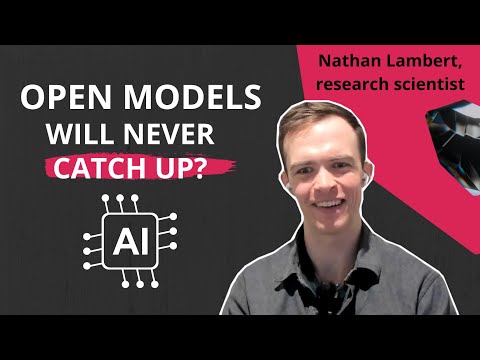
The macro shift: Geopolitical competition in AI is not just about raw model power; it is about who controls the foundational research and development platforms. Open models are the battleground for long-term national AI sovereignty.
The tactical edge: Invest in open model research and infrastructure, particularly in post-training environments and high-quality data generation. This builds a resilient, transparent AI ecosystem that can adapt and innovate independently.
The bottom line: The US must prioritize open model development now to secure its position as a global AI leader, foster domestic innovation, and provide accessible AI options for a diverse global user base over the next 6-12 months.
The convergence of AI and immersive computing is pushing towards a "HoloDeck" future. Roblox's vector-based data storage of 13 billion monthly hours provides unprecedented training data for agentic NPCs and real-time world generation, fundamentally changing how virtual worlds are built and experienced.
Invest in platforms that offer cloud-native, AI-accelerated creation tools and robust multiplayer synchronization. Prioritize those building on rich, proprietary 3D interaction data for superior AI agent training.
The future of digital interaction is 4D, photorealistic, and AI-driven. Companies with a clear, long-term vision paired with rapid, cloud-connected iteration will capture the next wave of virtual co-experience, making them prime targets for investment and partnership over the next 6-12 months.
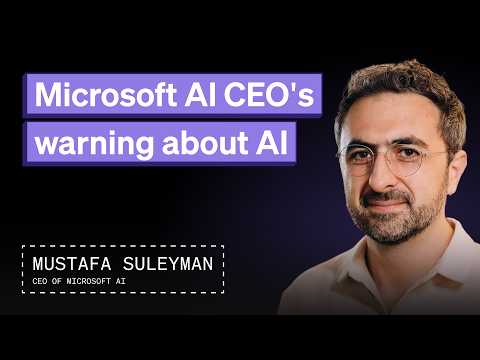
The exponential reduction in the cost of intelligence is transforming AI from a mere tool into a "hyperobject" with quasi-human capabilities, forcing society to adapt from a scarcity-based operating system to one of intelligence abundance.
Cultivate "AI muscle" by actively experimenting with AI tools, understanding their capabilities and limitations, and pushing their boundaries. This hands-on engagement is the best inoculation against "AI psychosis" and prepares you for a world where AI is ubiquitous.
AI's rapid proliferation and increasing autonomy demand immediate, collective action from governments, companies, and individuals to establish clear boundaries and ensure human control. Ignoring this "fourth class" of being risks societal instability and the erosion of human agency over the next 6-12 months.
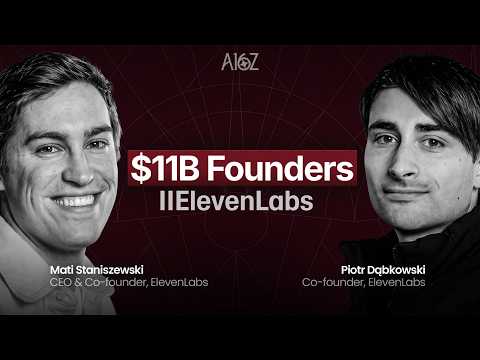
The computing paradigm is shifting from visual-centric to auditory-first, driven by AI's ability to process raw audio data for emotional depth and contextual understanding. This opens new frontiers for immersive experiences and global communication.
Invest in or build solutions that prioritize raw audio data processing and multimodal AI integration. Focus on applications where emotional nuance and natural interaction create a distinct user experience.
Voice AI, particularly with ElevenLabs' approach to emotional intelligence, is not just an incremental improvement; it is a foundational shift that will redefine human-computer interaction and unlock massive markets in education, entertainment, and global connectivity over the next 6-12 months.
AI's memory demands invert data center design, moving from storage-first to memory-first. High-speed networks and NVMe flash are now core memory tiers.
Fund software-defined memory solutions like WEKA's Axon and Augmented Memory Grid. These convert existing NVMe drives into high-performance context memory.
Persistent, rapid KV cache access through "Token Warehouses" will determine AI application and agent deployment profitability over the next 6-12 months.
AI is moving from opaque, data-driven systems to transparent, intentionally designed agents. This shift is driven by the need for reliability, safety, and the ability to extract novel insights from increasingly powerful models.
Invest in tools and research that provide granular control over AI internals, like Goodfire's platform. This enables precise customization, reduces unintended behaviors, and accelerates scientific discovery in critical domains.
The future of AI isn't just about bigger models; it's about smarter, more controllable ones. Understanding and directly influencing AI's "mind" will be a competitive differentiator and a prerequisite for deploying AI in high-stakes, real-world applications over the next 6-12 months.
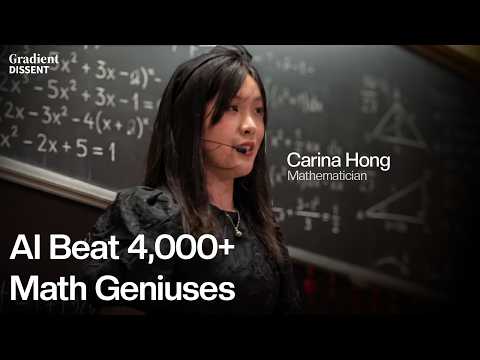
The era of "good enough" probabilistic AI for critical systems is ending; the market demands provable correctness. Axiom Math's approach signals a return to formal methods, supercharged by AI, addressing the verification bottleneck in software and hardware.
Investigate formal verification tools for safety-critical code generation, hardware design, and legacy code migration. Prioritize solutions combining AI generation with deterministic proof for speed and certainty.
Formally verifying complex systems with AI will redefine trust in software and hardware. Companies integrating these capabilities gain a competitive advantage, reducing bugs, accelerating development, and meeting regulatory demands over the next 6-12 months.
The scaling laws seen in large language and video models are now extending to physical robotics. Internet-scale human video data, combined with humanoid morphology, is creating a new paradigm for robot generalization.
Invest in or build systems that prioritize multi-stage data pipelines, especially those incorporating diverse egocentric data. This approach is proving key to unlocking zero-shot capabilities in physical AI.
World models are not just a research curiosity; they are a practical tool for accelerating robot deployment. Their ability to generalize and act as learned simulators will redefine how robots are trained, tested, and ultimately integrated into our daily lives over the next 6-12 months.
The Call Option's Double Edge: The standard call-option deal is an elegant solution to crypto's volatility, but it becomes toxic when the loan is too large. An oversized option creates a "magnet effect" where the price gets pinned to the strike, killing healthy price discovery.
"Active Market Making" Is a Trap: Selling the future to pump the present is a fool's game. This structure leverages a project’s future token supply for a short-term price pump that almost always ends in a perp-driven death spiral, destroying credibility.
Launch Price Is Vanity, Momentum Is Sanity: The initial TGE price is an illusion driven by retail FOMO. Projects should focus on establishing a fair pre-launch price and using stabilization mechanisms to build sustained momentum, rather than chasing a fleeting, sky-high valuation on day one.
Stablecoin Infrastructure is the New Gold Rush: The Genius Act fired the starting gun. The most significant opportunities lie not in issuing stablecoins, but in building the ecosystem around them—from payment rails to wallet design and tokenized money market funds.
Narrative is the Ultimate Catalyst: ETH’s rally wasn’t driven by a tech breakthrough but by a potent cocktail of treasury-driven demand and a leadership refresh. In crypto, momentum creates its own demand.
The Great Convergence is Accelerating: With Coinbase in the S&P 500 and a wave of crypto IPOs, traditional capital can no longer sit on the sidelines. The primary battleground is now for public market mindshare.
We are in a high-risk, high-reward phase where liquidity is the primary driver. The cycle's ultimate peak remains uncertain and heavily dependent on macro-economic policy.
Brace for the Parabola. This is the late-stage bull market, where the most significant gains historically occur in short, violent bursts. Being out of the market means risking missing the entire cycle's payoff.
Rotation Is in Motion. Capital has started flowing from Bitcoin to Ethereum. The next domino to watch for is a pop in large-cap alts, which would confirm a full-blown alt season is underway.
**Stablecoins are now institutional grade.** The Genius Act provides a clear regulatory framework, unlocking enterprise adoption and integration into traditional payment rails. Expect a wave of innovation in stablecoin infrastructure.
**The future of DeFi is the next battleground.** While the Clarity Act offers key protections for developers, traditional finance incumbents are actively lobbying to limit DeFi's scope. The fight will be fierce in the Senate.
**Capital formation is being supercharged.** The Clarity Act’s new token sale exemption will legitimize and streamline ICO-style fundraising, providing a powerful new tool for founders to raise capital with crypto-native efficiency.
Proof-of-Human is Becoming Non-Negotiable. The internet is on a trajectory where >99% of activity will be AI-driven, making sybil-resistant "proof of human" a fundamental infrastructure layer, not a niche feature.
Hardware is the Moat. Worldcoin bets that a specialized, secure hardware device (the Orb) is the only method resilient enough against sophisticated AI to scale a global human network, a concept crypto pioneer Hal Finney foresaw.
A New GTM: Web3 Incentives, Web2 Integrations. Worldcoin’s strategy blends token airdrops to bootstrap its network (14M+ verified users) with integrations into mainstream apps (social, dating, gaming) to drive long-term, real-world utility.
**Fiscal, Not Fed:** This melt-up is fueled by government spending, not central bank easing. Expect momentum to push assets higher before a sharp, painful correction. Have your exit plan ready.
**Trade the Politics:** The cleanest narrative trade isn’t just Bitcoin; it’s politically reflexive “hated” coins (like XRP) that benefit from deregulation and have built-in, retail-heavy communities.
**Beware the Treasury Trap:** Publicly traded crypto treasury companies are an attention game designed to prey on retail liquidity. While you can dance while the music plays, know that the exit door is small.