The transition from general-purpose LLMs to specialized coding agents that operate on the entire codebase rather than isolated snippets.
Audit your current stack for agentic readiness. Prioritize tools that integrate with Gemini 3 or similar high-reasoning models to automate repetitive pull requests.
Code is the substrate of the digital world. If you control the means of AI code generation, you control the speed of innovation for every other industry.
The move from a singular "Universe" view to a "Multiverse" perspective mirrors the transition from centralized monoliths to fragmented, interoperable ecosystems.
Build systems that fail gracefully when hitting Gödelian limits.
Truth is a vast ocean while proof is a small boat. Your roadmap must account for the reality that your system will eventually encounter truths it cannot verify.
The Macro Pivot: Outcome-Based Intelligence. We are moving from AI as a Service to Results as a Service where software value is tied to revenue generation rather than seat licenses.
The Tactical Edge: Verticalize the Data. Build in sectors with non-public outcome data to create a compounding moat that resists commoditization by foundation models.
The winners of 2026 will be those who use AI to solve core human needs for connection and discovery while building defensible, data-rich business models.
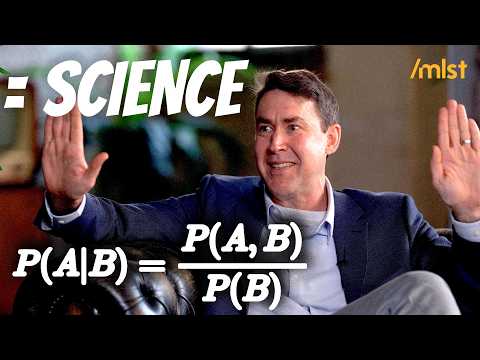
The Macro Transition: Moving from "Big Model" monoliths to "Lots of Little Models" where distributed Bayesian assets represent specific physical objects.
The Tactical Edge: Prioritize "Object-Centered" architectures that track uncertainty. This allows robots to "phone a friend" when encountering novel data.
The LLM era is hitting a wall of implicit representation. The next 12 months belong to those building explicit, causal world models grounded in physics rather than language.
The Macro Trend: The transition from static benchmarks to live human-in-the-loop evaluation. As models saturate fixed tests, the only remaining signal is subjective human preference at scale.
The Tactical Edge: Monitor secret model drops on Arena to spot frontier capabilities before official releases. This provides a lead time advantage for builders choosing their tech stack.
The Bottom Line: Arena is the new kingmaker. If you are building AI products, their expert-tier data is the most reliable map for navigating the frontier.
The move from small models to medium models (15B to 70B) suggests that reasoning capability is outstripping the desire for low-latency edge deployment.
Implement instruction-following re-rankers to prune your context window. This prevents the model from getting confused by irrelevant data.
Stop building toys. The next year belongs to those who can build full agentic systems that handle billions of tokens without losing the plot.
**Treasury Companies Are A Double-Edged Sword.** They are creating massive buy-side pressure now but pose a systemic risk. Their weak debt covenants could turn a market dip into a liquidation cascade.
**Market Structure Over Fundamentals (For Now).** ETH’s surge exemplifies this trend. Despite weak fundamentals, its powerful technical breakout and role as the next asset for treasury buyers are driving its outperformance.
**Watch the NAV Premium.** The key health metric is the premium-to-NAV on these treasury companies. As long as investors pay $2 for $1 of crypto, the mania continues. A flip to a discount is the canary in the coal mine.
The Cycle is Dead, Long Live the Cycle: The old four-year, retail-driven crypto cycle is over. We're in an institutionally-led "gigachad bull run" that will last through 2026 and push the market cap above $10 trillion, pending regulatory clarity.
Narrative is the Ultimate Metric: Chains that focus on philosophical purity and solving real-world problems (Bitcoin, Cardano) build more resilient communities and long-term value than those chasing fleeting metrics like TPS and TVL.
Bitcoin's Next Chapter will be Written on Cardano: As Bitcoin matures into a yield-bearing asset, its massive capital base will seek returns elsewhere. Cardano’s UTXO model and upcoming interoperability features are designed to capture this flow, positioning it as Bitcoin’s de facto yield layer.
The Dollar's "Gold Moment" is Here. The dollar is decoupling from its traditional anchor (rate differentials) just as gold decoupled from real yields, signaling a permanent regime shift driven by geopolitics, not just economics.
The "Dollar Smile" Has Inverted. The dollar is no longer a reliable risk-off hedge. Its positive correlation with equities means it now falls during market stress—a fundamental rewiring for asset allocators.
The Devaluation Trade is a Trap (For Now). While the long-term bearish case for the dollar is clear, the trade is dangerously crowded. Expect markets to test this one-sided positioning with a painful bounce before the ultimate decline resumes.
**The Real Cycle Indicator:** Forget price targets. The bull market's health is directly tied to the premium-to-NAV on crypto treasury vehicles. When those premiums collapse, the party is over.
**L1s Are Dead Money:** The dominant thesis is a massive market re-rating where capital flees overvalued L1 infrastructure and concentrates into Bitcoin and a handful of cash-flow-positive applications.
**Stablecoins Aren't a Commodity:** The moats are deep. New issuers will struggle to compete with Tether's liquidity network effects and Ethena's structural yield advantage, making it a bear market for new stablecoin startups.
Content is the New Capital: The Base App transforms every post into a tradable asset. This makes content creation a direct form of capital formation, rewarding creators for attention in a way that’s native to the internet of value.
The Rise of the Native Creator: The biggest winners on Base won't be Web2 transplants, but new creators who master the platform's unique blend of content and commerce. The strategy is to find and elevate undiscovered talent from every vertical.
From Algorithm to Free Market: Base is trading the black box of social media algorithms for the transparent chaos of a free market. The central experiment is whether market-based incentives can build a healthier, more aligned social network.
**ETH is the New Institutional Primitive.** The "ETH Treasury" model is a new unlock, leveraging ETH's native yield to create a self-financing acquisition engine that is attracting billions in institutional capital.
**The Floodgates Are Open.** The Genius Bill and explosive ETF inflows are not just bullish signals; they are structural shifts that are unleashing a torrent of capital and legitimizing the asset class for mainstream finance.
**Risk is Ramping.** The excitement is palpable, but so is the risk. The treasury meta feels like a potential bubble, and legal threats against core DeFi and infrastructure remain a significant overhang. Buyer beware.