The AI infrastructure boom is transitioning from speculative buildouts to financially engineered, risk-managed investments, driven by the commodification of compute and memory.
Explore futures and residual value products to de-risk your AI compute procurement or data center investments, securing predictable costs and monetizing hardware lifecycles.
Quantifying future compute demand and hardware value is no longer a luxury, it's a necessity. Over the next 6-12 months, those who integrate financial hedging into their AI strategy will gain a significant competitive advantage in capital allocation and operational efficiency.
Implement compute futures and residual value products to cap future costs or floor future revenue, significantly reducing exposure to spot market volatility and hardware obsolescence.
Ornn's residual value product allows data centers to sell GPUs years in advance, translating to lower financing costs for massive hardware investments.
Ornn's index tracks dynamic marketplace GPU pricing, empowering smaller buyers to avoid overpaying.
Data center operators and large compute buyers should explore Ornn's futures and residual value products to lock in costs, secure future revenue, and access more favorable financing terms.
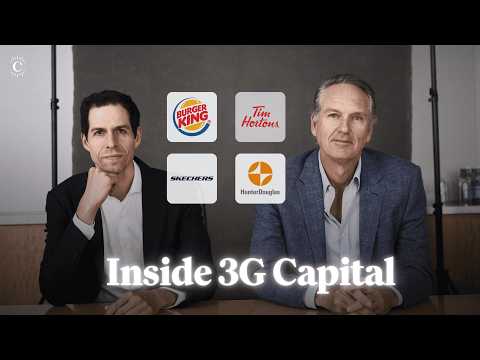
The Macro Shift: As market complexity and technological disruption accelerate, traditional diversified investing faces increasing headwinds. 3G Capital's micro-level focus on deeply understanding and operating a single, well-moated business, combined with a long-term, owner-operator mindset, provides a robust counter-strategy to extract value where others see only risk.
The Tactical Edge: Cultivate an "owner's mindset" in your team, decentralizing "how" decisions while centralizing "what" goals. Prioritize hiring and promoting individuals who demonstrate exceptional drive and potential, even if they lack traditional tenure, and align their incentives directly with long-term business success.
The Bottom Line: In the next 6-12 months, focus on identifying businesses with strong, direct customer relationships and defensible physical assets. These "boring" businesses, when infused with an owner-operator culture and strategic tech adoption, offer a compelling path to outsized, enduring value, regardless of broader market volatility.
Integrate compute futures and residual value products into your financial planning. This will allow you to hedge against price volatility, secure better financing, and optimize hardware refresh cycles.
The AI compute market is transitioning from an opaque, ad-hoc system to a financially engineered commodity market. This shift will introduce unprecedented transparency and risk management tools, fundamentally altering investment and operational strategies for AI infrastructure.
The ability to quantify future compute demand and hardware value is no longer a luxury; it is a necessity. Over the next 6-12 months, those who adopt these financial instruments will gain a significant competitive advantage, building more resilient and profitable AI operations.
The Macro Shift: As digital disintermediation accelerates, businesses with strong direct-to-consumer relationships and physical moats become increasingly valuable. This counters the "software eats the world" narrative by highlighting the enduring power of tangible assets and customer loyalty.
The Tactical Edge: Cultivate an owner-operator mindset throughout your organization, aligning incentives deeply with long-term value creation. Prioritize hiring and empowering young talent, giving them significant responsibility early, and providing mentorship to maximize their success.
The Bottom Line: In a market where valuations are stretched and capital is abundant, 3G's disciplined, long-term approach to identifying and operating truly great businesses offers a powerful counter-narrative. Focus on enduring business quality and people-driven execution will be the ultimate differentiator for compounding capital over the next decade.
Singular Focus: 3G's model is one investment per fund, backed by significant house capital. This forces extreme patience and a rigorous downside analysis, ensuring capital preservation is paramount before seeking outsized returns.
Operator-Led: 3G partners are seasoned operators, having run large businesses themselves. This hands-on experience allows them to identify and implement operational improvements that pure financial investors might miss, directly impacting value creation.
Disruption Defense: In a tech-driven world, 3G prioritizes businesses that own the customer relationship and are less susceptible to disintermediation. This focus on "atoms" businesses with strong brands and physical components provides a moat against digital upheaval.
The Macro Shift: As digital disruption accelerates, the market increasingly undervalues "boring" businesses with strong physical moats and direct customer relationships. 3G Capital demonstrates that these enduring assets, when paired with intense operational rigor and long-term capital, can generate outsized returns.
The Tactical Edge: Identify businesses where the brand is significantly "bigger than the business" – meaning widespread recognition exists but operational inefficiencies or poor franchising have suppressed its true value. Then, apply an owner-operator model to fix core issues and expand globally.
The Bottom Line: In a world pursuing the next big tech wave, the real alpha might lie in patiently acquiring and meticulously operating established, non-disruptable businesses. Your roadmap should include a focused study of industries with strong customer ties and a focus on building an ownership-driven culture, rather than just seeking growth at all costs.
3G Capital commits to a single investment per fund, deploying significant internal capital alongside partners. This intense focus acknowledges the rarity of truly exceptional businesses and leaders, driving rigorous due diligence and a deep commitment to each asset.
3G instills an ownership culture where leaders act as shareholders, aligning incentives directly with the business's long-term success. This contrasts with traditional management structures, driving decisions that prioritize the company's best interests.
3G prioritizes businesses that own the direct relationship with their end customers, like Burger King or Hunter Douglas. This direct connection reduces disintermediation risk, making the business more resilient to technological shifts or retail power plays.
**Treasury Companies Are A Double-Edged Sword.** They are creating massive buy-side pressure now but pose a systemic risk. Their weak debt covenants could turn a market dip into a liquidation cascade.
**Market Structure Over Fundamentals (For Now).** ETH’s surge exemplifies this trend. Despite weak fundamentals, its powerful technical breakout and role as the next asset for treasury buyers are driving its outperformance.
**Watch the NAV Premium.** The key health metric is the premium-to-NAV on these treasury companies. As long as investors pay $2 for $1 of crypto, the mania continues. A flip to a discount is the canary in the coal mine.
The Cycle is Dead, Long Live the Cycle: The old four-year, retail-driven crypto cycle is over. We're in an institutionally-led "gigachad bull run" that will last through 2026 and push the market cap above $10 trillion, pending regulatory clarity.
Narrative is the Ultimate Metric: Chains that focus on philosophical purity and solving real-world problems (Bitcoin, Cardano) build more resilient communities and long-term value than those chasing fleeting metrics like TPS and TVL.
Bitcoin's Next Chapter will be Written on Cardano: As Bitcoin matures into a yield-bearing asset, its massive capital base will seek returns elsewhere. Cardano’s UTXO model and upcoming interoperability features are designed to capture this flow, positioning it as Bitcoin’s de facto yield layer.
The Dollar's "Gold Moment" is Here. The dollar is decoupling from its traditional anchor (rate differentials) just as gold decoupled from real yields, signaling a permanent regime shift driven by geopolitics, not just economics.
The "Dollar Smile" Has Inverted. The dollar is no longer a reliable risk-off hedge. Its positive correlation with equities means it now falls during market stress—a fundamental rewiring for asset allocators.
The Devaluation Trade is a Trap (For Now). While the long-term bearish case for the dollar is clear, the trade is dangerously crowded. Expect markets to test this one-sided positioning with a painful bounce before the ultimate decline resumes.
**The Real Cycle Indicator:** Forget price targets. The bull market's health is directly tied to the premium-to-NAV on crypto treasury vehicles. When those premiums collapse, the party is over.
**L1s Are Dead Money:** The dominant thesis is a massive market re-rating where capital flees overvalued L1 infrastructure and concentrates into Bitcoin and a handful of cash-flow-positive applications.
**Stablecoins Aren't a Commodity:** The moats are deep. New issuers will struggle to compete with Tether's liquidity network effects and Ethena's structural yield advantage, making it a bear market for new stablecoin startups.
Content is the New Capital: The Base App transforms every post into a tradable asset. This makes content creation a direct form of capital formation, rewarding creators for attention in a way that’s native to the internet of value.
The Rise of the Native Creator: The biggest winners on Base won't be Web2 transplants, but new creators who master the platform's unique blend of content and commerce. The strategy is to find and elevate undiscovered talent from every vertical.
From Algorithm to Free Market: Base is trading the black box of social media algorithms for the transparent chaos of a free market. The central experiment is whether market-based incentives can build a healthier, more aligned social network.
**ETH is the New Institutional Primitive.** The "ETH Treasury" model is a new unlock, leveraging ETH's native yield to create a self-financing acquisition engine that is attracting billions in institutional capital.
**The Floodgates Are Open.** The Genius Bill and explosive ETF inflows are not just bullish signals; they are structural shifts that are unleashing a torrent of capital and legitimizing the asset class for mainstream finance.
**Risk is Ramping.** The excitement is palpable, but so is the risk. The treasury meta feels like a potential bubble, and legal threats against core DeFi and infrastructure remain a significant overhang. Buyer beware.