The Macro Shift: Context management is the new compute. As models get smarter, the winning architecture will be the one that most efficiently partitions and feeds relevant data to sub-agents.
The Tactical Edge: Prioritize reviewability. When building or using agents, focus on tools that provide clear diffs and tours of changes rather than just raw code generation.
The Bottom Line: The developer's role is evolving from a writer to an orchestrator. Success in the next 12 months depends on mastering the skill of agentic review rather than manual syntax.
The Macro Shift: Engineering is moving from a headcount-driven Opex model to an infrastructure-driven autonomy model where validation is the primary capital asset.
The Tactical Edge: Audit your codebase against the eight pillars of automated validation. Start by asking agents to generate tests for existing logic to close the coverage gap.
The Bottom Line: Massive velocity gains are not found in the next model update. They are found in the rigorous internal standards that allow agents to operate without human hand-holding.
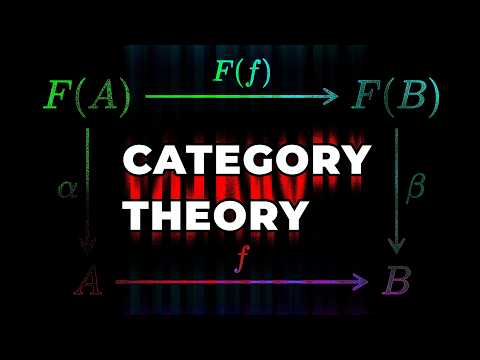
[Algorithmic Convergence]. The gap between symbolic logic and neural networks is closing through category theory. Expect architectures that are "correct by construction" rather than just "likely correct."
[Audit Architecture]. Evaluate new models based on their "algorithmic alignment" rather than just parameter count. Prioritize implementations that bake in non-invertible logic.
The next year will see a shift from scaling data to scaling structural priors. If you aren't thinking about how your model's architecture mirrors the problem's topology, you are just an alchemist in a world about to discover chemistry.
Strategic Implication: The future of software development isn't about *if* we use AI, but *how* we integrate human understanding and architectural discipline to prevent an "infinite software crisis.
Builder/Investor Note: Builders must prioritize deep system understanding and explicit planning over raw generation speed. Investors should favor companies that implement robust human-in-the-loop processes for AI-assisted development.
The "So What?": Over the next 6-12 months, the ability to "see the seams" and manage complexity will differentiate thriving engineering teams from those drowning in unmaintainable, AI-generated code.
Strategic Implication: The market for AI transformation services is expanding rapidly, driven by enterprises seeking to integrate AI for tangible business outcomes.
Builder/Investor Note: Focus on AI solutions with clear, practical applications for mid-market and enterprise clients. Technical talent capable of bridging research with deployment holds significant value.
The "So What?": The next 6-12 months will see increased demand for AI engineers who can implement and scale AI solutions, moving beyond proof-of-concept to widespread adoption.
Compensation Innovation: The traditional compensation playbook for engineers is outdated. New models that directly reward AI-augmented output will attract top talent and drive efficiency.
Builder/Investor Note: Founders should re-evaluate their incentive structures. Investors should seek companies experimenting with these models, as they may achieve outsized productivity.
The "So What?": The productivity gap between AI-augmented and non-AI-augmented engineers will widen. Companies that adapt their incentives will capture disproportionate value in the next 6-12 months.
Strategic Shift: Successful AI integration means identifying and solving *your* organization's specific SDLC bottlenecks, not just boosting code completion.
Builder/Investor Note: Prioritize psychological safety and invest in AI skill development. For builders, this means dedicated learning time; for investors, look for companies that do this well.
The "So What?": The next 6-12 months will separate organizations that merely *adopt* AI from those that *master* its strategic application and measurement, driving real competitive advantage.
Strategic Implication: AI integration is a company-wide transformation, not a feature. Organizations must re-architect processes, tools, and culture to compete.
Builder/Investor Note: Prioritize internal tooling that democratizes AI experimentation. Look for companies establishing "model behavior" as a distinct, cross-functional discipline.
The "So What?": The next 6-12 months will reward builders who bake AI security and user control into product design from day one, recognizing that technical mitigations alone are insufficient.
**Alpha Is Now Risk Management:** In a maturing crypto market, outperformance comes from actively managing gross exposure and utilizing a diverse strategy mix (equities, credit, derivatives), not just holding beta.
**Crypto Credit Offers Unprecedented Asymmetry:** Instruments like convertible bonds on DATs provide credit-like downside protection while retaining crypto-like upside, creating a compelling opportunity for risk-adjusted returns that is often cheaper than replicating with native options.
**The DAT Playbook Is Evolving:** The next cycle’s drama won't just be about token prices. Watch for DATs using leverage, building out their own "yield curves," and the eventual distressed cycle where activists and acquirers step in to capture NAV discounts.
The ETH Rally is an Illusion. Price action is dictated by treasury company flows, not fundamentals. Monitor their stock premium/discount to NAV as a leading indicator for the market top.
Prepare for a "Stupid" Finale. The market is primed for one last FOMO-driven blow-off top. This is the signal to sell into strength, not add risk.
Set Up the Next Home Run. The inevitable crash of treasury company stocks will present a massive opportunity. Prepare to buy these assets at deep discounts (30%+) to NAV when the market panics.
Concentrated Bets on Fundamentals Win. The era of "spray and pray" is over. The new meta is building highly concentrated portfolios (10-15 tokens) based on deep fundamental analysis of protocols with clear revenue models and product-market fit.
Digital Asset Treasuries Are TradFi's On-Ramp. DATs are more than a short-term trade; they are the primary bridge for institutional capital to gain crypto exposure. Their marketing power is proving to be as crucial as their financial engineering.
The 24/7 Market Is Coming. The tokenization of equities isn't a matter of *if* but *when*. This shift will create a fiduciary obligation for funds to move to on-chain assets, forcing a rapid, systemic evolution of financial markets.
**Concentrate on the Winners:** Bitcoin is the established store-of-value asset, and Ethereum is the dominant settlement layer for high-value digital assets. The data shows they have already won their respective categories.
**The Rest is a Long Tail of Risk:** Investing outside of Bitcoin and Ethereum is a bet against powerful, gravity-like market forces. These alternatives are competing for a sliver of the market, increasing their risk of becoming obsolete.
**Power Law is the Rule:** The market isn't about finding the "next" Ethereum; it's about recognizing that power laws are creating a duopoly where the vast majority of value will continue to accrue to the top two assets.
The New Game is Financial Engineering. The market's primary driver is the "Digital Asset Treasury" meta. Bitcoin leverages its "pristine collateral" narrative for debt financing, while Ethereum leverages native yield to justify its premium.
Don't Expect a 2021 Redux. The institutional capital fueling this rally is not here to bid on your favorite altcoin. Their focus is on BTC, ETH, and treasury-related arbitrage, making a widespread, retail-driven altcoin season unlikely.
De-Risk and Secure Profits. After a 3x run, seasoned traders are taking profits on ETH. The consensus is to refuse to round-trip your gains, pay down on-chain debt, and shift to scalping volatility rather than betting on a continued parabolic advance.
**Execution Guarantees Trump EVM Compatibility:** For complex financial products like derivatives, the ability to mathematically prove solvency outweighs the benefits of EVM compatibility, driving the rise of purpose-built L1s.
**Memecoins Are a Macro Indicator:** Don't dismiss memecoins as a distraction. They are a direct, high-beta response to monetary debasement, signaling retail's desperation for returns in a broken financial system.
**The Consumer War Is On:** While Ethereum solidifies its hold on institutional finance, the battle for consumer attention is just beginning. The success of its coordinated L2 strategy will determine if it can reclaim the narrative from chains like Solana.