The transition from general-purpose LLMs to specialized coding agents that operate on the entire codebase rather than isolated snippets.
Audit your current stack for agentic readiness. Prioritize tools that integrate with Gemini 3 or similar high-reasoning models to automate repetitive pull requests.
Code is the substrate of the digital world. If you control the means of AI code generation, you control the speed of innovation for every other industry.
The move from a singular "Universe" view to a "Multiverse" perspective mirrors the transition from centralized monoliths to fragmented, interoperable ecosystems.
Build systems that fail gracefully when hitting Gödelian limits.
Truth is a vast ocean while proof is a small boat. Your roadmap must account for the reality that your system will eventually encounter truths it cannot verify.
The Macro Pivot: Outcome-Based Intelligence. We are moving from AI as a Service to Results as a Service where software value is tied to revenue generation rather than seat licenses.
The Tactical Edge: Verticalize the Data. Build in sectors with non-public outcome data to create a compounding moat that resists commoditization by foundation models.
The winners of 2026 will be those who use AI to solve core human needs for connection and discovery while building defensible, data-rich business models.
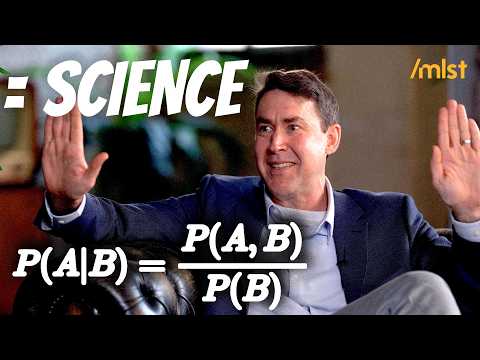
The Macro Transition: Moving from "Big Model" monoliths to "Lots of Little Models" where distributed Bayesian assets represent specific physical objects.
The Tactical Edge: Prioritize "Object-Centered" architectures that track uncertainty. This allows robots to "phone a friend" when encountering novel data.
The LLM era is hitting a wall of implicit representation. The next 12 months belong to those building explicit, causal world models grounded in physics rather than language.
The Macro Trend: The transition from static benchmarks to live human-in-the-loop evaluation. As models saturate fixed tests, the only remaining signal is subjective human preference at scale.
The Tactical Edge: Monitor secret model drops on Arena to spot frontier capabilities before official releases. This provides a lead time advantage for builders choosing their tech stack.
The Bottom Line: Arena is the new kingmaker. If you are building AI products, their expert-tier data is the most reliable map for navigating the frontier.
The move from small models to medium models (15B to 70B) suggests that reasoning capability is outstripping the desire for low-latency edge deployment.
Implement instruction-following re-rankers to prune your context window. This prevents the model from getting confused by irrelevant data.
Stop building toys. The next year belongs to those who can build full agentic systems that handle billions of tokens without losing the plot.
**Alpha Is Now Risk Management:** In a maturing crypto market, outperformance comes from actively managing gross exposure and utilizing a diverse strategy mix (equities, credit, derivatives), not just holding beta.
**Crypto Credit Offers Unprecedented Asymmetry:** Instruments like convertible bonds on DATs provide credit-like downside protection while retaining crypto-like upside, creating a compelling opportunity for risk-adjusted returns that is often cheaper than replicating with native options.
**The DAT Playbook Is Evolving:** The next cycle’s drama won't just be about token prices. Watch for DATs using leverage, building out their own "yield curves," and the eventual distressed cycle where activists and acquirers step in to capture NAV discounts.
The ETH Rally is an Illusion. Price action is dictated by treasury company flows, not fundamentals. Monitor their stock premium/discount to NAV as a leading indicator for the market top.
Prepare for a "Stupid" Finale. The market is primed for one last FOMO-driven blow-off top. This is the signal to sell into strength, not add risk.
Set Up the Next Home Run. The inevitable crash of treasury company stocks will present a massive opportunity. Prepare to buy these assets at deep discounts (30%+) to NAV when the market panics.
Concentrated Bets on Fundamentals Win. The era of "spray and pray" is over. The new meta is building highly concentrated portfolios (10-15 tokens) based on deep fundamental analysis of protocols with clear revenue models and product-market fit.
Digital Asset Treasuries Are TradFi's On-Ramp. DATs are more than a short-term trade; they are the primary bridge for institutional capital to gain crypto exposure. Their marketing power is proving to be as crucial as their financial engineering.
The 24/7 Market Is Coming. The tokenization of equities isn't a matter of *if* but *when*. This shift will create a fiduciary obligation for funds to move to on-chain assets, forcing a rapid, systemic evolution of financial markets.
**Concentrate on the Winners:** Bitcoin is the established store-of-value asset, and Ethereum is the dominant settlement layer for high-value digital assets. The data shows they have already won their respective categories.
**The Rest is a Long Tail of Risk:** Investing outside of Bitcoin and Ethereum is a bet against powerful, gravity-like market forces. These alternatives are competing for a sliver of the market, increasing their risk of becoming obsolete.
**Power Law is the Rule:** The market isn't about finding the "next" Ethereum; it's about recognizing that power laws are creating a duopoly where the vast majority of value will continue to accrue to the top two assets.
The New Game is Financial Engineering. The market's primary driver is the "Digital Asset Treasury" meta. Bitcoin leverages its "pristine collateral" narrative for debt financing, while Ethereum leverages native yield to justify its premium.
Don't Expect a 2021 Redux. The institutional capital fueling this rally is not here to bid on your favorite altcoin. Their focus is on BTC, ETH, and treasury-related arbitrage, making a widespread, retail-driven altcoin season unlikely.
De-Risk and Secure Profits. After a 3x run, seasoned traders are taking profits on ETH. The consensus is to refuse to round-trip your gains, pay down on-chain debt, and shift to scalping volatility rather than betting on a continued parabolic advance.
**Execution Guarantees Trump EVM Compatibility:** For complex financial products like derivatives, the ability to mathematically prove solvency outweighs the benefits of EVM compatibility, driving the rise of purpose-built L1s.
**Memecoins Are a Macro Indicator:** Don't dismiss memecoins as a distraction. They are a direct, high-beta response to monetary debasement, signaling retail's desperation for returns in a broken financial system.
**The Consumer War Is On:** While Ethereum solidifies its hold on institutional finance, the battle for consumer attention is just beginning. The success of its coordinated L2 strategy will determine if it can reclaim the narrative from chains like Solana.