AI is transforming software development from manual coding to agent orchestration, making "building" accessible to anyone with an idea and language. This fundamentally reconfigures the value of traditional programming skills and the entire app economy.
Invest in or build tools that prioritize agent-friendly APIs and CLI interfaces over traditional graphical user interfaces. Future value will accrue to services that seamlessly integrate into an agent's workflow, not just human-facing apps.
Personal AI agents are not just a new tool; they are a new operating system. Expect rapid shifts in user behavior and market demand, favoring platforms and services that empower autonomous AI, making now the time to adapt or be left behind.
AI agents are moving beyond language to autonomous action, fundamentally altering how software is built and consumed. This shift gives individuals the power to create complex systems with natural language, but also demands a new level of security awareness and critical thinking from users.
Embrace agentic engineering by focusing on clear communication and context provision rather than rigid coding. Experiment with open-source agents like OpenClaw to understand their capabilities and limitations firsthand.
The future of software is agent-centric. Investors should eye companies building agent-facing APIs or infrastructure, while builders must adapt their skills to "lead" AI teams. Ignoring this shift means missing the next wave of digital transformation.
The digital world moves from discrete apps to an integrated, agent-orchestrated OS, shifting value to platforms enabling seamless agent interaction.
Builders must pivot to "agentic engineering," focusing on guiding and designing systems for AI agents, mastering prompt engineering and CLI-based tool integration.
Personal AI agents will reshape software and productivity over the next 6-12 months. Investors should back agent infrastructure/API-first services; developers must embrace agent collaboration.
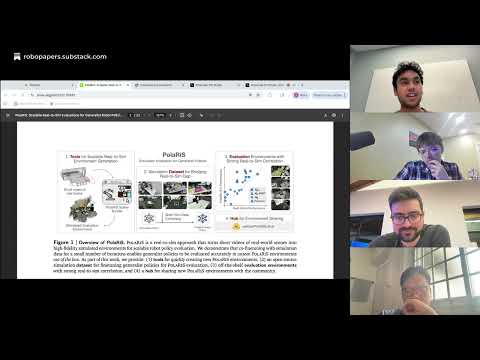
The push for generalist robot policies, akin to foundation models in other AI domains, demands evaluation tools that scale and generalize. PolaRiS directly addresses this by providing a framework for creating diverse, real-world correlated benchmarks, moving robotics beyond task-specific, overfitting evaluations towards true zero-shot generalization testing.
Implement PolaRiS's real-to-sim environment generation and "sim co-training" methodology. This allows for rapid, cost-effective iteration on robot policies with high confidence that improvements in simulation will translate to real-world gains, significantly accelerating development cycles.
For builders and investors, PolaRiS represents a critical infrastructure upgrade for robotics. It de-risks policy development by providing a reliable, scalable testing ground, making the path to deployable, generalist robots faster and more capital-efficient over the next 6-12 months.
The era of "agentic engineering" is here, moving software creation from explicit, line-by-line coding to high-level guidance of autonomous AI agents.
Experiment with agentic workflows now. Set up a local OpenClaw instance, even with free models, and use it to automate tedious tasks or prototype ideas.
Personal AI agents with system-level access are not just productivity tools; they are a new operating system layer that will consume and redefine existing applications.
Invest in companies demonstrating deep vertical integration in AI, custom silicon, and software-defined vehicle architectures. Prioritize those building proprietary data flywheels from large, active fleets.
The automotive industry is undergoing a fundamental re-architecture, moving from hardware-centric, domain-based systems to software-defined, AI-powered platforms. This shift will consolidate market power among vertically integrated players who control their data, compute, and software stack.
Autonomy will be a must-have feature by 2030, akin to airbags today. Companies without a robust, in-house, neural-net-based autonomy strategy and a software-defined architecture will struggle to compete at scale, leading to significant market share shifts in the coming years.
The shift from explicit coding to agentic orchestration means human creativity moves up the stack. Instead of writing every line, builders define intent, guide agents, and curate outcomes, making software creation more accessible and focused on problem-solving.
Invest in understanding agent-native design patterns. Prioritize building CLI-first tools and services that expose clear, composable interfaces, as these will be the foundational blocks for the next generation of AI-driven applications, making your products "agent-friendly" and future-proof.
Personal AI agents are not just productivity tools; they are a new operating system layer. Over the next 6-12 months, expect a rapid re-evaluation of traditional app value, a surge in agent-first infrastructure, and a critical need for robust, user-centric security frameworks as AI moves from language to action, directly impacting your digital strategy and investment thesis.
The rise of autonomous AI agents with system-level access is fundamentally reshaping the software landscape, moving value from traditional app interfaces to underlying APIs and data, and making building accessible for non-programmers.
Invest in infrastructure and tooling that facilitates agent-to-agent communication and robust CLI-based skill development, as this will be the new battleground for software functionality and integration.
The next 6-12 months will see increased adoption of agentic workflows, compelling companies to re-evaluate their product strategies towards API-first designs and human-centric "delight" to stay relevant as AI agents handle most functional tasks.
Survive First, Profit Later. The market always presents new opportunities, but only for those who preserve capital. Avoid leverage and hold significant stablecoin allocations to capitalize on moments of extreme fear, not become a victim of them.
Find Your Asymmetric Edge: Farm, Don't Buy. Retail investors cannot out-trade funds with insider information. The real edge is in airdrop farming—getting into promising protocols early and selling the token to the masses who buy on inflated centralized exchange listings.
The Altcoin Reckoning is Here. The belief that a rising Bitcoin lifts all boats is a dangerous assumption. Most alts are overvalued and lack a fundamental thesis beyond momentum. Prepare for a future where Bitcoin grinds higher while most of the altcoin market bleeds out.
Founder Vision Outweighs Everything. Polymarket’s story proves that a founder with an unwavering, maniacal vision can overcome technical hurdles, regulatory threats, and brutal bear markets. Shane won by being an unstoppable evangelist.
Abstraction Is the Key to Mass Adoption. The best crypto apps don't feel like crypto apps. Polymarket’s success comes from hiding the blockchain complexity, a lesson for every builder aiming for mainstream relevance.
Bet on Second-Order Effects. The surge in BNB isn't about BSC's tech; it's a proxy bet on CZ's return. Smart investors look past the immediate narrative to trade the powerful undercurrents shaping the market.
Security Through Adversity: Targon’s "PTSD" from battling malicious miners forced them to build a cryptographically secure compute layer using TEEs, making their platform more resilient than siloed, trusted alternatives.
DeFi Meets DePIN: They are building a transparent financial market for compute, complete with order books and derivatives. The goal isn’t just to rent GPUs; it’s to create the pricing infrastructure for the entire compute economy.
The Foundational Layer: Targon is providing a verifiable, secure, and cost-effective compute service that other BitTensor subnets can build upon, potentially supercharging the entire network’s growth and competitive advantage.
**The L1 War Is Won.** Don't bet on new L1s. The network effects, developer mindshare, and ecosystem infrastructure of chains like Solana and Base have created an insurmountable moat.
**DATs Are the Trojan Horse for TradFi.** Digital Asset Treasury companies are the key to unlocking Wall Street capital. Expect Solana DATs to drive a massive TVL re-rating in 2026 as their superior yield generation becomes undeniable.
**SOL to $2,000 Is the Base Case.** This price target isn't based on meme-fueled hype, but on a model where Solana captures just 10% of the projected multi-trillion-dollar tokenized asset market by 2030.
Regulation by Exhaustion: The SEC's primary weapon was not legal action but a relentless process designed to drain builders' time, energy, and will to continue.
The Target Is Always Moving: Regulators will continuously shift their focus—from token to revenue to the product itself—until they find a viable angle of attack.
Innovation Was the Real Target: This "shotgun approach" against hundreds of projects was a de facto industry crackdown that successfully chased many legitimate builders away, achieving a policy goal without ever going to court.
Stop Pricing in Fiat: The BTC/Gold ratio is the clearest signal of Bitcoin’s fundamental adoption, stripping away the distortion of dollar debasement.
Mean Reversion Points to $150k+: The established BTC/Gold trend channel since 2023 is screaming higher. A simple return to the channel’s midpoint targets a $150k–$160k Bitcoin price by year-end.
Gold's Rally is Bitcoin's Tailwind: Gold’s new role as a de-dollarization hedge for nations and the subsequent portfolio rebalancing from gold profits into BTC create powerful dual-demand drivers for Bitcoin.