Strategic Implication: The next decade will be defined by who builds the core infrastructure for intelligence. This is where the most significant value and influence will accrue.
Builder/Investor Note: Direct capital and talent towards foundational AI components—chips, models, and interoperable systems. Avoid the temptation to only build at the application layer.
The So What?: The window for shaping the future of intelligence is now. Engage in the deepest, most complex challenges to secure a footprint in this new era.
Strategic Implication: The global AI race is a zero-sum game for foundational models. Europe's best strategy is a "smart second mover" approach, focusing on the implementation layer by ensuring interoperability and data portability.
Builder/Investor Note: Invest in AI that achieves true autonomy and enhances expert productivity. Be wary of markets stifled by over-regulation, which can impede AI adoption and growth.
The "So What?": Europe faces a critical juncture. Without embracing AI-driven growth, its demographic and debt problems will worsen, leading to higher interest rates without the corresponding economic expansion.
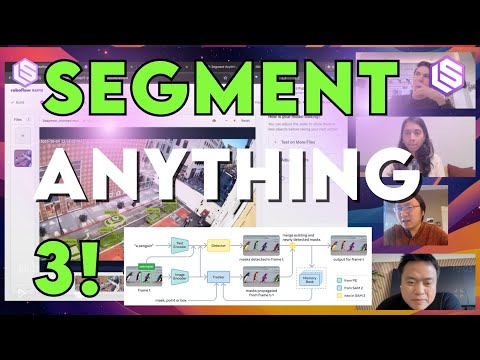
Vision AI Democratization: SAM 3 lowers the barrier for sophisticated vision tasks, making advanced segmentation and tracking accessible for a wider range of applications.
Builder/Investor Note: Focus on domain-specific adaptations and tooling that enhance human-AI interaction for ambiguous visual concepts. The "last mile" of user intent is a key differentiator.
The "So What?": SAM 3 accelerates the development of multimodal AI, particularly in robotics and video analysis, by providing a robust, scalable visual foundation for the next generation of intelligent systems.
Strategic Shift: The next frontier in robotics is less about pure algorithmic breakthroughs and more about building robust, scalable data infrastructure and full-stack product systems that can handle the messy physical world.
Builder/Investor Note: Prioritize companies solving the "boring" but critical data and systems problems. Look for practical, "scrappy" companies deploying robots in specific industrial niches, rather than just those with flashy, general-purpose demos.
The "So What?": The gap between impressive demos and deployable products will narrow over the next 6-12 months as data pipelines mature and product-focused companies gain traction. Expect to see more robust, self-correcting robots performing longer, more complex tasks in controlled environments.
Ecosystem Dominance: NVIDIA's strategy extends beyond hardware; they are building an end-to-end ecosystem of software, open-source models, and direct support, making them indispensable for national AI initiatives.
Builder Opportunity: Leverage NVIDIA's open-source Blueprints for agentic AI and Nemotron models for high-performance, customizable solutions. Prioritize local context in model training and data.
Strategic Imperative: Sovereign AI is a growing global trend. Nations and companies that can build and control AI tailored to their specific cultural, linguistic, and regulatory environments will gain a significant advantage in the coming years.
The democratization of RL fine-tuning will accelerate the development and deployment of more reliable and sophisticated AI agents across industries.
Builders should explore open-source LLMs combined with RL fine-tuning as a cost-effective strategy to achieve specific performance benchmarks, especially where latency and cost are critical.
Platforms abstracting infrastructure complexity and providing integrated tooling for the entire AI development lifecycle are crucial for the next phase of AI agent deployment.
Pre-Training is the New Frontier: The next leap in AI capabilities, particularly for agentic systems, will come from fundamental advancements in pre-training, not just post-training tweaks.
Builders & Investors: Focus on teams rethinking loss objectives, curating high-quality reasoning data, and developing dynamic benchmarks for agentic capabilities. Be wary of "agentic" claims that lack foundational pre-training innovation.
The "So What?": Over the next 6-12 months, expect a push for new benchmarks and data strategies that explicitly train models for multi-step planning, long-form reasoning, and error recovery, moving beyond simple next-token prediction.
Strategic Implication: AI fundamentally changes the economics of software development. Organizations must re-evaluate what constitutes "high-quality" engineering and adapt their processes.
Builder/Investor Note: Prioritize platforms that provide guardrails and guidance for AI tool usage, focusing on deterministic verification and robust testing. Uncontrolled AI deployment risks technical debt.
The "So What?": The next 6-12 months will see a bifurcation: companies that strategically integrate AI into their engineering culture and platforms will gain significant efficiency, while those that don't will struggle with quality and adoption.
Workflow Automation is the New Frontier: The real value of AI in developer tools comes from orchestrating entire workflows, not just individual point solutions.
Embed for Adoption: Tools must integrate seamlessly into existing workflows and IDEs (like Cursor) to achieve high usage.
Support as a Code-Shipping Powerhouse: Empowering non-traditional roles with AI-driven code generation leverages their unique, real-time context, creating significant operational leverage.
Embrace Financial Autonomy: Athletes are adopting crypto not just for gains, but for control. They are tired of a financial system where they are told to "shut your mouth and go play basketball" while trusting strangers with their money.
Regulation is a Two-Front War: The crypto industry must fight defensively to protect wins like stablecoin rewards while also playing offense to ensure new regulations don't stifle DeFi innovation before it can mature.
Prediction Markets are Information Markets: Their true disruption isn't just taking on FanDuel; it's creating a more efficient, decentralized, and transparent way to surface truth in real-time, for everything from sports to politics.
**Buy the Blood:** Massive open interest liquidations have historically been powerful buy signals, not a reason to panic. The data shows strong positive returns in the 30-120 days following such events.
**Invest in Token Factories:** The convergence of AI and crypto is creating a new paradigm. The most valuable companies will be those that control proprietary "token supplies" for identity, data, and assets, making the world machine-readable.
**Pick Your Winners:** The market is maturing. As barriers to entry rise, capital will consolidate around established leaders. Shift focus from chasing the "next new thing" to identifying compounding winners in categories like L1s and exchanges.
Capital Formation is the New Battleground: Coinbase’s Echo deal is a $400M bet to own the token launch pipeline, directly challenging Binance's Launchpad dominance.
Banks are Officially on Defense: The Fed’s "skinny master account" proposal threatens to let fintechs bypass banks entirely, a disruption so real that bank CEOs are publicly admitting innovators will win.
Prediction Markets are Going Mainstream: DraftKings' partnership with Polymarket validates the model as a legitimate workaround for complex state-level gambling laws, signaling a massive new distribution channel.
Sell the News, Buy the Self-Own. Eclipse’s price action demonstrates that in crypto, counter-narrative marketing can be more effective than traditional hype. When a project publicly acknowledges its own failures, it can signal a market bottom.
Culture is Strategy. The contrast between Ethereum’s perceived complacency and Solana’s hungry underdog ethos directly impacts developer incentives and innovation speed. Ecosystems with a clear, aggressive mission attract and retain talent differently.
Watch the SKR Token. As only the second token from Solana Labs, the SKR launch carries significant reputational weight. Investors should monitor its mechanics, as it will likely set a new standard for ecosystem projects launched by a parent company.
Fade the Cycle Narrative: The influx of new, cycle-agnostic capital via ETFs means the market's rhythm has changed. Sideways price action is the new up, signaling strong demand is absorbing OG selling.
Buy Picks, Shovels, and Yield: The era of riding hyped, valueless memecoins is over. The durable strategy is to own the infrastructure (Robin Hood) or assets that generate and return real fees to holders (Shuffle, Aerodrome).
Arbitrage Information Gaps: Find your edge in niche markets. Exploitable alpha exists in prediction markets, whether through contrarian betting, language advantages, or AI-powered analysis.
Stablecoins Are The Trojan Horse. They have achieved undeniable product-market fit, rivaling legacy payment rails and becoming a key tool for U.S. dollar dominance. They are the gateway for both institutional players and everyday users in emerging markets.
Usage is Divorced From Speculation. For the first time, practical on-chain activity is being driven by users in developing nations who *need* crypto, while speculation is led by those in developed nations who *want* it. The next bull run will be driven by products that bridge this divide.
The Bottleneck is No Longer Technology. With scalability largely solved (blockchains now process over 3,400 TPS), the primary barriers to adoption have shifted from infrastructure to product design, user experience, and regulatory clarity.