The Macro Shift: Scaling laws are hitting a diminishing return on raw data but a massive acceleration in reasoning. The shift from statistical matching to reasoning agents happens when models can recursively check their own logic.
The Tactical Edge: Build for the agentic future by prioritizing high-context data pipelines. Models perform better when you provide massive context rather than relying on zero-shot inference.
The Bottom Line: We are 24 months away from AI that makes unassisted human thought look like navigating London without a map. Prepare for a world where the most valuable skill is directing machine agency rather than performing manual logic.
The transition from model-centric to loop-centric development. Performance is now a function of the feedback cycle rather than just the weights of the frontier model.
Implement an LLM-as-a-judge step that outputs a "Reason for Failure" field. Feed this string directly into a meta-prompt to update your agent's system instructions automatically.
Static prompts are technical debt. Teams that build automated systems to iterate on their agent's instructions will outpace those waiting for the next model training run.
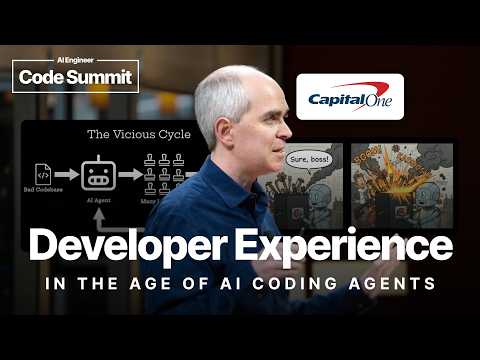
The Macro Shift: The transition from writing to reviewing as the primary engineering activity. As agents generate more code, the human role moves from creator to editor.
The Tactical Edge: Build CLIs for every internal tool to give agents a native text interface. This increases accuracy and speed compared to visual automation.
The Bottom Line: Developer experience is the infrastructure for AI. Investing in clean code and fast feedback loops is the only way to ensure AI productivity gains do not decay over the next 12 months.
The Capability-Productivity Gap. We are entering a period where model intelligence outpaces our ability to integrate it into high stakes production.
Audit your stack. Identify tasks where "good enough" generation is a win versus high context tasks where AI is currently a net negative.
Do not mistake a climbing benchmark for a finished product. For the next year, the biggest wins are not in smarter models but in better verification loops.
The transition from simple Large Language Models to Reasoning Models marks the end of the stochastic parrot era.
Build agentic workflows that utilize high-context windows for recursive problem solving.
We are moving toward a world where intelligence is a commodity. Your value will shift from knowing things to directing outcomes over the next 12 months.
The Macro Pivot: Agentic Abstraction. As the cost of logic hits zero, the value of a developer moves from how to build to what to build.
The Tactical Edge: Adopt Orchestrators. Replace your standard editor with agent-first platforms today to learn the art of directing sub-agents before the 2026 deadline.
The Bottom Line: The next 12 months will reward those who stop writing code and start building the systems that write it for them.
The Macro Movement: The Token Deflation. As compute becomes a commodity, the value of the "Human-in-the-Loop" moves from production to architectural oversight.
The Tactical Edge: Implement Code Maps. Use AI to index and understand your entire repository to ensure every generated line aligns with existing logic.
The Bottom Line: The next year belongs to the "Taste-Driven Developer." If you optimize for volume, you produce slop; if you optimize for accountability, you build a moat.
The Macro Shift: Software development is moving from human-led logic to agent-led verification.
The Tactical Edge: Use sub-agents to isolate testing from creation to prevent context pollution.
The Bottom Line: The technical barrier is evaporating. In the next 12 months, the winning platforms will be those that require the fewest technical decisions from the user.
AI Is The Only Game In Town: The crypto market is currently a passenger in a macro environment dictated by AI. Until that capital rotation shifts, crypto will likely remain highly correlated and susceptible to sell-offs when equities show weakness.
Bitcoin’s Handover Is Bullish: Don't mistake consolidation for a bear market. Bitcoin is undergoing a healthy ownership transfer from early believers to new institutions, building a stronger, deeper foundation for its next leg up.
Decentralization Is About Coercion, Not Paralysis: The ability of a chain’s validators to collectively intervene in a catastrophic hack is a feature, not a bug. True decentralization is measured by a network's ability to resist external pressure, not its inability to make collective decisions.
System Over Gut. Max’s systematic models correctly identified the top and signaled a buy on the recent dip. In volatile markets, outsourcing conviction to an algorithm removes emotion and highlights clear entry/exit points.
Turn Losses Into Liquidity. Jonah’s CryptoPunk sale demonstrates a crucial strategy: use tax-loss harvesting to turn underwater positions into immediate, deployable capital. A paper loss can become a real financial gain.
Watch Politics, Not Just Charts. The biggest long-term threat to your portfolio isn’t a broken chart pattern; it’s a political paradigm shift. The rise of redistributionism is a slow-burn risk that could eventually dwarf any market cycle.
ETH's Value is Foundational, Not Fickle. The core investment thesis is ETH as the digital economy's pristine collateral and store of value. Network revenue is just the icing on the cake.
The Real Work is Boring (and Bullish). The next phase of growth depends on integrating Ethereum into the mundane back-office operations of TradFi. This is the key to irreversible adoption.
Privacy is the Next Frontier. Compliant, ZK-powered privacy is the final gateway required to bring massive institutional capital on-chain.
OGs are cashing out. Heavy selling pressure above $120k comes from early Bitcoin whales transferring wealth to "fair-weather" DAT holders, creating a fragile market structure.
Politics now dictate portfolio risk. Zohran Mamdani’s rise signals a shift to redistributionist politics. If this trend goes national, it’s a clear signal to liquidate assets, as redistribution historically crushes asset prices.
Invest in clean assets with real yield. In a market saturated with VC-owned tokens, assets like Hyperliquid (HYPE) stand out due to their airdrop-only distribution and fee-driven buy-and-burn mechanism, creating a direct link between platform usage and token value.
**Privacy Isn't a Feature; It's the Foundation.** For institutions, confidentiality is non-negotiable. Any network aiming to attract serious capital must offer privacy that allows for compliance without broadcasting every move to the world.
**Real Adoption Is a Long Game.** Chasing bull market hype is a losing strategy for enterprise adoption. Canton’s success with partners like Goldman Sachs, DTCC, and Citadel demonstrates the power of prioritizing utility and compliance over a premature token launch.
**The Next Wave Is Tokenizing Everything.** The goal is to move beyond crypto-native assets. The real prize is upgrading the rails for the world's existing financial system—equities, bonds, and treasuries—by making them digitally native, 24/7, and instantly settleable.
Focus or Fade. As the industry matures, companies must shed non-core business units to become world-class at one thing. For Blockworks, that's data, not news.
Buy the Theme. Public market investors will pay a massive premium for the only stock representing a major crypto trend (e.g., Securitize for tokenization), often making it a better trade than trying to pick winners among underlying assets.
Growth is Subsidized. Major L1/L2 foundations are actively paying for enterprise adoption (e.g., Solana and Western Union). This is a standard business practice to kickstart network effects, but the long-term ROI remains unproven.