Strategic Implication: The next decade will be defined by who builds the core infrastructure for intelligence. This is where the most significant value and influence will accrue.
Builder/Investor Note: Direct capital and talent towards foundational AI components—chips, models, and interoperable systems. Avoid the temptation to only build at the application layer.
The So What?: The window for shaping the future of intelligence is now. Engage in the deepest, most complex challenges to secure a footprint in this new era.
Strategic Implication: The global AI race is a zero-sum game for foundational models. Europe's best strategy is a "smart second mover" approach, focusing on the implementation layer by ensuring interoperability and data portability.
Builder/Investor Note: Invest in AI that achieves true autonomy and enhances expert productivity. Be wary of markets stifled by over-regulation, which can impede AI adoption and growth.
The "So What?": Europe faces a critical juncture. Without embracing AI-driven growth, its demographic and debt problems will worsen, leading to higher interest rates without the corresponding economic expansion.
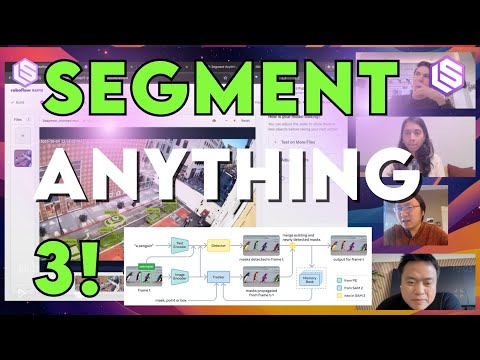
Vision AI Democratization: SAM 3 lowers the barrier for sophisticated vision tasks, making advanced segmentation and tracking accessible for a wider range of applications.
Builder/Investor Note: Focus on domain-specific adaptations and tooling that enhance human-AI interaction for ambiguous visual concepts. The "last mile" of user intent is a key differentiator.
The "So What?": SAM 3 accelerates the development of multimodal AI, particularly in robotics and video analysis, by providing a robust, scalable visual foundation for the next generation of intelligent systems.
Strategic Shift: The next frontier in robotics is less about pure algorithmic breakthroughs and more about building robust, scalable data infrastructure and full-stack product systems that can handle the messy physical world.
Builder/Investor Note: Prioritize companies solving the "boring" but critical data and systems problems. Look for practical, "scrappy" companies deploying robots in specific industrial niches, rather than just those with flashy, general-purpose demos.
The "So What?": The gap between impressive demos and deployable products will narrow over the next 6-12 months as data pipelines mature and product-focused companies gain traction. Expect to see more robust, self-correcting robots performing longer, more complex tasks in controlled environments.
Ecosystem Dominance: NVIDIA's strategy extends beyond hardware; they are building an end-to-end ecosystem of software, open-source models, and direct support, making them indispensable for national AI initiatives.
Builder Opportunity: Leverage NVIDIA's open-source Blueprints for agentic AI and Nemotron models for high-performance, customizable solutions. Prioritize local context in model training and data.
Strategic Imperative: Sovereign AI is a growing global trend. Nations and companies that can build and control AI tailored to their specific cultural, linguistic, and regulatory environments will gain a significant advantage in the coming years.
The democratization of RL fine-tuning will accelerate the development and deployment of more reliable and sophisticated AI agents across industries.
Builders should explore open-source LLMs combined with RL fine-tuning as a cost-effective strategy to achieve specific performance benchmarks, especially where latency and cost are critical.
Platforms abstracting infrastructure complexity and providing integrated tooling for the entire AI development lifecycle are crucial for the next phase of AI agent deployment.
Pre-Training is the New Frontier: The next leap in AI capabilities, particularly for agentic systems, will come from fundamental advancements in pre-training, not just post-training tweaks.
Builders & Investors: Focus on teams rethinking loss objectives, curating high-quality reasoning data, and developing dynamic benchmarks for agentic capabilities. Be wary of "agentic" claims that lack foundational pre-training innovation.
The "So What?": Over the next 6-12 months, expect a push for new benchmarks and data strategies that explicitly train models for multi-step planning, long-form reasoning, and error recovery, moving beyond simple next-token prediction.
Strategic Implication: AI fundamentally changes the economics of software development. Organizations must re-evaluate what constitutes "high-quality" engineering and adapt their processes.
Builder/Investor Note: Prioritize platforms that provide guardrails and guidance for AI tool usage, focusing on deterministic verification and robust testing. Uncontrolled AI deployment risks technical debt.
The "So What?": The next 6-12 months will see a bifurcation: companies that strategically integrate AI into their engineering culture and platforms will gain significant efficiency, while those that don't will struggle with quality and adoption.
Workflow Automation is the New Frontier: The real value of AI in developer tools comes from orchestrating entire workflows, not just individual point solutions.
Embed for Adoption: Tools must integrate seamlessly into existing workflows and IDEs (like Cursor) to achieve high usage.
Support as a Code-Shipping Powerhouse: Empowering non-traditional roles with AI-driven code generation leverages their unique, real-time context, creating significant operational leverage.
The Old Playbooks Are Obsolete. This isn't your 2021 bull run. The four-year cycle is broken, institutional flows have altered market dynamics, and historical patterns are no longer reliable predictors of future performance.
Ethereum Is Entering Hyper-Scale. A relentless upgrade cadence is simultaneously scaling both L1 (via gas limit increases) and L2s (via blob scaling), even before the ZK revolution delivers another 100x+ throughput boost to the mainnet.
Adaptability Is the Ultimate Security. Existential threats like quantum computing are moving from science fiction to near-term reality. Ethereum's culture of continuous improvement is its greatest defense, while chains resistant to change face a brewing crisis.
**ETH is Overvalued and Avoidable.** Its fundamentals do not justify its sky-high valuation. View it as a flawed asset, not a mandatory portfolio holding for crypto investors.
**Farm, Don't Trade.** The most reliable retail edge isn't trading, but airdrop farming. It allows you to acquire assets from overvalued launches without providing exit liquidity.
**Cash is a Position.** In a market defined by negative reflexivity and dwindling liquidity, the winning strategy is capital preservation. Avoid the casino, raise cash, and wait for the market to present clear, undervalued opportunities.
Stop Obsessing Over the Halving. The four-year cycle is a narrative, not a driver. The real signal is the macro business cycle, driven by debt refinancing and central bank liquidity. Track the ISM index: historically, buying below 50 and selling above 57 has been a winning strategy.
Invest in Networks, Not Spreadsheets. Value crypto protocols based on network effects (active users and transaction value), not discounted cash flows. The long-term bet is on the growth of the network itself, as this is where wealth has compounded most dramatically.
Survive to Compound. Structure your portfolio to withstand volatility. Have external cash flow so you’re never a forced seller, and take "lifestyle chips" off the table during rallies to manage psychological stress. Drawdowns are a feature, not a bug—use them to add to your long-term positions.
**The Trend is Up, The Cycle is Peaking.** Relentless government spending ensures long-term monetary inflation, making assets like Bitcoin and gold essential core holdings. However, the 65-month cycle is nearing its peak, signaling a time to reduce risk and prepare for turbulence.
**Own Both Sides of the Capital War.** The future is a bipolar monetary world. An optimal portfolio holds both Bitcoin (representing the US digital collateral system) and gold (representing China’s hard money strategy) to hedge against persistent inflation from both sides.
**Watch the Repo Market for the Spark.** The immediate flashing red light is in the repo markets, where interest rate spreads are blowing out. An unwind of leveraged positions here could be the catalyst that ends the current cycle, creating a prime buying opportunity for patient, long-term investors.
Fundamentals Are Coming Home to Roost. Valuations for Layer 1s are untethered from reality. Scrutinize value-capture mechanisms and stop treating staking rewards as revenue.
Follow the Smart Money's Feet, Not Their Mouths. While headlines scream adoption, crypto VCs are quietly pivoting to AI and fintech. This "disbelief" phase in venture often precedes a broader market bottom.
Macro Is the Main Character. Crypto is still on the far end of the risk curve. The sell-off is a macro-driven flight to safety, not a crypto-specific crisis. Until liquidity returns, expect continued correlation with traditional markets.
The Four-Year Cycle is Dead. The market is no longer driven by simple cyclical hype. Macro headwinds and competition for attention from AI mean investors must focus on projects with demonstrable utility, not just memetic potential.
Ethereum Gets Pragmatic. The Ethereum ecosystem is ditching idealism for execution, re-focusing on scaling its core infrastructure (L1) and building products with clear, real-world use cases for both consumers and institutions.
Institutions are Buying the Dip. Don't mistake retail fear for institutional exit. From Harvard's massive ETF allocation to Kraken's IPO plans, smart money is using the downturn to secure its position in the industry's foundational layers.