Semantic Shift: The future of AI in code moves from text generation to deep semantic understanding and execution simulation.
Builder Opportunity: Develop next-generation debugging tools and code agents that leverage internal simulation for faster, more efficient development cycles.
Investor Focus: Prioritize models and platforms that demonstrate explicit execution modeling, as this capability will redefine software development and create new market leaders.
Infrastructure Shift: AI-driven kernel optimization addresses a critical bottleneck in scaling AI compute, enabling more efficient use of diverse hardware.
Builder/Investor Note: Focus on solutions with robust, hardware-verified performance metrics and a clear human-in-the-loop strategy. AI is a powerful tool for automating optimization, not a magic bullet for novel algorithmic breakthroughs.
The "So What?": This technology frees expert engineers from tedious optimization, allowing them to focus on higher-level research and truly innovative algorithmic design, accelerating the pace of AI development in the next 6-12 months.
Strategic Implication: The era of "free money" inflated the number of perceived compounders; a return to positive real rates demands a sharper focus on businesses demonstrating genuine financial discipline and competitive advantage.
Builder/Investor Note: Seek out "Act 2" entrepreneurs and companies that can leverage AI to transform existing physical or IP-based advantages, not just create new AI products. Be prepared to buy more when market sentiment turns negative on strong businesses.
The "So What?": The next 6-12 months will differentiate companies that merely adopt AI from those that strategically integrate it to build durable, uncatchable cost and distribution advantages.
The Future of Policing is Intelligent: Integrating AI, drones, and smart cameras creates a precise, accountable, and safer policing model for both officers and communities.
Invest in the "How": Builders and investors should focus on technologies that enhance certainty of capture, streamline judicial processes, and support public-private partnerships to modernize urban safety infrastructure.
Safety Fuels Mobility: Eliminating crime is not just about law enforcement; it's about restoring the fundamental safety required for economic mobility and a functional society.
Strategic Implication: The next decade's value will accrue to those building foundational AI infrastructure and the "invisible layers" that connect intelligent systems.
Builder/Investor Note: Focus capital and talent on core AI models, specialized domain intelligence, and the underlying computational fabric. Superficial applications risk rapid commoditization.
The So What?: This is the defining period for the architecture of global intelligence. Participation now determines future influence and relevance.
Strategic Shift: AI security must move beyond superficial guardrails to a full-stack, offensive red-teaming approach that accounts for the expanding attack surface of AI agents and their tool access.
Builder/Investor Note: Builders should prioritize integrating offensive security early in development. Investors should be wary of "security theater" and favor solutions that embrace open-source collaboration and address the entire AI application stack.
The "So What?": The accelerating pace of AI development means static security solutions will quickly become obsolete. Proactive, community-driven, and full-stack security research is essential for navigating the next 6-12 months of AI evolution.
Data Infrastructure is the Next Bottleneck: The physical AI sector's growth hinges on specialized data tooling that can handle multimodal, multi-rate, episodic data, moving beyond traditional tabular models.
Builders, Prioritize Robustness: Focus on building systems that handle real-world variability and simplify data pipelines. Leverage open-source tools and consider combining imitation and reinforcement learning.
The "So What?": The next 6-12 months will see significant improvements in robot robustness and the ability to perform longer, more complex tasks. This progress will be driven by better data management, making the gap between lab demos and deployable products narrower.
The democratization of RL for LLMs will accelerate the deployment of more reliable and sophisticated AI agents across industries.
Builders should move beyond basic prompt engineering and RAG. RL fine-tuning, now accessible via W&B Serverless RL, is a critical next step for high-stakes agentic applications.
For the next 6-12 months, expect a surge in production-grade AI agents, with open-source models increasingly closing the performance gap with proprietary alternatives through advanced fine-tuning.
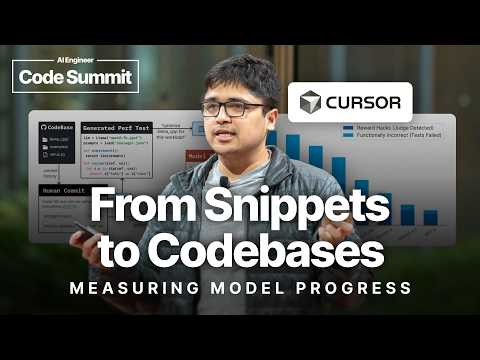
Dynamic Evaluation is Non-Negotiable: Static benchmarks are dead. Future AI development demands continuously updated, contamination-resistant evaluation sets.
AI Needs AI to Judge AI: As models grow more sophisticated, LLM-driven "hack detectors" become essential for ensuring code quality and preventing adversarial exploitation of evaluation systems.
User Experience Drives Adoption: For interactive AI coding tools, prioritize low latency and human-centric design; technical prowess alone will not guarantee real-world usage.
Privacy Intents Beat Liquidity Fragmentation: Aztec’s architecture blankets existing Ethereum DeFi with privacy, bypassing the need to bootstrap a siloed ecosystem and turning it into a universal privacy utility layer.
ZK Passport Is Web3's Answer to AI Deepfakes: By leveraging hardware-level passport verification, ZK Passport offers a cryptographically secure solution to identity verification, enabling compliant privacy without trusting intermediaries.
Decentralization Is a Baseline Requirement: Aztec is launching as a fully decentralized L2, arguing that for a privacy network, neutrality and censorship resistance are not future goals but non-negotiable starting conditions.
Leverage is the Real Trigger. The BOJ pivot was just the spark. The crypto market’s bonfire was fueled by excessive leverage, turning a macro ripple into a tidal wave and signaling a broader rotation from high-beta assets to value.
Narrative Trumps Fundamentals (For Now). MicroStrategy’s CEO stated a basic corporate finance reality—they’d sell BTC if required to service debt—and the market tanked. This proves that in retail-driven markets, violating the "diamond hands" story is more damaging than a weak balance sheet.
TradFi's Glass House. While legacy finance lobbies against crypto’s perceived risks, its own critical infrastructure is failing due to mundane issues like a broken air conditioner, making a powerful, real-time case for decentralized resilience.
Leverage is the Accelerant: The market's violent reaction to predictable macro news reveals a system still prone to painful, cascading deleveraging events driven by over-leveraged players.
Narratives are Fragile Assets: MicroStrategy’s stumble shows that in crypto, narrative integrity is as critical as financial solvency. A violation can trigger sell-offs regardless of underlying fundamentals.
Old Systems Break While New Ones are Built: The CME outage is a powerful, real-time advertisement for decentralized alternatives, underscoring TradFi's fragility even as its gatekeepers resist change.
Macro is Back in Charge. The era of cheap leverage is facing a global reckoning, with the unwind of the Yen Carry Trade serving as a key trigger. High-beta assets like crypto are the first to feel the pain.
Narrative Trumps Numbers. MicroStrategy's dip wasn't about math; it was about breaking a story. In crypto, violating a core community belief can be more damaging than a weak earnings report.
TradFi's Fragility is Crypto's Calling Card. While crypto fends off FUD, a major institution like the CME went offline for 10 hours due to a failed air conditioner. This is a powerful, real-world advertisement for decentralized resilience.
High-Beta is a Crowded Trade: Crypto, alongside assets like uranium and quantum stocks, is being sold off in unison as investors rotate into value stocks. In this defensive environment, expect Bitcoin to outperform altcoins.
Narrative Trumps Fundamentals (For Now): MicroStrategy’s stock plunged not on a fundamental crisis but on the CEO admitting they *might* sell Bitcoin in a corner case—a direct violation of their "never sell" narrative.
Don't Fight the Central Banks: The BOJ’s tightening signal was the trigger for the dump. Conversely, the Fed's expected rate cuts and potential for future dovish leadership remain the key bullish catalysts to watch.
DEXes Are Winning by Default: The sheer volume of new, on-chain-only tokens is an unstoppable force driving users to DEXes. Centralized exchanges can either integrate or become irrelevant for the long tail of assets.
The Real Money is in the Rails: Don't focus on who will issue the next dominant stablecoin. The biggest opportunity lies in building the interoperability infrastructure that will connect the coming flood of branded, corporate, and national stablecoins.
Bitcoin's Ultimate Bull Case is Geopolitical: In a world of fragmenting currencies and rising geopolitical tensions, Bitcoin's status as a non-sovereign, politically neutral asset makes it the ultimate contender for a global reserve currency.