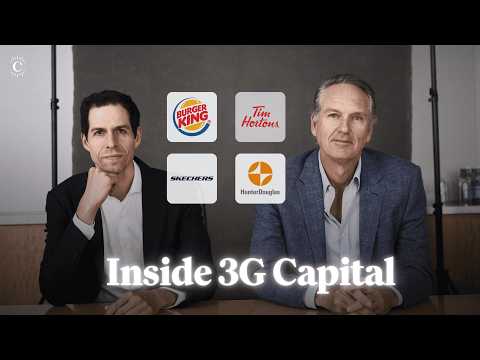
3G commits to one investment per fund, deploying significant internal capital alongside partners. This focus allows for rigorous downside analysis and patience, ensuring only truly exceptional businesses are acquired.
3G partners are seasoned operators who step into businesses, aligning incentives with ownership. This hands-on approach ensures decisions serve the business's long-term health, not just short-term management goals.
3G prioritizes businesses that directly own their customer relationships, like Burger King or Hunter Douglas. This direct connection reduces disintermediation risk from retailers or new technologies.
As capital markets become increasingly efficient and competitive, the edge moves from financial engineering to deep operational expertise and long-term, owner-aligned management.
Prioritize identifying and enabling high-potential individuals early in their careers, granting them significant responsibility and ownership.
Disciplined focus, patient relationship building, and an unwavering commitment to operational excellence in established, defensible businesses can still yield generational wealth.
The Macro Trend: In a world obsessed with digital disruption, 3G Capital's success with "atoms over bits" businesses highlights a strategic pivot: enduring value often resides in established brands with proprietary customer relationships, where operational excellence and long-term thinking create moats against fleeting tech trends.
The Tactical Edge: Identify businesses with strong, direct customer relationships and a clear path for operational improvement, even if they appear "boring." Prioritize deep, hands-on involvement to drive value, rather than relying solely on financial engineering.
The Bottom Line: The future of outsized returns may not be in chasing the next big tech wave, but in patiently acquiring and meticulously operating businesses that own their customer relationships, leveraging technology to enhance, not redefine, their core value. This strategy offers a more predictable, less volatile path to compounding capital.
The Macro Shift: In a world obsessed with digital disruption, 3G Capital's success highlights the enduring power of "hard" businesses with strong customer relationships. Their focus on foundational consumer brands, managed by operator-investors who prioritize long-term ownership and disciplined execution, offers a robust counter-narrative to the "bits over atoms" trend.
The Tactical Edge: Cultivate an extreme ownership culture by aligning incentives deeply, empowering young talent with real responsibility, and fostering a relentless bias for action.
The Bottom Line: For investors and builders, the lesson is clear: patience, deep operational involvement, and a fanatical focus on talent in defensible, "boring" businesses can yield extraordinary, long-term value, even in expensive markets.
Extreme Focus: 3G Capital commits to one investment per fund, deploying significant internal capital alongside partners. This singular focus forces rigorous downside analysis and patience, ensuring they only pursue truly exceptional opportunities.
Owner Operators: 3G partners are seasoned operators who step into businesses, aligning incentives with ownership. This means leaders act like shareholders, making decisions for the business's long-term health, not just short-term management goals.
Disruption Defense: 3G prioritizes businesses with strong customer relationships and physical components, making them less susceptible to digital disintermediation. They seek enduring brands like Hunter Douglas, where the sun will always rise and set, ensuring a consistent need for their product.
In an era of rapid technological change, businesses with strong, direct customer relationships and physical moats are increasingly valuable. 3G's focus on these "atoms" businesses, enhanced by strategic tech adoption, provides a blueprint for durable value creation.
Cultivate an ownership culture by aligning incentives deeply, empowering young talent with real responsibility, and prioritizing long-term value over short-term gains.
The future belongs to patient, operator-led investors who can identify and transform enduring businesses by focusing on fundamental quality, people, and strategic technological integration, rather than chasing fleeting trends.
3G Capital's model counters this by doubling down on "atoms" businesses with strong customer relationships and defensible positions, then applying rigorous operational excellence.
Cultivate an owner-operator mindset within your organization, even if you are not a private equity firm. Identify and back high-potential young talent with significant responsibility and aligned incentives, providing mentorship to maximize their success.
In a world obsessed with speed and diversification, 3G Capital proves that deep, patient, operator-led concentration on high-quality, defensible businesses, combined with a culture of ownership and meritocracy, remains a powerful engine for outsized value creation.
The era of celebrity endorsements is evolving into one of celebrity ownership, driven by a growing understanding of equity's compounding power and enabled by new technologies that lower the barrier to business creation.
Prioritize building a diverse, expert team and actively seek out "boring" businesses or underserved markets with clear, unmet demand.
The next 6-12 months will see an acceleration of talent leveraging their brand for equity stakes, particularly in tech-enabled ventures. Position yourself to either participate in these deals or build the tools that empower this new class of owner-operators.
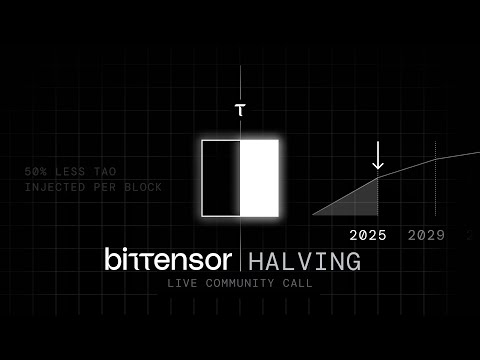
TAO's Centrality: The halving reinforces TAO's role as the ecosystem's core asset, with its scarcity driving value for all denominated subnet tokens.
Builder/Investor Note: Focus on subnet "flow" and long-term vision over immediate revenue. Identify projects with strong community and innovative tech, as TAO Flow will accelerate the decline of underperforming subnets.
The "So What?": Bittensor is entering a more mature, capital-efficient phase. The halving and technical upgrades create a more elastic market, rewarding genuine innovation and stake accumulation, while weeding out less viable projects.
Strategic Shift: The battle for privacy is a battle for power asymmetry. Companies with transparent, privacy-aligned business models (e.g., Proton's hybrid non-profit/for-profit structure) offer a viable alternative to surveillance capitalism.
Builder/Investor Note: Invest in and build open-source, privacy-preserving infrastructure and applications with strong technical guarantees. The shrinking gap between open-source and proprietary AI makes this increasingly feasible and competitive.
The "So What?": Your digital identity is paramount. Switching your primary email from a Big Tech provider (like Gmail) to a privacy-focused one (like Proton Mail) is a high-impact, low-effort action to opt out of pervasive data consolidation and reclaim agency in the digital age.
Proactive Tax Planning: Engage in tax loss harvesting now, leveraging the current wash sale exemption (with economic substance).
Meticulous Record Keeping: The 1099-DA will be incomplete. Investors must maintain robust personal records for all crypto activity, especially for ETPs and DeFi.
Software Opportunity: The complexity creates a massive market for sophisticated crypto tax software that can aggregate data and reconcile discrepancies.
Strategic Implication: Crypto is moving past its "everything is beta" phase. Expect greater dispersion in asset performance, rewarding fundamental analysis over broad market exposure.
Builder/Investor Note: Focus on projects with clear paths to productivity, durable advantages, and strong, substance-backed narratives. Opportunities exist in fixing token market inefficiencies and integrating crypto into existing consumer distribution channels.
The "So What?": The market demands a more sophisticated approach. Investors and builders who can identify and execute on real-world value creation, rather than relying on hype cycles, will capture the most significant returns in the next 6-12 months.
Compute is King (for now): The race for compute and data center capacity will intensify until the fundamental scaling laws of AI hit a wall.
Agents are Coming, with Caveats: Expect significant agentic progress in 2026, but real-world, fully autonomous agents require breakthroughs in reliability and new human-computer interaction data.
Privacy as a Differentiator: Decentralized AI offering true data privacy will become a critical value proposition as centralized platforms inevitably monetize user data.
Strategic Implication: The market is a casino. Success hinges on understanding market cycles, personal psychology, and the art of strategic entry and exit, not blind loyalty.
Builder/Investor Note: Prioritize identifying early narratives and catalysts. For smaller capital, focus on "grind drops" over TVL-based airdrops to maintain liquidity.
The "So What?": In the next 6-12 months, expect continued volatility. The ability to adapt strategies between "easy" and "hard" market modes, coupled with disciplined profit-taking, will define success.