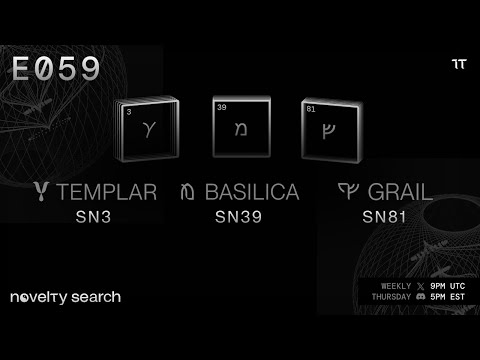
Sovereign AI is Non-Negotiable. The ecosystem cannot depend on centralized entities for foundational models. Templar’s `Sparse Loco` optimizer is the technological key to unlocking truly permissionless, large-scale model pre-training.
Services are the Moat, Not Compute. Basilica’s strategy confirms that raw decentralized compute is a tough business. The real value lies in building proprietary services—like verifiable inference and compute-multiplying tech—that nobody else can offer.
Vertical Integration is the Endgame. The strategy is a closed loop: Templar builds the model, Basilica provides the efficient compute, and Grail makes it intelligent. This integrated pipeline is the path to putting a Bittensor-native, state-of-the-art model on the world stage.
Full-Stack Dominance. The synergy between pre-training (Templar), post-training (Grail), and specialized compute (Basilica) creates a powerful flywheel, positioning them to build models and services end-to-end within their own ecosystem.
Research is the Moat. The team’s edge comes from fundamental research breakthroughs like Sparse LoCo and the Grail verification algorithm, creating unique capabilities rather than just competing on price or copying Web2 business models.
Beyond Commodity Compute. The vision for Basilica is clear: evolve beyond rentals and offer unique, high-margin services like verifiable inference and compute optimization that solve critical problems for the entire decentralized AI space.
China Isn't Copying; It's Out-Building. From EVs to AI, China's engineering-led culture and intense internal competition are creating superior products at faster speeds and lower costs.
The Real Battle is at Home. America's biggest obstacle isn't China; it's its own self-imposed friction. Winning requires aggressive domestic reforms that slash red tape and re-ignite a culture of building.
Pragmatism Beats Belligerence. The leaders on the front lines of global business see China with clear eyes. The U.S. must trade uninformed rhetoric for a pragmatic strategy of competing, learning, and accelerating its own innovation race.
Watch the Second Derivative, Not the Deficit. The market cares about the acceleration of money creation. A deficit shrinking from 7% to 5.5% of GDP is a major decelerating force, even if the absolute number remains large.
Tariffs Are a Stealth Tightening. Without larger offsetting stimulus, tariffs act as a significant fiscal drag, effectively tightening financial conditions and creating a headwind for economic growth.
AI Capex is the Bull Market's Wildcard. The single most important driver of private money creation is debt-fueled spending on AI infrastructure. This is the primary force propping up nominal growth and could offset some of the public sector slowdown.
Bittensor is a Capitalism Engine, Not Just an AI Network. TAO's structure incentivizes pure competition and can be used to decentralize any digital business, creating natural, escalating demand for the token as more "subnets" (companies) launch on the platform.
The Public Treasury is the New VC. For niche but high-potential tokens like TAO, a publicly traded treasury company offers a powerful vehicle for capital aggregation and provides retail investors access through traditional markets. The key metric isn't AUM, but increasing tokens per share.
Obsession is the Only Moat. In a world of constant change, the only sustainable advantage is a deep, relentless obsession. Altucher's career proves that diving into niche interests with total focus is the path to reinvention and success.
**AI's Cartesian Error:** Modern AI treats intelligence as software, ignoring the critical role of hardware and environment. This "computational dualism" is a fundamental mistake; true intelligence is embodied and enactive.
**Biology's Stack is Smarter:** Biological systems are hyper-efficient because they delegate adaptation across a full "stack" of abstraction layers (cells, organs, organism). Today’s AI systems are rigid bureaucracies that only learn at the top.
**Intelligence Requires Consciousness:** Consciousness is a necessary adaptation for navigating the world, not a mystical add-on. Truly intelligent and adaptive agents will, by necessity, be conscious.
Product and Distribution Are King: Having a proprietary model is not a prerequisite for success. More than half of the top-performing "AI All-Stars" thrive by building superior user experiences on top of existing models, proving that UI and community are powerful moats.
Vibe Coding Is the New Killer App: The explosive growth and unprecedented retention of vibe coding platforms signal a major new trend. These tools are empowering a new generation of builders and rapidly bridging the gap between consumer and prosumer use cases.
The Platform Wars Are Just Beginning: Don't count the incumbents out. Google's strong debut with four products shows the fight for AI dominance is a multi-front war, while Chinese firms are proving adept at competing in both domestic and international markets simultaneously.
**Automate Humans, Don't Replace Software.** The biggest opportunities are in augmenting human workflows that have never been codified in software. This requires a hands-on, problem-solving approach, not an off-the-shelf product.
**'Forward Deployed' Teams are the New Kingmakers.** This hybrid role—part builder, part consultant, part visionary—is the essential bridge for getting complex AI into production within large enterprises, closing the gap between platform potential and real-world customer needs.
**Sacrifice Near-Term Margin for Long-Term Moat.** In this platform shift, obsessive margin-chasing is a fatal error. The winning move is to do the messy, hands-on implementation work to embed your solution, own the critical data layer, and build a truly defensible business.
Embrace Specialization, Not Generalization. The most effective AI systems are emerging from a “system of many agents” approach. Instead of chasing a single AGI, the trend is toward building and orchestrating multiple deep experts, each with a narrow focus.
AI Augments Experts, It Doesn't Replace Novices. The biggest productivity gains are going to those who already have domain expertise. AI is a tool whose value is unlocked by a user who can provide precise prompts and critically evaluate the output.
The Next Thousand Unicorns are Agent Companies. The startup playbook is clear: go deep on a single, vertical workflow and build an agent that does it better than anyone else. Just as APIs like Twilio and Stripe unbundled services, agents will unbundle workflows, creating entire companies from what was once a feature.
**Strategic Implication:** The market's current "slowdown regime" demands caution. Avoid highly leveraged directional bets in traditional risk assets.
**Builder/Investor Note:** Simplistic macro models and headline-driven narratives are failing. Focus on robust, multi-factor systematic approaches to identify true signal from noise.
**The "So What?":** The Fed's political constraints on inflation mean a return to 2% without a recession is unlikely, potentially keeping inflation between 2-3% and supporting real assets, but with continued volatility.
Concentration is Key: Ruthlessly prune portfolios, focusing on assets with clear utility, user adoption, and robust value accrual mechanisms.
Build for Revenue: For builders, design tokenomics that directly reward token holders with revenue or buybacks, moving beyond abstract governance.
Macro Over Cycle: The Fed's liquidity injections and potential rate cuts could override historical crypto cycles, creating a unique market environment for the next 6-12 months.
Strategic Implication: The market is bifurcating. Institutional capital is flowing into Bitcoin and tokenized RWAs, while many altcoins face a reckoning over their lack of clear value accrual.
Builder/Investor Note: Builders must design tokens with explicit economic rights or revenue share. Investors should concentrate on assets with strong fundamentals and institutional tailwinds, adopting a pragmatic, long-term view.
The "So What?": The next 6-12 months will see continued institutional integration, potentially overriding traditional crypto cycles due to stimulative monetary policy. Focus on infrastructure that bridges TradFi and crypto, and solutions addressing AI's insatiable energy demand.
ETH's current price is likely a function of finite, incentive-driven institutional buying, not organic demand. A significant price correction is probable once this buying pressure subsides, particularly around the January 15th date.
Investors should consider shorting ETH or accumulating cash to prepare for potential market lows. Builders should focus on clear value accrual mechanisms for their own tokens or equity, rather than assuming automatic uplift from underlying infrastructure.
The market is shifting from euphoria to a more rational assessment of value. Understanding the difference between technological utility and asset investment potential is critical for navigating the next 6-12 months.
Strategic Implication: The "Empire Strikes Back" is real, with TradFi giants building their own tokenized solutions and specialized chains, intensifying competition for public blockchains.
Builder/Investor Note: Focus on infrastructure and applications that enable seamless movement of tokenized "money" between specialized chains. This interoperability is crucial for unlocking capital efficiency.
The "So What?": Despite current market rotation into "value" assets, the long-term trend of institutional tokenization is accelerating. Regulatory clarity in the US will act as a significant accelerant, but competitive forces are already driving adoption.
Onchain Convergence: Expect more traditional finance players to build on Ethereum L2s, prioritizing security and customizability while abstracting crypto's technical layers.
Tokenization's Reach: The tokenization of private equity and real-world assets will expand, democratizing access and potentially disrupting traditional fundraising and ownership models.
Product-First Crypto: Builders must prioritize user experience and product utility over underlying blockchain mechanics to drive mainstream adoption in the next 6-12 months.