The transition from general-purpose LLMs to specialized coding agents that operate on the entire codebase rather than isolated snippets.
Audit your current stack for agentic readiness. Prioritize tools that integrate with Gemini 3 or similar high-reasoning models to automate repetitive pull requests.
Code is the substrate of the digital world. If you control the means of AI code generation, you control the speed of innovation for every other industry.
The move from a singular "Universe" view to a "Multiverse" perspective mirrors the transition from centralized monoliths to fragmented, interoperable ecosystems.
Build systems that fail gracefully when hitting Gödelian limits.
Truth is a vast ocean while proof is a small boat. Your roadmap must account for the reality that your system will eventually encounter truths it cannot verify.
The Macro Pivot: Outcome-Based Intelligence. We are moving from AI as a Service to Results as a Service where software value is tied to revenue generation rather than seat licenses.
The Tactical Edge: Verticalize the Data. Build in sectors with non-public outcome data to create a compounding moat that resists commoditization by foundation models.
The winners of 2026 will be those who use AI to solve core human needs for connection and discovery while building defensible, data-rich business models.
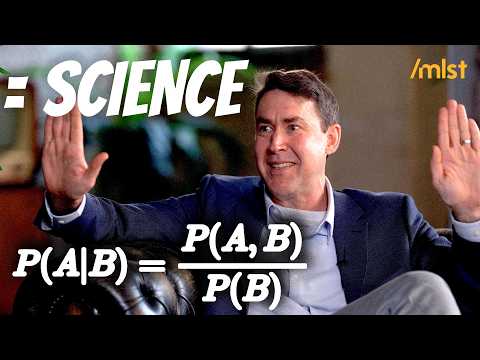
The Macro Transition: Moving from "Big Model" monoliths to "Lots of Little Models" where distributed Bayesian assets represent specific physical objects.
The Tactical Edge: Prioritize "Object-Centered" architectures that track uncertainty. This allows robots to "phone a friend" when encountering novel data.
The LLM era is hitting a wall of implicit representation. The next 12 months belong to those building explicit, causal world models grounded in physics rather than language.
The Macro Trend: The transition from static benchmarks to live human-in-the-loop evaluation. As models saturate fixed tests, the only remaining signal is subjective human preference at scale.
The Tactical Edge: Monitor secret model drops on Arena to spot frontier capabilities before official releases. This provides a lead time advantage for builders choosing their tech stack.
The Bottom Line: Arena is the new kingmaker. If you are building AI products, their expert-tier data is the most reliable map for navigating the frontier.
The move from small models to medium models (15B to 70B) suggests that reasoning capability is outstripping the desire for low-latency edge deployment.
Implement instruction-following re-rankers to prune your context window. This prevents the model from getting confused by irrelevant data.
Stop building toys. The next year belongs to those who can build full agentic systems that handle billions of tokens without losing the plot.
**Strategic Implication:** The market's current "slowdown regime" demands caution. Avoid highly leveraged directional bets in traditional risk assets.
**Builder/Investor Note:** Simplistic macro models and headline-driven narratives are failing. Focus on robust, multi-factor systematic approaches to identify true signal from noise.
**The "So What?":** The Fed's political constraints on inflation mean a return to 2% without a recession is unlikely, potentially keeping inflation between 2-3% and supporting real assets, but with continued volatility.
Concentration is Key: Ruthlessly prune portfolios, focusing on assets with clear utility, user adoption, and robust value accrual mechanisms.
Build for Revenue: For builders, design tokenomics that directly reward token holders with revenue or buybacks, moving beyond abstract governance.
Macro Over Cycle: The Fed's liquidity injections and potential rate cuts could override historical crypto cycles, creating a unique market environment for the next 6-12 months.
Strategic Implication: The market is bifurcating. Institutional capital is flowing into Bitcoin and tokenized RWAs, while many altcoins face a reckoning over their lack of clear value accrual.
Builder/Investor Note: Builders must design tokens with explicit economic rights or revenue share. Investors should concentrate on assets with strong fundamentals and institutional tailwinds, adopting a pragmatic, long-term view.
The "So What?": The next 6-12 months will see continued institutional integration, potentially overriding traditional crypto cycles due to stimulative monetary policy. Focus on infrastructure that bridges TradFi and crypto, and solutions addressing AI's insatiable energy demand.
ETH's current price is likely a function of finite, incentive-driven institutional buying, not organic demand. A significant price correction is probable once this buying pressure subsides, particularly around the January 15th date.
Investors should consider shorting ETH or accumulating cash to prepare for potential market lows. Builders should focus on clear value accrual mechanisms for their own tokens or equity, rather than assuming automatic uplift from underlying infrastructure.
The market is shifting from euphoria to a more rational assessment of value. Understanding the difference between technological utility and asset investment potential is critical for navigating the next 6-12 months.
Strategic Implication: The "Empire Strikes Back" is real, with TradFi giants building their own tokenized solutions and specialized chains, intensifying competition for public blockchains.
Builder/Investor Note: Focus on infrastructure and applications that enable seamless movement of tokenized "money" between specialized chains. This interoperability is crucial for unlocking capital efficiency.
The "So What?": Despite current market rotation into "value" assets, the long-term trend of institutional tokenization is accelerating. Regulatory clarity in the US will act as a significant accelerant, but competitive forces are already driving adoption.
Onchain Convergence: Expect more traditional finance players to build on Ethereum L2s, prioritizing security and customizability while abstracting crypto's technical layers.
Tokenization's Reach: The tokenization of private equity and real-world assets will expand, democratizing access and potentially disrupting traditional fundraising and ownership models.
Product-First Crypto: Builders must prioritize user experience and product utility over underlying blockchain mechanics to drive mainstream adoption in the next 6-12 months.