The Macro Shift: Context management is the new compute. As models get smarter, the winning architecture will be the one that most efficiently partitions and feeds relevant data to sub-agents.
The Tactical Edge: Prioritize reviewability. When building or using agents, focus on tools that provide clear diffs and tours of changes rather than just raw code generation.
The Bottom Line: The developer's role is evolving from a writer to an orchestrator. Success in the next 12 months depends on mastering the skill of agentic review rather than manual syntax.
The Macro Shift: Engineering is moving from a headcount-driven Opex model to an infrastructure-driven autonomy model where validation is the primary capital asset.
The Tactical Edge: Audit your codebase against the eight pillars of automated validation. Start by asking agents to generate tests for existing logic to close the coverage gap.
The Bottom Line: Massive velocity gains are not found in the next model update. They are found in the rigorous internal standards that allow agents to operate without human hand-holding.
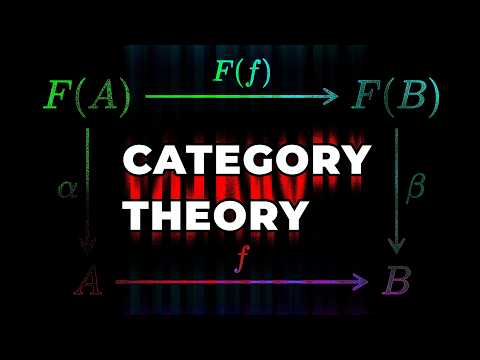
[Algorithmic Convergence]. The gap between symbolic logic and neural networks is closing through category theory. Expect architectures that are "correct by construction" rather than just "likely correct."
[Audit Architecture]. Evaluate new models based on their "algorithmic alignment" rather than just parameter count. Prioritize implementations that bake in non-invertible logic.
The next year will see a shift from scaling data to scaling structural priors. If you aren't thinking about how your model's architecture mirrors the problem's topology, you are just an alchemist in a world about to discover chemistry.
Strategic Implication: The future of software development isn't about *if* we use AI, but *how* we integrate human understanding and architectural discipline to prevent an "infinite software crisis.
Builder/Investor Note: Builders must prioritize deep system understanding and explicit planning over raw generation speed. Investors should favor companies that implement robust human-in-the-loop processes for AI-assisted development.
The "So What?": Over the next 6-12 months, the ability to "see the seams" and manage complexity will differentiate thriving engineering teams from those drowning in unmaintainable, AI-generated code.
Strategic Implication: The market for AI transformation services is expanding rapidly, driven by enterprises seeking to integrate AI for tangible business outcomes.
Builder/Investor Note: Focus on AI solutions with clear, practical applications for mid-market and enterprise clients. Technical talent capable of bridging research with deployment holds significant value.
The "So What?": The next 6-12 months will see increased demand for AI engineers who can implement and scale AI solutions, moving beyond proof-of-concept to widespread adoption.
Compensation Innovation: The traditional compensation playbook for engineers is outdated. New models that directly reward AI-augmented output will attract top talent and drive efficiency.
Builder/Investor Note: Founders should re-evaluate their incentive structures. Investors should seek companies experimenting with these models, as they may achieve outsized productivity.
The "So What?": The productivity gap between AI-augmented and non-AI-augmented engineers will widen. Companies that adapt their incentives will capture disproportionate value in the next 6-12 months.
Strategic Shift: Successful AI integration means identifying and solving *your* organization's specific SDLC bottlenecks, not just boosting code completion.
Builder/Investor Note: Prioritize psychological safety and invest in AI skill development. For builders, this means dedicated learning time; for investors, look for companies that do this well.
The "So What?": The next 6-12 months will separate organizations that merely *adopt* AI from those that *master* its strategic application and measurement, driving real competitive advantage.
Strategic Implication: AI integration is a company-wide transformation, not a feature. Organizations must re-architect processes, tools, and culture to compete.
Builder/Investor Note: Prioritize internal tooling that democratizes AI experimentation. Look for companies establishing "model behavior" as a distinct, cross-functional discipline.
The "So What?": The next 6-12 months will reward builders who bake AI security and user control into product design from day one, recognizing that technical mitigations alone are insufficient.
Strategic Implication: Solana's focus on PropAMMs and perpetuals is a foundational shift, positioning it as a global financial hub rather than just a speculative playground. This creates a more sustainable revenue model for the chain.
Builder/Investor Note: Builders should leverage Solana's market structure for innovative financial primitives. Investors must scrutinize tokenomics, especially the "two-asset model," and prioritize projects with transparent investor relations.
The "So What?": The next 6-12 months will see a significant increase in onchain trading sophistication and volume on Solana, driven by PropAMMs and the expansion into perpetuals. This will attract more institutional capital and solidify Solana's role in global finance.
Market Bifurcation: The crypto market is splitting. Protocols with strong FinTech distribution partnerships (the "DeFi mullets") will outpace those relying solely on crypto-native power users.
Builder/Investor Note: Builders should prioritize Base App integration and AI-driven simplification. Investors should identify DeFi protocols securing these large-scale distribution deals and those building in tokenized RWAs and prediction markets.
The "So What?": Coinbase's aggressive expansion into traditional assets, combined with Base App's creator-first, self-custodial "everything app" vision, signals a significant push for mainstream adoption. The next 6-12 months will see a race to onboard millions of new users and creators, fundamentally reshaping how we interact with finance and digital ownership.
Clarity is King: The industry needs clearer, legally defensible definitions of token holder rights and revenue accrual to build trust and sustainable value.
Builder/Investor Note: Builders should prioritize explicit tokenomics and robust governance. Investors must scrutinize token rights beyond speculative narratives and be hyper-vigilant against social engineering scams.
The "So What?": The next 6-12 months will test which projects can evolve beyond ambiguous structures to deliver tangible value and accountability, separating sustainable innovation from speculative chaos.
**Evolving Human-AI Interaction:** Our relationship with AI, especially digital personas, will evolve rapidly. Society will develop "genre literacy" to understand and integrate these new forms of connection.
**Builder/Investor Note:** Prioritize user agency in design. Implement "sunsets" for grief bots and avoid intrusive notifications. Invest in decentralized data solutions that empower individual control over digital legacy.
**The "So What?":** Grief tech forces a philosophical reckoning. As digital personas become more sophisticated, the very definition of "death" and "being alive" will blur, creating unprecedented social, legal, and economic implications.
AI Development Shift: BitTensor is redefining how complex AI is built, offering a decentralized, capital-efficient, and talent-rich alternative to traditional corporate and VC models.
Investor Opportunity: This creates a new asset class for investors seeking early-stage AI exposure with token liquidity, but demands a high tolerance for volatility and a deep understanding of technical roadmaps.
Builder's Playbook: For AI builders, BitTensor offers a platform to focus on core technology, leverage specialized models, and build interoperable services, accelerating innovation without the typical startup overhead.
**Narrative Shift:** BitTensor is actively moving beyond its crypto-native roots to position itself as a serious, efficient platform for mainstream AI development.
**Builder Opportunity:** For AI engineers, BitTensor offers a unique model to access distributed compute and talent, potentially reducing development costs and accelerating innovation.
**Long-Term Play:** Exploit, scheduled for 2026, signals a long-term strategic vision for BitTensor's growth and mainstream adoption, requiring sustained community and developer engagement.