The Macro Shift: The Great Re-Shoring. National security now depends on domestic production of critical minerals and semiconductors.
The Tactical Edge: Build for Scale. Prioritize manufacturing competence over pure software features to win government contracts.
The Bottom Line: The defense industrial base is being rebuilt from the ground up. The next decade belongs to the builders who can merge Silicon Valley speed with the Pentagon's scale.
The Macro Trend: Biological Sovereignty. As global systems destabilize, the Amazon remains the most critical piece of biological infrastructure on the planet.
The Tactical Edge: Support Jungle Keepers. Direct capital to organizations that convert loggers into rangers to secure land concessions.
The Amazon is a finite asset under active siege. Protecting it requires a blend of primitive survival skills and high-tech surveillance over the next 18 months.
The Macro Pivot: As generative AI masters simulation, the physical world becomes a high-fidelity playground for software.
The Tactical Edge: Invest in the "brain" layer rather than the "limb" layer. Software that can generalize across different hardware forms will capture the most value.
The next decade belongs to embodied AI that reasons in real time. If you are waiting for the hardware to look perfect before paying attention, you will miss the moment the software takes over the physical world.
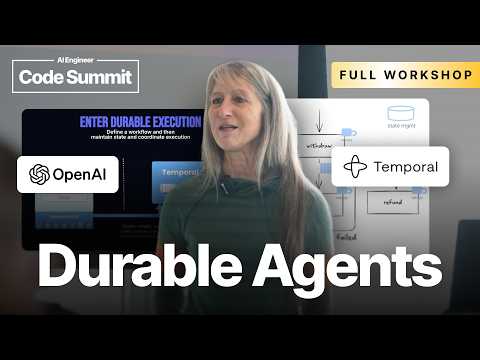
The industry is moving from "Agent as a Script" to "Agent as a Durable Service" where state management is handled by the infrastructure.
Wrap your existing API tools in the `activity_as_tool` function to gain automatic retries and execution history.
Reliability is the only moat in the agentic economy. If your agent cannot survive a server restart during a three-day task, it is not ready for the enterprise.
The Macro Trend: The move from fragmented content libraries to integrated health systems where AI synthesizes biomarkers and movement.
The Tactical Edge: Construct internal LLM tools to categorize qualitative feedback. This turns thousands of raw reviews into a precise roadmap.
The Bottom Line: Building a $100M ARR consumer app requires mastery of both growth loops and product retention. Solve for the daily habit to win the long game.
The transition from general-purpose AI to specialized application layers. As foundation models commoditize, value migrates to the "fat tail" of human-centric complexity.
Prioritize building or investing in "DNA of the future" companies that incumbents must eventually acquire to survive. Focus on winning the "point of attack" by staying deep in the technical details.
We are in a unique market where demand growth justifies high valuations. Success over the next year depends on identifying founders who are the absolute best in the world at one specific thing.
Tokenization is the Trojan Horse: TradFi isn't just observing; it's actively building on public blockchains. Tokenized real-world assets (RWAs) are the primary vector for institutional adoption.
Governance Matters: For builders, robust and transparent DAO governance is paramount. For investors, scrutinize projects for clear value accrual to token holders and potential conflicts between core teams and DAOs.
Regulatory Nuance: The Fed's policy shift suggests a move towards more nuanced regulation, potentially opening doors for regulated entities to engage with digital assets.
Strategic Patience Pays: Successful RWA tokenization requires a multi-year commitment to building infrastructure and liquidity, even if it means foregoing immediate profits.
Builders & Investors: Focus on Wallets & DApps: The future is self-custody wallets interacting with specialized, best-in-class DApps, not centralized "super apps." Build intuitive wallet experiences and highly efficient DApps.
The "So What?": Expect a significant migration of traditional financial assets and liabilities onto DeFi protocols over the next 6-12 months, driven by institutional adoption and regulatory clarity, leading to lower costs for consumers and new opportunities for capital.
Political Catalyst: A major political shift, likely driven by public anger over economic disparity, is the only force capable of breaking the current feudalistic cycle. This will be obvious when it happens, likely causing a sharp market correction.
Strategic Asset Allocation: Investors should prioritize stores of value (like gold) and seek out hard assets in overlooked emerging/frontier markets. Avoid the AI hardware bubble and identify companies that will leverage AI to cut white-collar costs, rather than those building the infrastructure.
The "So What?": The current economic structure is unsustainable. The growing divide and misallocation of capital will eventually force a re-evaluation of economic priorities. Positioning for this shift means embracing volatility and a long-term, contrarian view, looking beyond the overvalued "approved products" of the current system.
Convergence is Here: The lines between traditional finance and crypto are blurring. Expect more "everything apps" and institutional adoption of public blockchains for RWAs.
Token Alignment Matters: Builders must prioritize robust legal and governance structures that enshrine token holder rights. This will be a key differentiator for attracting capital in the next cycle.
Ethereum's Enduring Role: Despite new contenders, Ethereum continues to solidify its position as a foundational layer for institutional tokenization and decentralized finance.
Market Structure Overhaul: The current token distribution model is broken. Expect continued pressure on altcoins until tokenomics evolve to prioritize product-market fit over continuous investor unlocks.
Strategic Accumulation: This period of apathy is ideal for researching and accumulating Bitcoin and high-conviction RWAs. Cash is a strategic asset for deploying when opportunities arise.
TradFi on Chain: The next growth vector for crypto involves capturing traditional finance flows through tokenized equities, commodities, and FX. Builders should focus on robust, order-book based solutions with improved user experience.
Institutional Integration: Crypto is embedding itself into traditional finance, not replacing it. Expect more "everything apps" and verticalized services from major players.
Yield Evolution: As interest rates decline, the demand for diversified, transparent yield-bearing stablecoins will intensify. Protocols with robust risk management and RWA exposure will lead.
Creator Economy's Next Frontier: On-chain tools will redefine creator monetization, shifting from vanity metrics to direct value capture and deeper fan relationships.