The Macro Shift: Scaling laws are hitting a diminishing return on raw data but a massive acceleration in reasoning. The shift from statistical matching to reasoning agents happens when models can recursively check their own logic.
The Tactical Edge: Build for the agentic future by prioritizing high-context data pipelines. Models perform better when you provide massive context rather than relying on zero-shot inference.
The Bottom Line: We are 24 months away from AI that makes unassisted human thought look like navigating London without a map. Prepare for a world where the most valuable skill is directing machine agency rather than performing manual logic.
The transition from model-centric to loop-centric development. Performance is now a function of the feedback cycle rather than just the weights of the frontier model.
Implement an LLM-as-a-judge step that outputs a "Reason for Failure" field. Feed this string directly into a meta-prompt to update your agent's system instructions automatically.
Static prompts are technical debt. Teams that build automated systems to iterate on their agent's instructions will outpace those waiting for the next model training run.
The Macro Shift: The transition from writing to reviewing as the primary engineering activity. As agents generate more code, the human role moves from creator to editor.
The Tactical Edge: Build CLIs for every internal tool to give agents a native text interface. This increases accuracy and speed compared to visual automation.
The Bottom Line: Developer experience is the infrastructure for AI. Investing in clean code and fast feedback loops is the only way to ensure AI productivity gains do not decay over the next 12 months.
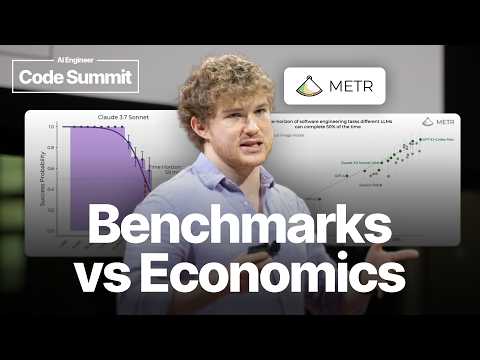
The Capability-Productivity Gap. We are entering a period where model intelligence outpaces our ability to integrate it into high stakes production.
Audit your stack. Identify tasks where "good enough" generation is a win versus high context tasks where AI is currently a net negative.
Do not mistake a climbing benchmark for a finished product. For the next year, the biggest wins are not in smarter models but in better verification loops.
The transition from simple Large Language Models to Reasoning Models marks the end of the stochastic parrot era.
Build agentic workflows that utilize high-context windows for recursive problem solving.
We are moving toward a world where intelligence is a commodity. Your value will shift from knowing things to directing outcomes over the next 12 months.
The Macro Pivot: Agentic Abstraction. As the cost of logic hits zero, the value of a developer moves from how to build to what to build.
The Tactical Edge: Adopt Orchestrators. Replace your standard editor with agent-first platforms today to learn the art of directing sub-agents before the 2026 deadline.
The Bottom Line: The next 12 months will reward those who stop writing code and start building the systems that write it for them.
The Macro Movement: The Token Deflation. As compute becomes a commodity, the value of the "Human-in-the-Loop" moves from production to architectural oversight.
The Tactical Edge: Implement Code Maps. Use AI to index and understand your entire repository to ensure every generated line aligns with existing logic.
The Bottom Line: The next year belongs to the "Taste-Driven Developer." If you optimize for volume, you produce slop; if you optimize for accountability, you build a moat.
The Macro Shift: Software development is moving from human-led logic to agent-led verification.
The Tactical Edge: Use sub-agents to isolate testing from creation to prevent context pollution.
The Bottom Line: The technical barrier is evaporating. In the next 12 months, the winning platforms will be those that require the fewest technical decisions from the user.
Strategic Implication: The YBS market is shifting from speculative yield farming to a foundational layer for tokenized finance, driven by institutional interest and RWA integration.
Builder/Investor Note: Prioritize YBS protocols with diversified yield strategies and robust risk management (e.g., first-loss tranches). Builders should focus on RWA infrastructure and sustainable, real-world yield mechanisms.
The "So What?": The convergence of declining traditional rates and maturing RWA tokenization will funnel significant capital into diversified, transparent YBS. Protocols prioritizing these elements will capture the lion's share of the projected $100 billion TVL.
RWA as a Macro Trend: The tokenization of real-world assets is not a niche but a fundamental shift, attracting significant institutional capital and driving a search for yield beyond traditional instruments.
AI Integration is the Moat: For builders, success in AI hinges on deep integration into existing platforms and workflows, coupled with robust trust and safety mechanisms for autonomous agents.
The Hybrid Future: The market is moving towards centralized frontends (banks, exchanges) offering decentralized, on-chain products. This model bridges user familiarity with crypto-native efficiency, unlocking massive adoption in the next 6-12 months.
Agentic Finance is Here: Autonomous AI agents will manage significant capital, requiring robust guardrails and verifiable security.
Distribution Wins: For AI models, deep integration into existing user ecosystems and multi-platform functionality will drive adoption and performance.
Human Roles Evolve: Builders must design for human-AI collaboration, focusing on AI as an accelerator for specialized human expertise, not a full replacement.
Strategic Implication: The current DeFi landscape is unsustainable without clearer definitions of token holder rights and founder accountability. Expect continued "DAO warfare" and founder exits until these structural issues are addressed.
Builder/Investor Note: For builders, prioritize explicit, transparent legal and technical structures from day one. For investors, assume tokens offer no inherent rights beyond what is explicitly stated and legally enforceable.
The "So What?": The industry needs "light-form" regulatory clarity and standardized norms, potentially driven by centralized exchanges, to foster trust and enable sustainable innovation beyond pure speculation in the next 6-12 months.
Strategic Implication: The "four-year cycle" driven by speculative behavior is likely dead. The industry's maturation will be marked by sustainable business models, not just macro-driven asset prices.
Builder/Investor Note: Prioritize utility and user experience over tokenomics and crypto-native branding. Invest in projects solving real-world problems for a broad audience, not just those chasing the next airdrop.
The "So What?": The next 6-12 months will see a continued shift towards applications that abstract away blockchain complexity, making crypto an invisible, powerful backend for mainstream products.
Strategic Implication: The market is re-evaluating crypto-holding companies, punishing those without clear value-add beyond asset accumulation. The "MNAV of 1" is the expected long-term anchor.
Builder/Investor Note: This is a high-conviction, long-term play, not a quick arbitrage. Investors must conduct deep due diligence on each company's balance sheet, share structure, and operational strategy.
The "So What?": For the next 6-12 months, expect continued volatility and company-specific challenges. The path to MNAV parity will be bumpy, driven by broader market recovery, potential M&A, and individual company execution, not a simple market mechanism.