The transition from general-purpose LLMs to specialized coding agents that operate on the entire codebase rather than isolated snippets.
Audit your current stack for agentic readiness. Prioritize tools that integrate with Gemini 3 or similar high-reasoning models to automate repetitive pull requests.
Code is the substrate of the digital world. If you control the means of AI code generation, you control the speed of innovation for every other industry.
The move from a singular "Universe" view to a "Multiverse" perspective mirrors the transition from centralized monoliths to fragmented, interoperable ecosystems.
Build systems that fail gracefully when hitting Gödelian limits.
Truth is a vast ocean while proof is a small boat. Your roadmap must account for the reality that your system will eventually encounter truths it cannot verify.
The Macro Pivot: Outcome-Based Intelligence. We are moving from AI as a Service to Results as a Service where software value is tied to revenue generation rather than seat licenses.
The Tactical Edge: Verticalize the Data. Build in sectors with non-public outcome data to create a compounding moat that resists commoditization by foundation models.
The winners of 2026 will be those who use AI to solve core human needs for connection and discovery while building defensible, data-rich business models.
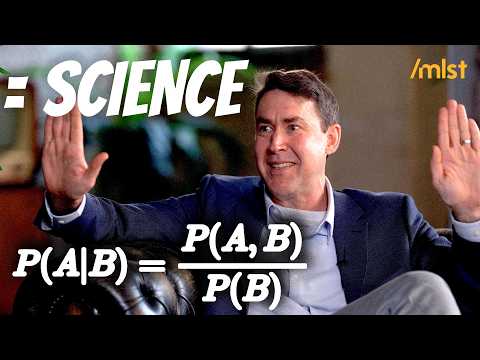
The Macro Transition: Moving from "Big Model" monoliths to "Lots of Little Models" where distributed Bayesian assets represent specific physical objects.
The Tactical Edge: Prioritize "Object-Centered" architectures that track uncertainty. This allows robots to "phone a friend" when encountering novel data.
The LLM era is hitting a wall of implicit representation. The next 12 months belong to those building explicit, causal world models grounded in physics rather than language.
The Macro Trend: The transition from static benchmarks to live human-in-the-loop evaluation. As models saturate fixed tests, the only remaining signal is subjective human preference at scale.
The Tactical Edge: Monitor secret model drops on Arena to spot frontier capabilities before official releases. This provides a lead time advantage for builders choosing their tech stack.
The Bottom Line: Arena is the new kingmaker. If you are building AI products, their expert-tier data is the most reliable map for navigating the frontier.
The move from small models to medium models (15B to 70B) suggests that reasoning capability is outstripping the desire for low-latency edge deployment.
Implement instruction-following re-rankers to prune your context window. This prevents the model from getting confused by irrelevant data.
Stop building toys. The next year belongs to those who can build full agentic systems that handle billions of tokens without losing the plot.
Strategic Implication: The YBS market is shifting from speculative yield farming to a foundational layer for tokenized finance, driven by institutional interest and RWA integration.
Builder/Investor Note: Prioritize YBS protocols with diversified yield strategies and robust risk management (e.g., first-loss tranches). Builders should focus on RWA infrastructure and sustainable, real-world yield mechanisms.
The "So What?": The convergence of declining traditional rates and maturing RWA tokenization will funnel significant capital into diversified, transparent YBS. Protocols prioritizing these elements will capture the lion's share of the projected $100 billion TVL.
RWA as a Macro Trend: The tokenization of real-world assets is not a niche but a fundamental shift, attracting significant institutional capital and driving a search for yield beyond traditional instruments.
AI Integration is the Moat: For builders, success in AI hinges on deep integration into existing platforms and workflows, coupled with robust trust and safety mechanisms for autonomous agents.
The Hybrid Future: The market is moving towards centralized frontends (banks, exchanges) offering decentralized, on-chain products. This model bridges user familiarity with crypto-native efficiency, unlocking massive adoption in the next 6-12 months.
Agentic Finance is Here: Autonomous AI agents will manage significant capital, requiring robust guardrails and verifiable security.
Distribution Wins: For AI models, deep integration into existing user ecosystems and multi-platform functionality will drive adoption and performance.
Human Roles Evolve: Builders must design for human-AI collaboration, focusing on AI as an accelerator for specialized human expertise, not a full replacement.
Strategic Implication: The current DeFi landscape is unsustainable without clearer definitions of token holder rights and founder accountability. Expect continued "DAO warfare" and founder exits until these structural issues are addressed.
Builder/Investor Note: For builders, prioritize explicit, transparent legal and technical structures from day one. For investors, assume tokens offer no inherent rights beyond what is explicitly stated and legally enforceable.
The "So What?": The industry needs "light-form" regulatory clarity and standardized norms, potentially driven by centralized exchanges, to foster trust and enable sustainable innovation beyond pure speculation in the next 6-12 months.
Strategic Implication: The "four-year cycle" driven by speculative behavior is likely dead. The industry's maturation will be marked by sustainable business models, not just macro-driven asset prices.
Builder/Investor Note: Prioritize utility and user experience over tokenomics and crypto-native branding. Invest in projects solving real-world problems for a broad audience, not just those chasing the next airdrop.
The "So What?": The next 6-12 months will see a continued shift towards applications that abstract away blockchain complexity, making crypto an invisible, powerful backend for mainstream products.
Strategic Implication: The market is re-evaluating crypto-holding companies, punishing those without clear value-add beyond asset accumulation. The "MNAV of 1" is the expected long-term anchor.
Builder/Investor Note: This is a high-conviction, long-term play, not a quick arbitrage. Investors must conduct deep due diligence on each company's balance sheet, share structure, and operational strategy.
The "So What?": For the next 6-12 months, expect continued volatility and company-specific challenges. The path to MNAV parity will be bumpy, driven by broader market recovery, potential M&A, and individual company execution, not a simple market mechanism.