AI is transforming software development from manual coding to agent orchestration, making "building" accessible to anyone with an idea and language. This fundamentally reconfigures the value of traditional programming skills and the entire app economy.
Invest in or build tools that prioritize agent-friendly APIs and CLI interfaces over traditional graphical user interfaces. Future value will accrue to services that seamlessly integrate into an agent's workflow, not just human-facing apps.
Personal AI agents are not just a new tool; they are a new operating system. Expect rapid shifts in user behavior and market demand, favoring platforms and services that empower autonomous AI, making now the time to adapt or be left behind.
AI agents are moving beyond language to autonomous action, fundamentally altering how software is built and consumed. This shift gives individuals the power to create complex systems with natural language, but also demands a new level of security awareness and critical thinking from users.
Embrace agentic engineering by focusing on clear communication and context provision rather than rigid coding. Experiment with open-source agents like OpenClaw to understand their capabilities and limitations firsthand.
The future of software is agent-centric. Investors should eye companies building agent-facing APIs or infrastructure, while builders must adapt their skills to "lead" AI teams. Ignoring this shift means missing the next wave of digital transformation.
The digital world moves from discrete apps to an integrated, agent-orchestrated OS, shifting value to platforms enabling seamless agent interaction.
Builders must pivot to "agentic engineering," focusing on guiding and designing systems for AI agents, mastering prompt engineering and CLI-based tool integration.
Personal AI agents will reshape software and productivity over the next 6-12 months. Investors should back agent infrastructure/API-first services; developers must embrace agent collaboration.
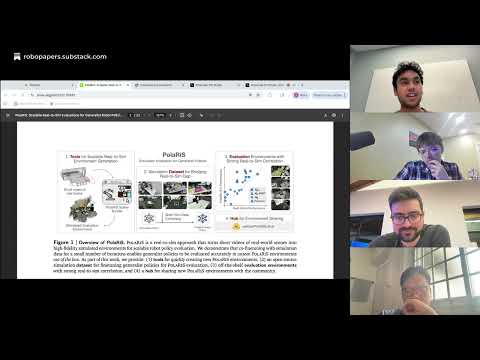
The push for generalist robot policies, akin to foundation models in other AI domains, demands evaluation tools that scale and generalize. PolaRiS directly addresses this by providing a framework for creating diverse, real-world correlated benchmarks, moving robotics beyond task-specific, overfitting evaluations towards true zero-shot generalization testing.
Implement PolaRiS's real-to-sim environment generation and "sim co-training" methodology. This allows for rapid, cost-effective iteration on robot policies with high confidence that improvements in simulation will translate to real-world gains, significantly accelerating development cycles.
For builders and investors, PolaRiS represents a critical infrastructure upgrade for robotics. It de-risks policy development by providing a reliable, scalable testing ground, making the path to deployable, generalist robots faster and more capital-efficient over the next 6-12 months.
The era of "agentic engineering" is here, moving software creation from explicit, line-by-line coding to high-level guidance of autonomous AI agents.
Experiment with agentic workflows now. Set up a local OpenClaw instance, even with free models, and use it to automate tedious tasks or prototype ideas.
Personal AI agents with system-level access are not just productivity tools; they are a new operating system layer that will consume and redefine existing applications.
Invest in companies demonstrating deep vertical integration in AI, custom silicon, and software-defined vehicle architectures. Prioritize those building proprietary data flywheels from large, active fleets.
The automotive industry is undergoing a fundamental re-architecture, moving from hardware-centric, domain-based systems to software-defined, AI-powered platforms. This shift will consolidate market power among vertically integrated players who control their data, compute, and software stack.
Autonomy will be a must-have feature by 2030, akin to airbags today. Companies without a robust, in-house, neural-net-based autonomy strategy and a software-defined architecture will struggle to compete at scale, leading to significant market share shifts in the coming years.
The shift from explicit coding to agentic orchestration means human creativity moves up the stack. Instead of writing every line, builders define intent, guide agents, and curate outcomes, making software creation more accessible and focused on problem-solving.
Invest in understanding agent-native design patterns. Prioritize building CLI-first tools and services that expose clear, composable interfaces, as these will be the foundational blocks for the next generation of AI-driven applications, making your products "agent-friendly" and future-proof.
Personal AI agents are not just productivity tools; they are a new operating system layer. Over the next 6-12 months, expect a rapid re-evaluation of traditional app value, a surge in agent-first infrastructure, and a critical need for robust, user-centric security frameworks as AI moves from language to action, directly impacting your digital strategy and investment thesis.
The rise of autonomous AI agents with system-level access is fundamentally reshaping the software landscape, moving value from traditional app interfaces to underlying APIs and data, and making building accessible for non-programmers.
Invest in infrastructure and tooling that facilitates agent-to-agent communication and robust CLI-based skill development, as this will be the new battleground for software functionality and integration.
The next 6-12 months will see increased adoption of agentic workflows, compelling companies to re-evaluate their product strategies towards API-first designs and human-centric "delight" to stay relevant as AI agents handle most functional tasks.
Consolidation is Coming: The market will reward projects that unify their structures and clearly define token holder rights, moving away from the misaligned Labs/DAO split.
Builder/Investor Note: Builders should prioritize product-market fit before token launches and design for transparent, direct value accrual to tokens. Investors must scrutinize token rights and value flow, favoring projects with clear structures or strong buyback programs.
The "So What?": This "ideological bear market" is forcing a necessary re-evaluation of Web3's core business models. The next 2-3 years will see a consolidation of strong teams and a push for regulatory innovation, creating generational buying opportunities for those who understand the shift.
Strategic Shift: Crypto is transitioning from a retail-driven speculative market to an institutionally-backed, fundamentals-focused industry.
Builder/Investor Note: Prioritize fundamentally strong DeFi protocols and major assets. Builders must focus on real-world utility and lean operations.
The "So What?": Regulatory clarity, stablecoin expansion, and AI's capital demands create a powerful, linear growth environment for crypto in 2026, potentially leading to new all-time highs for major assets.
Strategic Implication: The RWA market is poised for a "nuclear" expansion in 2026, driven by declining T-bill yields and a global search for higher returns. Expect 25-50x growth, pushing total value to $400B-$800B.
Builder/Investor Note: Focus investments on RWA infrastructure and tooling (lending, borrowing, insurance, core chains) rather than just holding RWA assets. These platforms capture fees from growing volume. Builders should prioritize crypto-native composability and permissionless access.
The "So What?": The convergence of traditional finance's yield needs with crypto's permissionless innovation, particularly in emerging markets, will redefine capital allocation and create new financial primitives over the next 6-12 months.
Verifiable Infrastructure: Lighter's ZK-centric approach to verifiability positions it as a robust platform for institutional adoption as regulatory clarity improves.
Market Expansion Strategy: The zero-fee model is a bold play to expand the DeFi trading market, potentially attracting a new wave of users and professional liquidity.
Ecosystem Play: The "sidecar protocol" and planned expansion into RWAs, options, and fixed income signal Lighter's ambition to become a foundational layer for a broader, more integrated DeFi.
Strategic Implication: The WLF case highlights a critical tension between marketing claims and regulatory reality in the crypto space. Clear market structure laws will force projects to align their operations with their stated decentralization.
Builder/Investor Note: Projects claiming "DeFi" status but exhibiting centralized control (e.g., insider veto power, token freezing, high insider token concentration) face significant regulatory risk. Builders should audit their governance and token distribution against emerging "bright line" tests.
The "So What?": The outcome of WLF's regulatory classification, and the broader market structure bill, will define the operating environment for crypto for the next 6-12 months, determining which projects thrive under new legal frameworks.
Strategic Implication: The crypto market is undergoing a structural re-rating. Focus on companies building essential infrastructure and solving real-world problems, not just speculative tokens.
Builder/Investor Note: Private crypto equity is attracting significant capital. Builders should focus on full-stack fintech solutions and direct customer engagement. Investors should identify structurally advantaged companies with clear business models.
The "So What?": The next 6-12 months will see continued decoupling. A potential softening of AI hype could redirect capital, but the long-term winners in crypto will be those providing tangible utility and robust infrastructure.