The Macro Shift: The Great Re-Shoring. National security now depends on domestic production of critical minerals and semiconductors.
The Tactical Edge: Build for Scale. Prioritize manufacturing competence over pure software features to win government contracts.
The Bottom Line: The defense industrial base is being rebuilt from the ground up. The next decade belongs to the builders who can merge Silicon Valley speed with the Pentagon's scale.
The Macro Trend: Biological Sovereignty. As global systems destabilize, the Amazon remains the most critical piece of biological infrastructure on the planet.
The Tactical Edge: Support Jungle Keepers. Direct capital to organizations that convert loggers into rangers to secure land concessions.
The Amazon is a finite asset under active siege. Protecting it requires a blend of primitive survival skills and high-tech surveillance over the next 18 months.
The Macro Pivot: As generative AI masters simulation, the physical world becomes a high-fidelity playground for software.
The Tactical Edge: Invest in the "brain" layer rather than the "limb" layer. Software that can generalize across different hardware forms will capture the most value.
The next decade belongs to embodied AI that reasons in real time. If you are waiting for the hardware to look perfect before paying attention, you will miss the moment the software takes over the physical world.
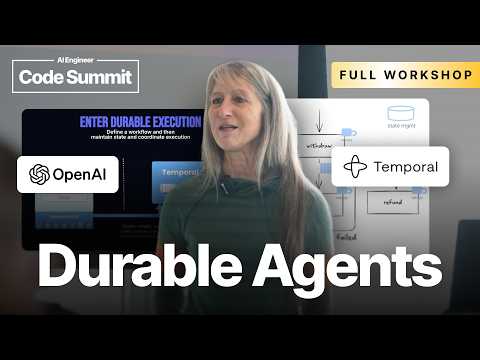
The industry is moving from "Agent as a Script" to "Agent as a Durable Service" where state management is handled by the infrastructure.
Wrap your existing API tools in the `activity_as_tool` function to gain automatic retries and execution history.
Reliability is the only moat in the agentic economy. If your agent cannot survive a server restart during a three-day task, it is not ready for the enterprise.
The Macro Trend: The move from fragmented content libraries to integrated health systems where AI synthesizes biomarkers and movement.
The Tactical Edge: Construct internal LLM tools to categorize qualitative feedback. This turns thousands of raw reviews into a precise roadmap.
The Bottom Line: Building a $100M ARR consumer app requires mastery of both growth loops and product retention. Solve for the daily habit to win the long game.
The transition from general-purpose AI to specialized application layers. As foundation models commoditize, value migrates to the "fat tail" of human-centric complexity.
Prioritize building or investing in "DNA of the future" companies that incumbents must eventually acquire to survive. Focus on winning the "point of attack" by staying deep in the technical details.
We are in a unique market where demand growth justifies high valuations. Success over the next year depends on identifying founders who are the absolute best in the world at one specific thing.
Consolidation is Coming: The market will reward projects that unify their structures and clearly define token holder rights, moving away from the misaligned Labs/DAO split.
Builder/Investor Note: Builders should prioritize product-market fit before token launches and design for transparent, direct value accrual to tokens. Investors must scrutinize token rights and value flow, favoring projects with clear structures or strong buyback programs.
The "So What?": This "ideological bear market" is forcing a necessary re-evaluation of Web3's core business models. The next 2-3 years will see a consolidation of strong teams and a push for regulatory innovation, creating generational buying opportunities for those who understand the shift.
Strategic Shift: Crypto is transitioning from a retail-driven speculative market to an institutionally-backed, fundamentals-focused industry.
Builder/Investor Note: Prioritize fundamentally strong DeFi protocols and major assets. Builders must focus on real-world utility and lean operations.
The "So What?": Regulatory clarity, stablecoin expansion, and AI's capital demands create a powerful, linear growth environment for crypto in 2026, potentially leading to new all-time highs for major assets.
Strategic Implication: The RWA market is poised for a "nuclear" expansion in 2026, driven by declining T-bill yields and a global search for higher returns. Expect 25-50x growth, pushing total value to $400B-$800B.
Builder/Investor Note: Focus investments on RWA infrastructure and tooling (lending, borrowing, insurance, core chains) rather than just holding RWA assets. These platforms capture fees from growing volume. Builders should prioritize crypto-native composability and permissionless access.
The "So What?": The convergence of traditional finance's yield needs with crypto's permissionless innovation, particularly in emerging markets, will redefine capital allocation and create new financial primitives over the next 6-12 months.
Verifiable Infrastructure: Lighter's ZK-centric approach to verifiability positions it as a robust platform for institutional adoption as regulatory clarity improves.
Market Expansion Strategy: The zero-fee model is a bold play to expand the DeFi trading market, potentially attracting a new wave of users and professional liquidity.
Ecosystem Play: The "sidecar protocol" and planned expansion into RWAs, options, and fixed income signal Lighter's ambition to become a foundational layer for a broader, more integrated DeFi.
Strategic Implication: The WLF case highlights a critical tension between marketing claims and regulatory reality in the crypto space. Clear market structure laws will force projects to align their operations with their stated decentralization.
Builder/Investor Note: Projects claiming "DeFi" status but exhibiting centralized control (e.g., insider veto power, token freezing, high insider token concentration) face significant regulatory risk. Builders should audit their governance and token distribution against emerging "bright line" tests.
The "So What?": The outcome of WLF's regulatory classification, and the broader market structure bill, will define the operating environment for crypto for the next 6-12 months, determining which projects thrive under new legal frameworks.
Strategic Implication: The crypto market is undergoing a structural re-rating. Focus on companies building essential infrastructure and solving real-world problems, not just speculative tokens.
Builder/Investor Note: Private crypto equity is attracting significant capital. Builders should focus on full-stack fintech solutions and direct customer engagement. Investors should identify structurally advantaged companies with clear business models.
The "So What?": The next 6-12 months will see continued decoupling. A potential softening of AI hype could redirect capital, but the long-term winners in crypto will be those providing tangible utility and robust infrastructure.