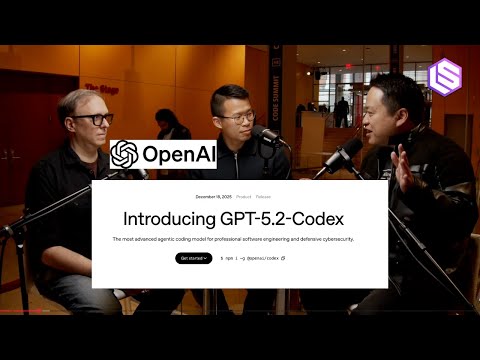
The Macro Shift: Agentic Abstraction. We are moving from Model-as-a-Service to Agent-as-a-Service where the harness is as important as the weights.
The Tactical Edge: Standardize your CLI. Use tools like ripgrep (RG) that models already have "habits" for to see immediate performance gains.
The Bottom Line: The next 12 months will see the end of manual integration engineering as agents become capable of navigating UIs and legacy terminals autonomously.
The commoditization of syntax means architectural judgment is the only remaining moat. As the cost of code hits zero the value of intent skyrockets.
Replace your manual refactoring workflows with a burn and rebuild strategy. Use agents to generate entirely new modules instead of patching old ones.
Seniority is no longer a shield against obsolescence. You must spend the next six months building your agentic intuition or risk being replaced by a PhD student with a prompt.
The Macro Evolution: Standardized communication layers are replacing custom API integrations. This commoditizes the connector market and moves value to the models that best utilize these tools.
The Tactical Edge: Standardize your internal data tools using MCP servers today. This ensures your company is ready for autonomous agents that can discover and use your resources without manual API integration.
The Bottom Line: The agentic stack is consolidating around MCP. Interoperability is no longer a feature; it is the foundation for the next decade of AI utility.
The Macro Shift: From Model-Centric to Eval-Centric. The value is moving from the LLM itself to the proprietary evaluation loops that keep the LLM on the rails.
The Tactical Edge: Export production traces and build a "Golden Set" of 50 hard examples. Use these to run A/B tests on every prompt change before hitting production.
The Bottom Line: Reliability is the product. If you cannot measure how your agent fails, you haven't built a product; you've built a demo.
The transition from chatbots with tools to agents that build tools marks the end of the manual integration era.
Stop building custom model scaffolding and start building on top of opinionated agent layers like the Codex SDK.
In 12 months, the distinction between a coding agent and a general computer user will vanish as the terminal becomes the primary interface for all digital labor.
The Capability-Utility Gap is widening. We see a divergence where models get smarter but the friction of human-AI collaboration keeps productivity flat.
Deploy AI for mid-level engineers or low-context tasks. Avoid forcing AI workflows on your top seniors working in complex legacy systems.
The next year will focus on reliability over raw intelligence. The winners will have models that require the least amount of human babysitting.
Bitcoin, once digital gold, is now frontier tech, vulnerable to broader tech sell-offs.
Reallocate capital towards crypto assets benefiting from regulatory clarity and innovation: stablecoins, tokenized assets, privacy, prediction markets, perpetual futures.
Bitcoin's short-term narrative is challenged, but its long-term tech thesis holds.
Real-time data platforms are supplanting traditional economic reporting, forcing investors to re-evaluate their information sources, while AI's capital expenditure is creating a bifurcation between infrastructure providers and speculative model companies.
Prioritize investments in blockchain infrastructure and stablecoin-centric payment solutions that cater to the emerging agentic economy, and leverage real-time data for a competitive information advantage.
The convergence of real-time data, AI agents, and blockchain rails will fundamentally alter market dynamics and value capture over the next 6-12 months, rewarding those who understand the shift from centralized, lagging systems to decentralized, optimized ones.
The Macro Shift: AI is fundamentally reshaping corporate IT spending, driving a strategic pivot from external SaaS subscriptions to internal development, which will consolidate profits within mega-cap tech and pressure traditional software vendors.
The Tactical Edge: Identify and invest in vertically integrated tech giants that can leverage AI for internal cost savings and new product development, while selectively shorting asset-heavy, midstream, or non-essential SaaS providers during strength.
The Bottom Line: The current market is a re-evaluation of fundamental value across tech and crypto. Focus on companies with strong internal demand for compute and real-world utility, and understand that crypto's speculative cycles, while volatile, are driven by a unique social dynamic that will persist.
High-performance L2s are carving out new market segments by prioritizing user experience and speed over strict L1 equivalence, challenging traditional value accrual models.
Builders should target L2s offering ultra-low latency and predictable costs for consumer-facing DeFi and gaming, as these environments enable novel, sticky applications.
The next wave of crypto adoption hinges on L2s that can deliver real-time, seamless experiences, shifting value capture from L1 monetary premium to execution premium and innovative tokenomics.
The global monetary order is transitioning from a unipolar, dollar-dominant system to a multipolar one, driven by sovereign debt and geopolitical competition. This change elevates neutral reserve assets and challenges traditional financial institutions.
Diversify your portfolio across high-quality equities (with an international and value tilt), hard assets (gold, silver, platinum, Bitcoin), and real-world assets like energy infrastructure. Maintain 5-10% cash for opportunities.
The "gradual print" and ongoing monetary reordering mean sustained debasement of fiat currencies. Positioning in hard assets and resilient, undervalued real-world businesses is crucial for preserving and growing wealth over the next 6-12 months.
The relentless demand for AI compute is transforming Bitcoin miners from speculative, commodity-dependent entities into stable, infrastructure-as-a-service providers. This pivot leverages their core asset—cheap power—to capture predictable, high-margin revenue streams.
Evaluate Bitcoin mining stocks based on their AI contract pipeline, execution capabilities, and access to consistent power, rather than solely on Bitcoin price correlation. Prioritize those with colocation leases to minimize GPU capex risk.
The strategic shift to AI offers a compelling de-risking narrative for Bitcoin miners, potentially leading to higher valuations and more stable cash flows. However, investors must monitor execution risks and political headwinds around power access over the next 6-12 months.