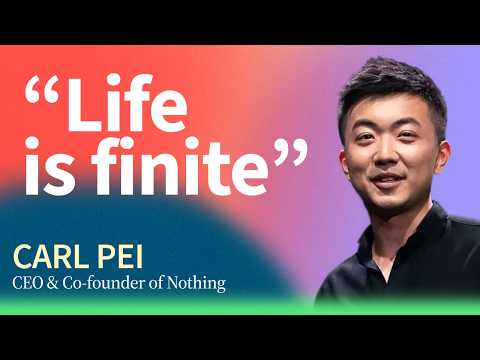
The Macro Shift: Infrastructure Invisibility. As core technologies become background noise, value moves from the pipes to the unique experiences built on top of them.
The Tactical Edge: Reject Mediocrity. Audit your product for average features and replace them with high-conviction improvements that competitors are too lazy to attempt.
The Bottom Line: Building is the only way to ensure the future happens. If you do not create the next version of reality, you are stuck living in an outdated vision.
The transition from hardware specs to emotional hardware where brand identity and OS-native AI become the primary moats.
Prioritize arbitrage opportunities in marketing by finding underpriced attention on platforms like TikTok before they become crowded.
Success in mature markets requires a Genghis Khan method: be a talent scout, stay open-minded to global supply chains, and use design to win the emotional battle for the consumer's pocket.
The transition from centralized cloud training to distributed local inference creates a massive demand for high-bandwidth storage and custom CPUs.
Audit your technical roadmap to prioritize local agentic workflows that reduce latency and data privacy risks.
The next 12 months will favor hardware that enables physical AI and local autonomy. Owning the compute stack is becoming a competitive necessity for builders who want to move faster than the cloud allows.
Intelligence is decoupling from scale. As reasoning becomes a commodity, the value moves from the size of the model to the proprietary nature of the training data.
Use TRL or Unsloth for single-GPU fine-tuning. Prioritize cleaning your instruction sets over increasing your training iterations.
The future belongs to those who own their data pipelines. If you can distill elite reasoning into a 350M parameter model, you win on latency, cost, and privacy.
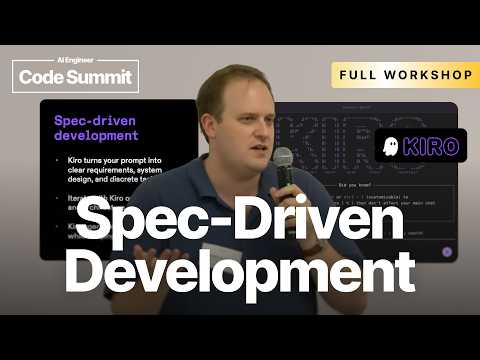
Software maintenance is moving from a manual craft to an industrial process. As agents handle the toil of migrations and security, human engineers will focus entirely on high-level system design.
Batch by Dependency. Use the OpenHands SDK to visualize your codebase as a graph and deploy agents to solve the leaf nodes first.
Companies that master agent orchestration will clear their tech debt backlogs in weeks instead of years, creating a massive competitive advantage in product velocity.
Value is migrating from raw infrastructure to the model layer. As compute becomes a commodity, the economic winner is the entity that owns the weights and the inference interface.
Audit your portfolio for projects with Visa-style fee structures. Prioritize protocols that generate revenue from external usage rather than internal token circularity.
Sustainable crypto AI requires moving past speculative emissions toward actual service fees. The next year will separate apps that use AI to solve problems from protocols that use AI to sell tokens.
The "Fat Protocol" thesis is being replaced by "Fat Applications" as front-ends capture the spread between network costs and user willingness to pay.
Build or invest in "Super Terminals" like Fuse that abstract gas fees and integrate banking features natively.
In 2026, the winner isn't the fastest chain, but the app that makes the chain invisible. Front-ends are the new sovereign entities of the crypto economy.
The Macro Movement: Infrastructure costs are creating a natural monopoly for dominant chains. Capital is migrating away from ghost chains that cannot support the $20 million annual integration tax.
The Tactical Edge: Audit the IP structure of your protocol holdings. Prioritize projects where the foundation or DAO owns the primary domain to avoid "stealth privatization" risks.
The Bottom Line: The next year belongs to platforms that own the user relationship and the underlying pipes. Expect a brutal consolidation where only the most integrated apps survive.