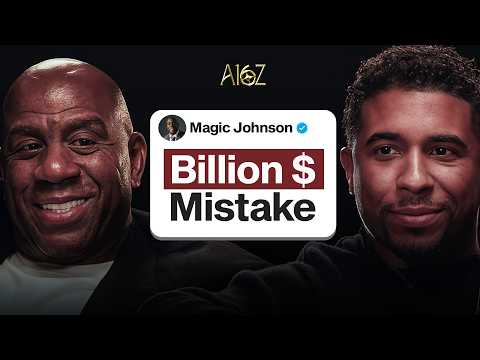
The landscape of wealth creation for public figures is shifting from transient endorsement income to durable equity ownership, driven by increased financial literacy and the strategic deployment of capital into high-growth, often tech-enabled, ventures.
Cultivate a "deal-making rolodex" by consistently networking, prioritizing early attendance at key events, and seeking out mentors who can open doors to opportunities.
Long-term value creation hinges on a disciplined investment philosophy that embraces "boring" businesses with strong demand, leverages strategic partnerships, and prioritizes equity stakes over short-term cash, positioning investors to capitalize on the next wave of innovation in AI and beyond.
The cultural pivot from short-term celebrity endorsements to long-term equity ownership is accelerating, driven by the transparency and efficiency of modern tech platforms. This creates a new class of builder-investors who leverage their brand for strategic capital deployment.
Cultivate a "give first" mentality in networking, prioritizing long-term relationships over immediate transactions. Seek out "boring" businesses with clear demand in underserved markets, applying a disciplined, data-driven approach to investment and operational excellence.
Success in the next decade demands a blend of relentless execution, strategic partnership, and a willingness to invest in foundational assets and experiences. For investors, this means looking beyond hype to identify enduring value, while for builders, it means leveraging new tools like AI to create efficient, high-impact ventures.
The era of celebrity endorsements is giving way to celebrity equity ownership, where personal brands are used as strategic capital in high-growth ventures. This move is driven by a desire for long-term wealth creation and the recognition that influence, combined with smart capital, can accelerate business success.
Cultivate a diverse network of mentors and partners, prioritizing those who offer deep expertise and shared vision over immediate financial gain. Invest in "boring" businesses with clear market demand and be prepared to put your own capital at risk to secure significant equity.
Building a multi-generational business empire requires a long-term mindset, a willingness to learn from the best, and the courage to invest in overlooked opportunities and emerging technologies.
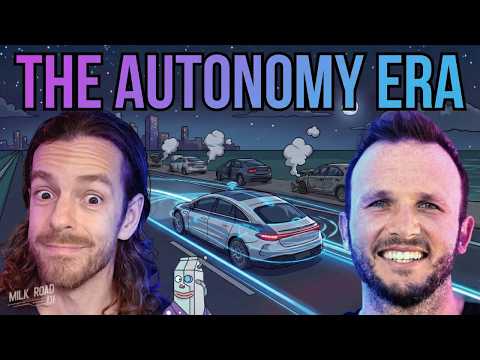
AI-driven automation converges with Tesla's vertically integrated hardware and data infrastructure, creating a deflationary force across transportation and labor markets and an unparalleled economic moat.
Investors should re-evaluate Tesla not as an automotive stock, but as a dominant AI and robotics platform with compounding revenue streams. Builders should study Tesla's full-stack, data-centric AI deployment.
Tesla's imminent unsupervised FSD rollout and robo-taxi network will fundamentally alter personal mobility and asset ownership, making it critical for anyone tracking the future of AI, robotics, and global economics over the next 6-12 months.
Evaluate Tesla not as an automotive stock, but as a leading AI and robotics platform with multiple, compounding revenue streams.
AI-driven automation, powered by vertically integrated hardware and software, is poised to create unprecedented deflationary forces across transportation and labor, concentrating immense value in companies that control the full stack.
Tesla's imminent unsupervised FSD rollout and robo-taxi network, coupled with its robotics and space infrastructure, represent a multi-trillion dollar opportunity that the market is only beginning to price in, making it a critical consideration for long-term tech investors.
AI-driven vertical integration, exemplified by Tesla's FSD and robotics, is creating a new economic order where traditional industry boundaries dissolve. This shift will drive massive deflation in transportation and labor costs, fundamentally altering consumer behavior and capital allocation.
Investors should evaluate companies not just on current revenue streams but on their proprietary data moats and ability to vertically integrate AI across hardware and software. Builders should focus on platforms that enable autonomous services, recognizing the immense value in owning both the AI and the physical means of deployment.
Tesla's strategic pivot to autonomous AI and robotics, coupled with its unique data advantage and vertical integration, positions it to capture unprecedented market share in multiple trillion-dollar industries. This is about owning the future of movement, work, and even space exploration, making it a critical long-term bet for those looking beyond today's market narratives.
Value is migrating from raw infrastructure to the model layer. As compute becomes a commodity, the economic winner is the entity that owns the weights and the inference interface.
Audit your portfolio for projects with Visa-style fee structures. Prioritize protocols that generate revenue from external usage rather than internal token circularity.
Sustainable crypto AI requires moving past speculative emissions toward actual service fees. The next year will separate apps that use AI to solve problems from protocols that use AI to sell tokens.
The "Fat Protocol" thesis is being replaced by "Fat Applications" as front-ends capture the spread between network costs and user willingness to pay.
Build or invest in "Super Terminals" like Fuse that abstract gas fees and integrate banking features natively.
In 2026, the winner isn't the fastest chain, but the app that makes the chain invisible. Front-ends are the new sovereign entities of the crypto economy.
The Macro Movement: Infrastructure costs are creating a natural monopoly for dominant chains. Capital is migrating away from ghost chains that cannot support the $20 million annual integration tax.
The Tactical Edge: Audit the IP structure of your protocol holdings. Prioritize projects where the foundation or DAO owns the primary domain to avoid "stealth privatization" risks.
The Bottom Line: The next year belongs to platforms that own the user relationship and the underlying pipes. Expect a brutal consolidation where only the most integrated apps survive.