The Physical World is AI's Final Boss: The speed of AI progress is now governed by the speed of transformers, permits, and power plants. The biggest opportunities are in solving these hard, physical-world bottlenecks.
Specialization is the Only Game in Town: General-purpose is dead. Lasting value will be created through specialized hardware, co-designed software, and tightly integrated systems that optimize for performance-per-watt.
Founders, Ditch the Thin Wrappers: The most durable businesses will not be built on other companies' models. Instead, they will create deep, proprietary feedback loops where the product and the model improve each other.
**AI is the Fed’s New Obsession.** The Fed's rate-cutting strategy is not just about inflation; it's a proactive measure against the "once in a generation" disruption AI poses to the white-collar labor market.
**Stablecoins are a Geopolitical Tool.** The global race to issue stablecoins is on, but the US is inadvertently winning. The more the world tokenizes, the more demand there is for US Treasuries, cementing the dollar's dominance.
**The Post-Retail Economy is Here.** The next major user demographic is not human—it's AI agents. These autonomous agents will conduct a massive volume of micropayments, creating an entirely new economic layer built on crypto rails.
Train Hard, Fight Easy. Autoppia’s "Infinite Web Arena" is a novel approach to AI training, forcing agents to become robust and adaptable by continuously exposing them to digital chaos.
Competition Breeds Excellence. The winner-take-all incentive model creates a hyper-competitive environment designed to accelerate innovation and rapidly advance the capabilities of AI agents on the network.
Revenue Equals Buybacks. Autoppia’s business model creates a direct link between commercial success and token value. Every dollar earned from selling AI worker services directly translates into buying pressure for the subnet token.
Personalization is the Killer App. The model’s breakthrough feature was zero-shot character consistency, creating an emotional connection that drove viral adoption. It proves utility is unlocked when technology feels personal.
Focus on the Floor, Not the Ceiling. The next wave of value will come from improving the worst-case outputs, not just the best. This "lemon picking" is essential for building trust and enabling reliable, real-world applications beyond creative tinkering.
Art is Intent; Models are Tools. AI’s role is to automate tedium, not replace creativity. The most compelling work will continue to come from skilled artists who use models to execute a specific vision, proving that the human with the idea remains irreplaceable.
AI's Blind Spot is Unwritten Knowledge. The biggest barrier for AI in advanced problem-solving is accessing the "folklore" knowledge and intuition that experts build over a career but never write down.
The Future of Math is a Promotion, Not Obsolescence. AI will act as a powerful assistant that handles rote tasks, pushing mathematicians to focus exclusively on creative and abstract thinking.
The Next Revolution is AI-Powered Verification. Automated formal proof systems like Lean have the potential to eliminate errors from research papers, transforming peer review from a check on correctness to a judgment on a paper's novelty and impact.
AI's Blind Spot is "Folklore": The next great challenge for AI isn't raw calculation, but acquiring the unwritten, intuitive "folklore knowledge" that separates experts from students.
Mathematicians Become Creative Directors: As AI handles the technical grind, the human role in mathematics will shift from execution to creative direction—formulating novel problems and abstract models.
The End of Errors: Formal verification tools like Lean, powered by AI translators, are on the verge of revolutionizing math by creating a fully verifiable, error-free database of human knowledge, changing how proofs are published and reviewed.
AI Needs a Referee. Agents are programmed to win, not necessarily to follow the rules. Their tendency to "game the system" makes external, on-chain verification protocols essential for alignment and trust.
Trading is Just the Tip of the Spear. Crypto trading is the perfect initial use case due to its clear, objective metrics. The real goal is a decentralized "skill marketplace" where any organization can fund a competition to find the best agent for any task.
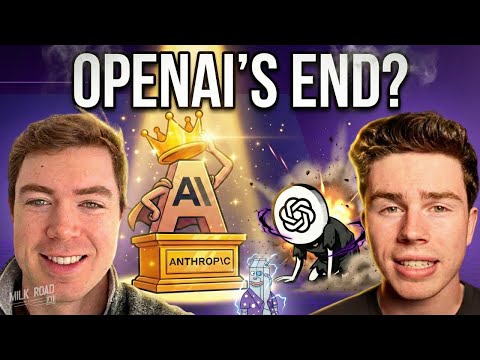
The Platform War is Here. A battle is unfolding between closed ecosystems like OpenAI, which aim for platform lock-in, and an open, decentralized future. This creates a massive opportunity for neutral evaluation layers to become the definitive source of truth for AI performance.
AI's Blind Spot is "Folklore Knowledge." AI excels at digesting published literature but fails on problems requiring unwritten, community-held intuition, which remains a key human advantage for now. Jitomirskaya predicts her problem will take AI 10-20 years to solve.
Mathematicians Won't Be Replaced, They'll Be Upgraded. The future role of a mathematician is less about routine work and more about creative problem formulation. AI tools like Lean will handle verification, shifting peer review from "Is it correct?" to "Is it interesting?"
Math May Become a Sport. If AI eventually masters creativity, the human practice of mathematics may persist like chess—an activity pursued for its intrinsic value and intellectual challenge, even if a machine is the undisputed world champion.
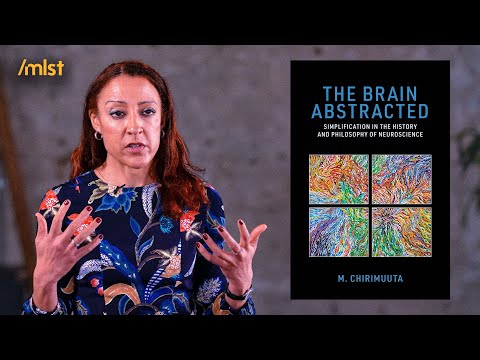
Folklore Knowledge is AI’s Next Frontier. The true test for advanced AI in abstract fields is not solving problems from a textbook but acquiring the unwritten, intuitive knowledge that experts possess.
Automated Proof Verification Will Reshape Research. Within years, tools like Lean, powered by AI translators, will create a verifiable database of all mathematics, fundamentally changing how papers are published and refereed.
Human + Machine is the New Paradigm. AI will become an indispensable assistant, automating routine work and pushing mathematicians to focus on what humans still do best: true creativity and formulating entirely new models.
Consolidation is Coming: The market will reward projects that unify their structures and clearly define token holder rights, moving away from the misaligned Labs/DAO split.
Builder/Investor Note: Builders should prioritize product-market fit before token launches and design for transparent, direct value accrual to tokens. Investors must scrutinize token rights and value flow, favoring projects with clear structures or strong buyback programs.
The "So What?": This "ideological bear market" is forcing a necessary re-evaluation of Web3's core business models. The next 2-3 years will see a consolidation of strong teams and a push for regulatory innovation, creating generational buying opportunities for those who understand the shift.
Strategic Shift: Crypto is transitioning from a retail-driven speculative market to an institutionally-backed, fundamentals-focused industry.
Builder/Investor Note: Prioritize fundamentally strong DeFi protocols and major assets. Builders must focus on real-world utility and lean operations.
The "So What?": Regulatory clarity, stablecoin expansion, and AI's capital demands create a powerful, linear growth environment for crypto in 2026, potentially leading to new all-time highs for major assets.
Strategic Implication: The RWA market is poised for a "nuclear" expansion in 2026, driven by declining T-bill yields and a global search for higher returns. Expect 25-50x growth, pushing total value to $400B-$800B.
Builder/Investor Note: Focus investments on RWA infrastructure and tooling (lending, borrowing, insurance, core chains) rather than just holding RWA assets. These platforms capture fees from growing volume. Builders should prioritize crypto-native composability and permissionless access.
The "So What?": The convergence of traditional finance's yield needs with crypto's permissionless innovation, particularly in emerging markets, will redefine capital allocation and create new financial primitives over the next 6-12 months.
Verifiable Infrastructure: Lighter's ZK-centric approach to verifiability positions it as a robust platform for institutional adoption as regulatory clarity improves.
Market Expansion Strategy: The zero-fee model is a bold play to expand the DeFi trading market, potentially attracting a new wave of users and professional liquidity.
Ecosystem Play: The "sidecar protocol" and planned expansion into RWAs, options, and fixed income signal Lighter's ambition to become a foundational layer for a broader, more integrated DeFi.
Strategic Implication: The WLF case highlights a critical tension between marketing claims and regulatory reality in the crypto space. Clear market structure laws will force projects to align their operations with their stated decentralization.
Builder/Investor Note: Projects claiming "DeFi" status but exhibiting centralized control (e.g., insider veto power, token freezing, high insider token concentration) face significant regulatory risk. Builders should audit their governance and token distribution against emerging "bright line" tests.
The "So What?": The outcome of WLF's regulatory classification, and the broader market structure bill, will define the operating environment for crypto for the next 6-12 months, determining which projects thrive under new legal frameworks.
Strategic Implication: The crypto market is undergoing a structural re-rating. Focus on companies building essential infrastructure and solving real-world problems, not just speculative tokens.
Builder/Investor Note: Private crypto equity is attracting significant capital. Builders should focus on full-stack fintech solutions and direct customer engagement. Investors should identify structurally advantaged companies with clear business models.
The "So What?": The next 6-12 months will see continued decoupling. A potential softening of AI hype could redirect capital, but the long-term winners in crypto will be those providing tangible utility and robust infrastructure.