The landscape of wealth creation for public figures is shifting from transient endorsement income to durable equity ownership, driven by increased financial literacy and the strategic deployment of capital into high-growth, often tech-enabled, ventures.
Cultivate a "deal-making rolodex" by consistently networking, prioritizing early attendance at key events, and seeking out mentors who can open doors to opportunities.
Long-term value creation hinges on a disciplined investment philosophy that embraces "boring" businesses with strong demand, leverages strategic partnerships, and prioritizes equity stakes over short-term cash, positioning investors to capitalize on the next wave of innovation in AI and beyond.
The cultural pivot from short-term celebrity endorsements to long-term equity ownership is accelerating, driven by the transparency and efficiency of modern tech platforms. This creates a new class of builder-investors who leverage their brand for strategic capital deployment.
Cultivate a "give first" mentality in networking, prioritizing long-term relationships over immediate transactions. Seek out "boring" businesses with clear demand in underserved markets, applying a disciplined, data-driven approach to investment and operational excellence.
Success in the next decade demands a blend of relentless execution, strategic partnership, and a willingness to invest in foundational assets and experiences. For investors, this means looking beyond hype to identify enduring value, while for builders, it means leveraging new tools like AI to create efficient, high-impact ventures.
The era of celebrity endorsements is giving way to celebrity equity ownership, where personal brands are used as strategic capital in high-growth ventures. This move is driven by a desire for long-term wealth creation and the recognition that influence, combined with smart capital, can accelerate business success.
Cultivate a diverse network of mentors and partners, prioritizing those who offer deep expertise and shared vision over immediate financial gain. Invest in "boring" businesses with clear market demand and be prepared to put your own capital at risk to secure significant equity.
Building a multi-generational business empire requires a long-term mindset, a willingness to learn from the best, and the courage to invest in overlooked opportunities and emerging technologies.
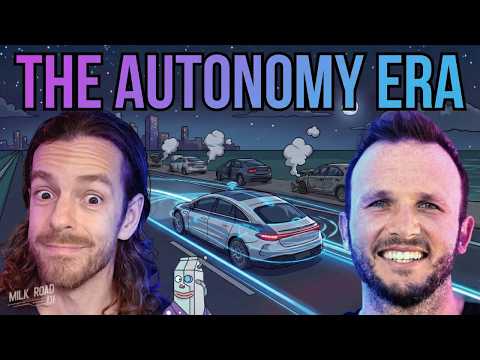
AI-driven automation converges with Tesla's vertically integrated hardware and data infrastructure, creating a deflationary force across transportation and labor markets and an unparalleled economic moat.
Investors should re-evaluate Tesla not as an automotive stock, but as a dominant AI and robotics platform with compounding revenue streams. Builders should study Tesla's full-stack, data-centric AI deployment.
Tesla's imminent unsupervised FSD rollout and robo-taxi network will fundamentally alter personal mobility and asset ownership, making it critical for anyone tracking the future of AI, robotics, and global economics over the next 6-12 months.
Evaluate Tesla not as an automotive stock, but as a leading AI and robotics platform with multiple, compounding revenue streams.
AI-driven automation, powered by vertically integrated hardware and software, is poised to create unprecedented deflationary forces across transportation and labor, concentrating immense value in companies that control the full stack.
Tesla's imminent unsupervised FSD rollout and robo-taxi network, coupled with its robotics and space infrastructure, represent a multi-trillion dollar opportunity that the market is only beginning to price in, making it a critical consideration for long-term tech investors.
AI-driven vertical integration, exemplified by Tesla's FSD and robotics, is creating a new economic order where traditional industry boundaries dissolve. This shift will drive massive deflation in transportation and labor costs, fundamentally altering consumer behavior and capital allocation.
Investors should evaluate companies not just on current revenue streams but on their proprietary data moats and ability to vertically integrate AI across hardware and software. Builders should focus on platforms that enable autonomous services, recognizing the immense value in owning both the AI and the physical means of deployment.
Tesla's strategic pivot to autonomous AI and robotics, coupled with its unique data advantage and vertical integration, positions it to capture unprecedented market share in multiple trillion-dollar industries. This is about owning the future of movement, work, and even space exploration, making it a critical long-term bet for those looking beyond today's market narratives.
The Macro Strategic Pivot: Vertical Consolidation. Protocols are moving away from modularity toward integrated stacks to capture maximum fee revenue.
The Tactical Edge: Monitor BLP Rates. Watch the spread between Felix and Hyperliquid’s native lending rates. Capital will migrate to the platform offering the lowest borrow cost for margin trading.
The Bottom Line: Hyperliquid is winning by becoming a DeFi Super App rather than just a perp engine. Its success over the next year depends on its ability to manage UI fragmentation while keeping all revenue inside the Hype ecosystem.
The Macro Trend: The transition from fragmented L2 liquidity to unified cross-chain execution.
The Tactical Edge: Monitor Arrow’s Q2 launch on Mainnet to capitalize on the initial liquidity migration.
The Bottom Line: Arrow is building the operating system for Ethereum liquidity. If they capture even a fraction of Mainnet the economic model moves from inflationary to net-positive.