The Macro Shift: Scaling laws are hitting a diminishing return on raw data but a massive acceleration in reasoning. The shift from statistical matching to reasoning agents happens when models can recursively check their own logic.
The Tactical Edge: Build for the agentic future by prioritizing high-context data pipelines. Models perform better when you provide massive context rather than relying on zero-shot inference.
The Bottom Line: We are 24 months away from AI that makes unassisted human thought look like navigating London without a map. Prepare for a world where the most valuable skill is directing machine agency rather than performing manual logic.
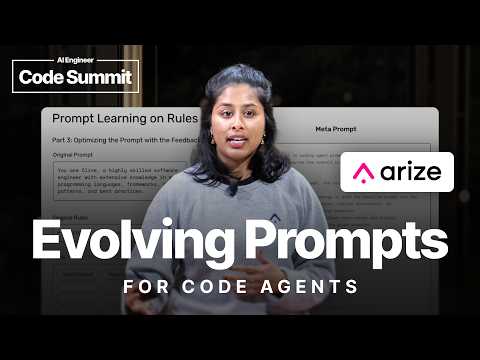
The transition from model-centric to loop-centric development. Performance is now a function of the feedback cycle rather than just the weights of the frontier model.
Implement an LLM-as-a-judge step that outputs a "Reason for Failure" field. Feed this string directly into a meta-prompt to update your agent's system instructions automatically.
Static prompts are technical debt. Teams that build automated systems to iterate on their agent's instructions will outpace those waiting for the next model training run.
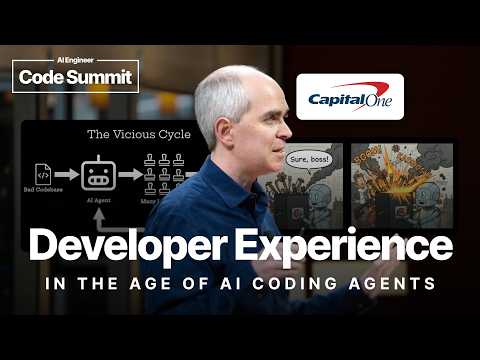
The Macro Shift: The transition from writing to reviewing as the primary engineering activity. As agents generate more code, the human role moves from creator to editor.
The Tactical Edge: Build CLIs for every internal tool to give agents a native text interface. This increases accuracy and speed compared to visual automation.
The Bottom Line: Developer experience is the infrastructure for AI. Investing in clean code and fast feedback loops is the only way to ensure AI productivity gains do not decay over the next 12 months.
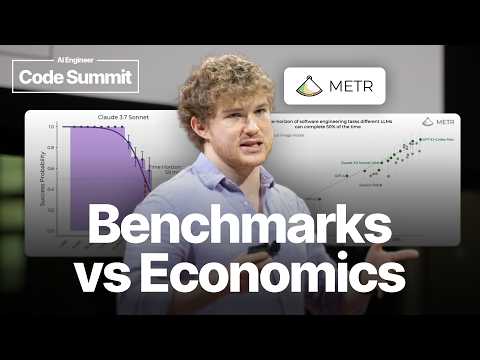
The Capability-Productivity Gap. We are entering a period where model intelligence outpaces our ability to integrate it into high stakes production.
Audit your stack. Identify tasks where "good enough" generation is a win versus high context tasks where AI is currently a net negative.
Do not mistake a climbing benchmark for a finished product. For the next year, the biggest wins are not in smarter models but in better verification loops.
The transition from simple Large Language Models to Reasoning Models marks the end of the stochastic parrot era.
Build agentic workflows that utilize high-context windows for recursive problem solving.
We are moving toward a world where intelligence is a commodity. Your value will shift from knowing things to directing outcomes over the next 12 months.
The Macro Pivot: Agentic Abstraction. As the cost of logic hits zero, the value of a developer moves from how to build to what to build.
The Tactical Edge: Adopt Orchestrators. Replace your standard editor with agent-first platforms today to learn the art of directing sub-agents before the 2026 deadline.
The Bottom Line: The next 12 months will reward those who stop writing code and start building the systems that write it for them.
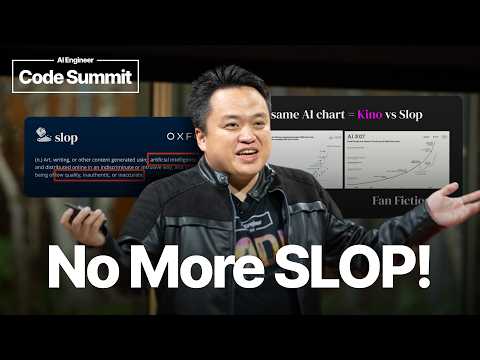
The Macro Movement: The Token Deflation. As compute becomes a commodity, the value of the "Human-in-the-Loop" moves from production to architectural oversight.
The Tactical Edge: Implement Code Maps. Use AI to index and understand your entire repository to ensure every generated line aligns with existing logic.
The Bottom Line: The next year belongs to the "Taste-Driven Developer." If you optimize for volume, you produce slop; if you optimize for accountability, you build a moat.
The Macro Shift: Software development is moving from human-led logic to agent-led verification.
The Tactical Edge: Use sub-agents to isolate testing from creation to prevent context pollution.
The Bottom Line: The technical barrier is evaporating. In the next 12 months, the winning platforms will be those that require the fewest technical decisions from the user.
Capital no longer distinguishes between AI stocks and rare metals. Investors treat these as a single risk-on bucket settled on-chain.
Monitor Hyperliquid deployers. Identify protocols moving from passive yield to active market-making to capture the next commodity rotation.
The next year will favor platforms providing access to diverse asset classes. Pure crypto protocols must adapt or lose mindshare to trade everything venues.
The Macro Transition: Hard Asset Migration. As fiat currencies lose purchasing power, capital moves into finite assets, starting with Gold and Bitcoin before trickling down to Silver and Ethereum.
The Tactical Edge: Buy the Laggard. Identify assets with strong fundamentals that have underperformed the market leader by more than 30%.
The Bottom Line: The catchup trade is the most profitable strategy when the primary leaders are consolidating.
The institutionalization of Bitcoin has temporarily sacrificed its digital gold status for liquidity, creating a massive opportunity for those who can stomach the volatility before the next decoupling.
Monitor Japanese government bond yields as a leading indicator for global risk tolerance.
Bitcoin is currently a liquidity sponge, not a bunker. Expect it to follow the Trump Put and tech earnings until its volatility profile mirrors a currency rather than a speculative stock.
The market is moving from the "Compute Layer" to the "Agentic Layer." Owning the GPU is less valuable than owning the agent that controls the wallet.
Build agent-first interfaces. Stop designing for human clicks and start structuring your data so an LLM can execute transactions on your behalf.
The next 12 months belong to on-chain agents that handle treasury ops and commerce. The "decentralized GPU" narrative is dead. The "AI Agent with a bank account" narrative is just beginning.