AI is transforming software development from manual coding to agent orchestration, making "building" accessible to anyone with an idea and language. This fundamentally reconfigures the value of traditional programming skills and the entire app economy.
Invest in or build tools that prioritize agent-friendly APIs and CLI interfaces over traditional graphical user interfaces. Future value will accrue to services that seamlessly integrate into an agent's workflow, not just human-facing apps.
Personal AI agents are not just a new tool; they are a new operating system. Expect rapid shifts in user behavior and market demand, favoring platforms and services that empower autonomous AI, making now the time to adapt or be left behind.
AI agents are moving beyond language to autonomous action, fundamentally altering how software is built and consumed. This shift gives individuals the power to create complex systems with natural language, but also demands a new level of security awareness and critical thinking from users.
Embrace agentic engineering by focusing on clear communication and context provision rather than rigid coding. Experiment with open-source agents like OpenClaw to understand their capabilities and limitations firsthand.
The future of software is agent-centric. Investors should eye companies building agent-facing APIs or infrastructure, while builders must adapt their skills to "lead" AI teams. Ignoring this shift means missing the next wave of digital transformation.
The digital world moves from discrete apps to an integrated, agent-orchestrated OS, shifting value to platforms enabling seamless agent interaction.
Builders must pivot to "agentic engineering," focusing on guiding and designing systems for AI agents, mastering prompt engineering and CLI-based tool integration.
Personal AI agents will reshape software and productivity over the next 6-12 months. Investors should back agent infrastructure/API-first services; developers must embrace agent collaboration.
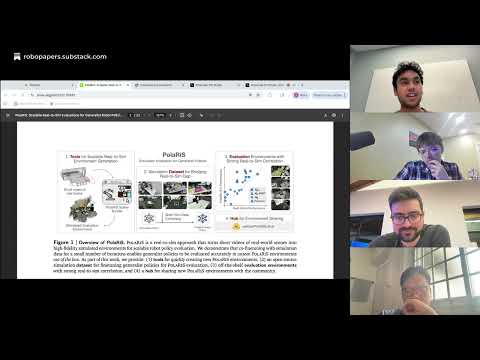
The push for generalist robot policies, akin to foundation models in other AI domains, demands evaluation tools that scale and generalize. PolaRiS directly addresses this by providing a framework for creating diverse, real-world correlated benchmarks, moving robotics beyond task-specific, overfitting evaluations towards true zero-shot generalization testing.
Implement PolaRiS's real-to-sim environment generation and "sim co-training" methodology. This allows for rapid, cost-effective iteration on robot policies with high confidence that improvements in simulation will translate to real-world gains, significantly accelerating development cycles.
For builders and investors, PolaRiS represents a critical infrastructure upgrade for robotics. It de-risks policy development by providing a reliable, scalable testing ground, making the path to deployable, generalist robots faster and more capital-efficient over the next 6-12 months.
The era of "agentic engineering" is here, moving software creation from explicit, line-by-line coding to high-level guidance of autonomous AI agents.
Experiment with agentic workflows now. Set up a local OpenClaw instance, even with free models, and use it to automate tedious tasks or prototype ideas.
Personal AI agents with system-level access are not just productivity tools; they are a new operating system layer that will consume and redefine existing applications.
Invest in companies demonstrating deep vertical integration in AI, custom silicon, and software-defined vehicle architectures. Prioritize those building proprietary data flywheels from large, active fleets.
The automotive industry is undergoing a fundamental re-architecture, moving from hardware-centric, domain-based systems to software-defined, AI-powered platforms. This shift will consolidate market power among vertically integrated players who control their data, compute, and software stack.
Autonomy will be a must-have feature by 2030, akin to airbags today. Companies without a robust, in-house, neural-net-based autonomy strategy and a software-defined architecture will struggle to compete at scale, leading to significant market share shifts in the coming years.
The shift from explicit coding to agentic orchestration means human creativity moves up the stack. Instead of writing every line, builders define intent, guide agents, and curate outcomes, making software creation more accessible and focused on problem-solving.
Invest in understanding agent-native design patterns. Prioritize building CLI-first tools and services that expose clear, composable interfaces, as these will be the foundational blocks for the next generation of AI-driven applications, making your products "agent-friendly" and future-proof.
Personal AI agents are not just productivity tools; they are a new operating system layer. Over the next 6-12 months, expect a rapid re-evaluation of traditional app value, a surge in agent-first infrastructure, and a critical need for robust, user-centric security frameworks as AI moves from language to action, directly impacting your digital strategy and investment thesis.
The rise of autonomous AI agents with system-level access is fundamentally reshaping the software landscape, moving value from traditional app interfaces to underlying APIs and data, and making building accessible for non-programmers.
Invest in infrastructure and tooling that facilitates agent-to-agent communication and robust CLI-based skill development, as this will be the new battleground for software functionality and integration.
The next 6-12 months will see increased adoption of agentic workflows, compelling companies to re-evaluate their product strategies towards API-first designs and human-centric "delight" to stay relevant as AI agents handle most functional tasks.
Policy Stalled: The prospects for comprehensive crypto market structure law are deteriorating, with political finger-pointing hindering progress. This means continued uncertainty for builders and investors, forcing operations into a legal gray area with unpredictable outcomes.
Custody Failures: The US government's handling of seized crypto assets, like the alleged $40 million theft from a Bitfinex hack wallet by a contractor's son, reveals alarming security gaps. This highlights that even state actors struggle with basic digital asset security, raising questions about their ability to regulate the space effectively.
Misplaced Focus: Trump's $5 billion lawsuit against JP Morgan for account closures is not true debanking, which impacts ordinary individuals and crypto businesses. This lawsuit distracts from the systemic issue of banks cutting off access to financial services for legitimate businesses without transparency or recourse.
The Macro Shift: AI's recursive self-improvement is compressing innovation cycles and dissolving engineering moats, creating an urgent demand for crypto infrastructure that can adapt to unforeseen technological advancements.
The Tactical Edge: Prioritize protocols and platforms that demonstrate a proactive approach to long-term technical risks, such as quantum computing, over those with rigid, unadaptable architectures.
The Bottom Line: The convergence of AI and crypto will redefine security and value. Ethereum's strategic investment in quantum resistance positions it to capture a significant narrative and technical advantage, while Bitcoin's inertia could become a critical liability over the next 6-12 months.
Monitor institutional capital flows into BitTensor subnets, particularly the DNA Fund's $300M DAT. Significant subnet acquisitions will likely precede sharp upward movements in TAO's price, offering a leading indicator for investors.
BitTensor is architecting a decentralized AI economy where market incentives and Darwinian selection drive innovation, effectively crowdsourcing the world's best AI talent to solve complex problems.
BitTensor is in its "sausage factory" phase, building the infrastructure for a $10,000+ TAO valuation. The current market irrationality and interface challenges are temporary.
The AI compute market is moving from opaque, centralized providers to verifiable, decentralized networks. Nodeexo's model forces real pricing and competition by embedding cryptographic trust directly into the infrastructure layer.
Evaluate Bittensor subnets not just for speculative yield, but for their ability to convert subnet tokens into real-world utility and verified infrastructure. Prioritize those building tangible, trust-minimized services.
Nodeexo's approach to verifiable GPU compute establishes a new standard for trust in decentralized AI infrastructure. This creates a compelling investment thesis for those identifying real utility and transparent value in the Bittensor ecosystem over the next 6-12 months.
The Macro Shift: Geopolitical tensions and economic uncertainty are driving a global re-allocation of capital, with Eastern wealth increasingly favoring hard assets and localized crypto rails. This challenges Western-centric market analysis and demands a broader, more nuanced view of global finance.
The Tactical Edge: Cultivate deep domain expertise and critical thinking, using AI as an amplification tool, not a replacement for learning. Focus on areas where human judgment, taste, and the ability to translate AI insights into real-world value remain irreplaceable.
The Bottom Line: The next 6-12 months will see continued divergence in global capital flows and accelerating AI integration. Investors must track opaque Eastern market signals, while builders should prioritize AI applications that augment human capability rather than simply automate, ensuring their skills remain relevant in an increasingly AI-driven world.
The Macro Shift: Monetary Escapism: As fiat debases and geopolitical tensions rise, capital is rotating from traditional tech to hard-capped assets and AI infrastructure.
The Tactical Edge: Reallocate Capital: Prioritize real assets and cyclical commodities (gold, silver, oil, copper) while selectively shorting overvalued software companies facing AI disruption and increasing capital expenditures.
The Bottom Line: The market is re-pricing value based on true scarcity and capital intensity. Position for a volatile environment where traditional narratives fail, and tangible assets or essential AI infrastructure dictate returns.