The Macro Shift: Scaling laws are hitting a diminishing return on raw data but a massive acceleration in reasoning. The shift from statistical matching to reasoning agents happens when models can recursively check their own logic.
The Tactical Edge: Build for the agentic future by prioritizing high-context data pipelines. Models perform better when you provide massive context rather than relying on zero-shot inference.
The Bottom Line: We are 24 months away from AI that makes unassisted human thought look like navigating London without a map. Prepare for a world where the most valuable skill is directing machine agency rather than performing manual logic.
The transition from model-centric to loop-centric development. Performance is now a function of the feedback cycle rather than just the weights of the frontier model.
Implement an LLM-as-a-judge step that outputs a "Reason for Failure" field. Feed this string directly into a meta-prompt to update your agent's system instructions automatically.
Static prompts are technical debt. Teams that build automated systems to iterate on their agent's instructions will outpace those waiting for the next model training run.
The Macro Shift: The transition from writing to reviewing as the primary engineering activity. As agents generate more code, the human role moves from creator to editor.
The Tactical Edge: Build CLIs for every internal tool to give agents a native text interface. This increases accuracy and speed compared to visual automation.
The Bottom Line: Developer experience is the infrastructure for AI. Investing in clean code and fast feedback loops is the only way to ensure AI productivity gains do not decay over the next 12 months.
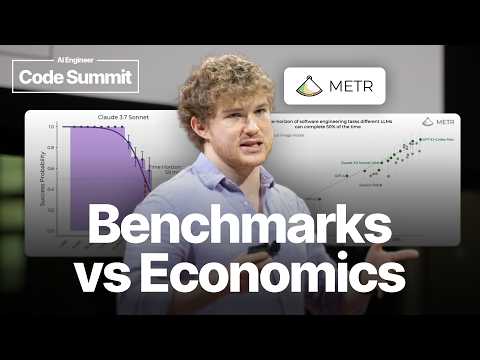
The Capability-Productivity Gap. We are entering a period where model intelligence outpaces our ability to integrate it into high stakes production.
Audit your stack. Identify tasks where "good enough" generation is a win versus high context tasks where AI is currently a net negative.
Do not mistake a climbing benchmark for a finished product. For the next year, the biggest wins are not in smarter models but in better verification loops.
The transition from simple Large Language Models to Reasoning Models marks the end of the stochastic parrot era.
Build agentic workflows that utilize high-context windows for recursive problem solving.
We are moving toward a world where intelligence is a commodity. Your value will shift from knowing things to directing outcomes over the next 12 months.
The Macro Pivot: Agentic Abstraction. As the cost of logic hits zero, the value of a developer moves from how to build to what to build.
The Tactical Edge: Adopt Orchestrators. Replace your standard editor with agent-first platforms today to learn the art of directing sub-agents before the 2026 deadline.
The Bottom Line: The next 12 months will reward those who stop writing code and start building the systems that write it for them.
The Macro Movement: The Token Deflation. As compute becomes a commodity, the value of the "Human-in-the-Loop" moves from production to architectural oversight.
The Tactical Edge: Implement Code Maps. Use AI to index and understand your entire repository to ensure every generated line aligns with existing logic.
The Bottom Line: The next year belongs to the "Taste-Driven Developer." If you optimize for volume, you produce slop; if you optimize for accountability, you build a moat.
The Macro Shift: Software development is moving from human-led logic to agent-led verification.
The Tactical Edge: Use sub-agents to isolate testing from creation to prevent context pollution.
The Bottom Line: The technical barrier is evaporating. In the next 12 months, the winning platforms will be those that require the fewest technical decisions from the user.
Policy Stalled: The prospects for comprehensive crypto market structure law are deteriorating, with political finger-pointing hindering progress. This means continued uncertainty for builders and investors, forcing operations into a legal gray area with unpredictable outcomes.
Custody Failures: The US government's handling of seized crypto assets, like the alleged $40 million theft from a Bitfinex hack wallet by a contractor's son, reveals alarming security gaps. This highlights that even state actors struggle with basic digital asset security, raising questions about their ability to regulate the space effectively.
Misplaced Focus: Trump's $5 billion lawsuit against JP Morgan for account closures is not true debanking, which impacts ordinary individuals and crypto businesses. This lawsuit distracts from the systemic issue of banks cutting off access to financial services for legitimate businesses without transparency or recourse.
The Macro Shift: AI's recursive self-improvement is compressing innovation cycles and dissolving engineering moats, creating an urgent demand for crypto infrastructure that can adapt to unforeseen technological advancements.
The Tactical Edge: Prioritize protocols and platforms that demonstrate a proactive approach to long-term technical risks, such as quantum computing, over those with rigid, unadaptable architectures.
The Bottom Line: The convergence of AI and crypto will redefine security and value. Ethereum's strategic investment in quantum resistance positions it to capture a significant narrative and technical advantage, while Bitcoin's inertia could become a critical liability over the next 6-12 months.
Monitor institutional capital flows into BitTensor subnets, particularly the DNA Fund's $300M DAT. Significant subnet acquisitions will likely precede sharp upward movements in TAO's price, offering a leading indicator for investors.
BitTensor is architecting a decentralized AI economy where market incentives and Darwinian selection drive innovation, effectively crowdsourcing the world's best AI talent to solve complex problems.
BitTensor is in its "sausage factory" phase, building the infrastructure for a $10,000+ TAO valuation. The current market irrationality and interface challenges are temporary.
The AI compute market is moving from opaque, centralized providers to verifiable, decentralized networks. Nodeexo's model forces real pricing and competition by embedding cryptographic trust directly into the infrastructure layer.
Evaluate Bittensor subnets not just for speculative yield, but for their ability to convert subnet tokens into real-world utility and verified infrastructure. Prioritize those building tangible, trust-minimized services.
Nodeexo's approach to verifiable GPU compute establishes a new standard for trust in decentralized AI infrastructure. This creates a compelling investment thesis for those identifying real utility and transparent value in the Bittensor ecosystem over the next 6-12 months.
The Macro Shift: Geopolitical tensions and economic uncertainty are driving a global re-allocation of capital, with Eastern wealth increasingly favoring hard assets and localized crypto rails. This challenges Western-centric market analysis and demands a broader, more nuanced view of global finance.
The Tactical Edge: Cultivate deep domain expertise and critical thinking, using AI as an amplification tool, not a replacement for learning. Focus on areas where human judgment, taste, and the ability to translate AI insights into real-world value remain irreplaceable.
The Bottom Line: The next 6-12 months will see continued divergence in global capital flows and accelerating AI integration. Investors must track opaque Eastern market signals, while builders should prioritize AI applications that augment human capability rather than simply automate, ensuring their skills remain relevant in an increasingly AI-driven world.
The Macro Shift: Monetary Escapism: As fiat debases and geopolitical tensions rise, capital is rotating from traditional tech to hard-capped assets and AI infrastructure.
The Tactical Edge: Reallocate Capital: Prioritize real assets and cyclical commodities (gold, silver, oil, copper) while selectively shorting overvalued software companies facing AI disruption and increasing capital expenditures.
The Bottom Line: The market is re-pricing value based on true scarcity and capital intensity. Position for a volatile environment where traditional narratives fail, and tangible assets or essential AI infrastructure dictate returns.