The decoupling of parameter count from active compute via sparsity means intelligence is becoming a software optimization problem as much as a hardware one.
Audit your agentic workflows for turn efficiency rather than just cost per token.
In a world of infinite tokens, the winner is the one who can verify the truth the fastest.
The Macro Pivot: The transition from LLMs as chat interfaces to LLMs as logic engines. As models move from text prediction to logic execution, the value moves from the model itself to the verification systems surrounding it.
The Tactical Edge: Audit the stack. Prioritize the integration of agentic coding tools like Jules to shorten the feedback loop between ideation and deployment.
The Bottom Line: Code is the only medium where AI can self-correct and scale without human intervention. The next 12 months will be defined by who can turn raw model power into reliable, self-healing code.
The Macro Transition: We are moving from "fire-and-forget" prompts to durable execution environments where state is as important as the model itself.
The Tactical Edge: Wrap your existing tool calls in the `useStep` function to gain instant retry logic and execution history.
The Bottom Line: Reliability is the primary moat in the agent market. Builders who adopt durable workflows will move to production while others are still debugging local scripts.
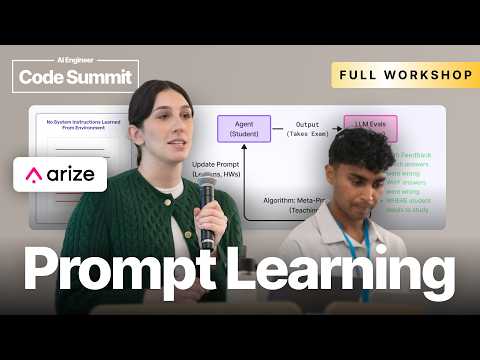
The move from manual prompt engineering to automated prompt learning. As models become commodities, the proprietary loop that refines them becomes the moat.
Implement a Train-Test Split for your prompts. Use a subset of failure data to generate new rules and validate them against a separate holdout set to ensure the logic holds.
Reliability is the only metric that matters for agent adoption. If you are not using a feedback loop to update your system instructions, you are building on sand.
The move from industrial management to creative inspiration. As AI automates routine tasks, the only remaining value is high-variance human creativity.
Apply the Keeper Test today. Ask your leads which team members they would fight for and provide generous exits for the rest to reset your talent bar.
Scaling doesn't require more rules. It requires better people. If you can maintain talent density, you can run fast while your competitors choke on their own handbooks.
Investigate platforms offering regulated perpetual futures on traditional assets. These venues are positioned to capture significant institutional flow by combining crypto's product innovation with TradFi's risk management.
The global financial system is bifurcating, with a clear trend towards regulated, institutional-grade venues for all tradable assets, including novel ones like compute power.
The future of finance involves crypto-native products like perpetuals, but their mass adoption by institutions hinges on robust regulation and superior risk management.
The Macro Shift: AI's productivity gains are consolidating power and profits within vertically integrated tech giants, fundamentally altering the competitive landscape for software and infrastructure providers.
The Tactical Edge: Re-evaluate SaaS investments, favoring mega-cap tech companies poised to absorb former SaaS revenues through internal AI-driven development. For crypto, identify and accumulate projects with genuine revenue generation during the bear market.
The Bottom Line: Position your portfolio for a world where AI drives corporate insourcing, crypto valuations reset to fundamentals, and core digital assets like Bitcoin undergo necessary technical upgrades to survive future threats.
Traditional finance is integrating with crypto, but often on its own terms, demanding more transparency from protocols while VCs continue to deploy significant capital into specific, high-potential crypto and AI intersections.
Scrutinize institutional "partnerships" for concrete terms and evaluate protocols based on their true moat against easy forks or platform risk.
The market is bifurcating: clear regulatory wins for specific crypto applications (like prediction markets) and innovative AI/crypto plays are attracting capital, while opaque TradFi deals and general L1 infrastructure face increased scrutiny. Position for clarity and genuine value accrual.
The digitization of finance is accelerating, with institutional capital now actively seeking onchain yield and efficiency. This is creating a competitive pressure cooker for traditional banks, while opening vast opportunities for nimble DeFi protocols.
Focus on protocols building robust RWA infrastructure and those providing deep liquidity for tokenized treasuries. These are the picks and shovels for the coming institutional capital wave.
The fight for stablecoin yield and institutional adoption will define the next 6-12 months. Position yourself to capitalize on the inevitable flow of capital from TradFi to transparent, yield-bearing onchain assets, even if it's just a fraction of the total.
Explore DeFi protocols in the N7 index (Morpho, Frax, Aave, etc.) for early exposure to institutional capital flows and RWA looping opportunities.
Experiment with AI agents to automate content creation, research, and even software development, drastically cutting operational costs.
The financial system is bifurcating into a "Neo Finance" layer where tokenized real-world assets are integrated with DeFi primitives, and an "AI-augmented" layer where autonomous agents supercharge individual and small team productivity.
Bittensor is transitioning from a purely experimental decentralized AI network to a performance-driven marketplace, demanding real-world utility and robust economic models from its subnets.
Builders launching subnets must secure initial TAO liquidity and a clear, executable product roadmap from day one to navigate the competitive landscape and achieve emission.
The network's continuous adaptation, from chain buys to MEV mitigation, signals a commitment to long-term stability and value.