The digital experience economy is moving from static content to dynamic, AI-driven co-experience platforms, where user interaction data becomes the core asset for training next-generation virtual intelligence.
Invest in platforms that offer robust, cloud-connected infrastructure and proprietary, vectorized user data for AI training, as these will be the engines for future immersive content and agentic AI development.
Roblox's long-term vision, powered by its unique data moat and AI investments, positions it to define the future of virtual co-experience, making it a critical player to watch for investors and builders in the AI and gaming space over the next 6-12 months.
The exponential reduction in the cost of intelligence, coupled with open-source proliferation, is pushing AI into every corner of society, creating a collective action problem where market incentives for "engaging" AI clash with the need for societal safety and control.
Get hands-on with AI now. "Vibe coding" and actively experimenting with AI tools builds "AI muscle," inoculating users against psychosis risks and building a deeper understanding of AI's capabilities and limitations.
AI is here to stay and will redefine work and interaction. Understanding its "hyperobject" nature, advocating for clear regulatory boundaries, and actively engaging with the technology are critical for navigating the near future without falling for its simulated charms.
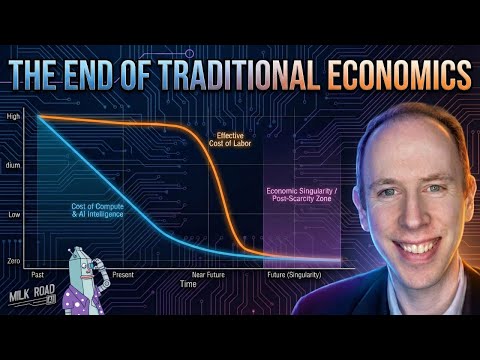
AI-driven hyperdeflation will fundamentally alter economic structures, leading to a post-scarcity future where the primary challenge shifts from production to distribution and the integration of human and machine economies.
Invest in infrastructure that bridges human and AI economies, or prepare for a future where AI agents become a significant, crypto-native economic force.
The next 6-12 months will see continued acceleration of AI capabilities, pushing us closer to a future where traditional labor and intelligence are nearly free. Understanding this change is crucial for navigating the emerging economic landscape and identifying new value creation opportunities.
The era of opaque, black-box AI is ending; the future demands intentionally designed models with human understanding and control. This shift is driven by reliability in high-stakes applications and extracting novel insights.
Investigate interpretability tools (like Goodfire's platform) to gain granular control over model behavior, moving beyond basic fine-tuning for critical applications.
Interpretability is not a niche; it's the missing piece for scaling AI safely into mission-critical domains. Mastering model understanding and intentional design will yield unprecedented capabilities and competitive advantage.
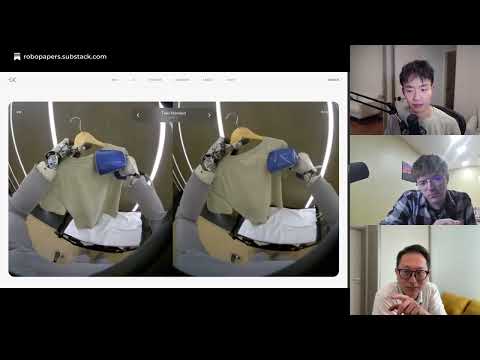
Robotics is moving from bespoke, data-hungry behavior cloning to generalized, human-informed learning via world models. This shift, mirroring the success of LLMs, means robots can use the vast, unstructured data of human experience to acquire new skills.
Invest in platforms and data pipelines that facilitate multi-modal, multi-stage training for humanoid robots. Prioritize systems that can generate synthetic data and use world models for high-throughput, targeted policy evaluation.
World models are the engine for scalable robot intelligence. They promise a future where robots learn faster, generalize wider, and self-improve through iterative simulation, making widespread humanoid deployment a near-term reality.
The Macro Shift: AI is collapsing the time horizon for technological deployment and market dominance, shifting the competitive advantage from pure innovation to a combination of innovation, capital, and rapid infrastructure deployment.
The Tactical Edge: Invest in companies that are not just building AI, but are fundamentally rethinking existing industries with AI-first principles, recognizing that traditional software moats are eroding.
The Bottom Line: The next 12-24 months will see AI's broad impact kick in, creating unprecedented opportunities for those who understand its new "laws of physics" and the critical role of policy in shaping its trajectory.
The healthcare system is moving from reactive, acute care to proactive, preventative interventions, driven by the unsustainable costs of chronic disease and a growing understanding of environmental health.
Build infrastructure that financially incentivizes lifestyle interventions, such as TrueMed's HSA/FSA payment rails for health-promoting products and services.
The next decade will see hundreds of billions of dollars redirected towards preventative health. Companies that bridge the gap between lifestyle choices and healthcare financing will capture significant market share.
The Macro Shift: Global energy demand, driven by AI, forces a strategic re-evaluation of nuclear power. This creates a window for nations to re-shore critical energy infrastructure, moving from reliance on adversaries to domestic, cost-competitive solutions.
The Tactical Edge: Investigate companies addressing foundational supply chain gaps in critical industries like energy. Look for teams with a "first principles" engineering approach and a track record of commercializing hard tech.
The Bottom Line: America's energy independence and its ability to power future technological growth, like AI, hinge on rebuilding domestic nuclear fuel enrichment. This is not just an industrial opportunity; it is a national security imperative.
Trust is moving from opaque balance sheets to verifiable, cryptographically enforced infrastructure. This means financial protocols, not just institutions, will increasingly dictate settlement, custody, and compliance.
Prioritize tokenized assets and investment vehicles that offer direct legal claims and verifiable on-chain mechanics. For builders, focus on creating infrastructure that eliminates intermediaries and provides transparent, programmable utility, like vaults.
The future of finance is about verifiable infrastructure and programmable ownership. Understanding the nuances of tokenized security structures and the rise of on-chain vaults will be critical for investors and builders navigating the convergence of traditional finance and DeFi over the next 6-12 months.
The market is demanding verifiable, transparent, and capital-efficient trading venues that eliminate the hidden risks of centralized intermediaries. This pushes innovation towards fully onchain, unified risk engines.
Explore platforms that integrate multiple DeFi primitives (spot, perp, lending) under a single, onchain risk engine. These venues offer superior capital efficiency and potentially higher risk-adjusted returns for sophisticated strategies like basis trades.
The next wave of DeFi success will come from platforms that solve for capital productivity and verifiable safety, attracting institutional and sophisticated retail capital by offering returns previously unattainable in fragmented or opaque markets.
The Macro Shift: Institutional capital flow dictates market cycles; the current downturn purges weak projects, paving the way for a value-driven recovery.
The Tactical Edge: Identify projects with genuine value accrual, strong fundamentals, and potential for buybacks, preparing to dollar-cost average into these "Carvana" plays.
The Bottom Line: The current "gross" feeling is a signal to strategically deploy capital into long-term, high-conviction assets, rather than short-term trading.
Capital is migrating from speculative, long-tail crypto assets to tokenized real-world assets and sophisticated derivatives. This reflects a broader market demand for yield, hedging, and perceived stability.
Explore tokenized commodities (gold, silver) and equity perpetuals for new leverage and yield opportunities. Exercise extreme caution with prediction markets and weekend tokenized equity trading due to information asymmetry and manipulation risks.
The crypto market is maturing beyond pure digital assets, integrating with traditional finance through tokenization and derivatives. Position your portfolio to capture value from this convergence, prioritizing robust liquidity and verifiable information over pure speculation.
The Macro Reallocation: As global liquidity loosens and traditional assets falter, capital is migrating from "atoms" (metals) to "bits" (crypto), particularly into DeFi protocols offering superior yield and ownership.
The Tactical Edge: Investigate DeFi neo-banks like Superform that aggregate yield, simplify UX, and offer tokenized ownership. These platforms are positioned to capture retail and institutional capital seeking higher returns and self-custody.
The Bottom Line: A crypto-friendly Fed, capital rotation from traditional assets, and maturing user-owned DeFi platforms mean the next 6-12 months will see significant growth in onchain finance, making it a critical area for strategic investment and building.
Global liquidity, traditionally seeking refuge in gold and equities, is increasingly flowing into Bitcoin and tokenized real-world assets on compliant crypto platforms. This economic reality is forcing exchanges to prioritize regulated, high-value offerings over speculative altcoins.
For builders, pivot from pure cryptonative narratives to projects with tangible products, clear revenue models, and infrastructure plays (RWA, AI, stablecoins). For investors, accumulate Bitcoin and explore tokenized traditional assets on compliant universal exchanges, recognizing the market's flight to quality.
The crypto market is maturing, demanding real value and regulatory adherence. Over the next 6-12 months, success will hinge on participating in platforms and projects that bridge traditional finance with blockchain, leaving pure altcoin speculation behind.