The Macro Shift: The Great Re-Shoring. National security now depends on domestic production of critical minerals and semiconductors.
The Tactical Edge: Build for Scale. Prioritize manufacturing competence over pure software features to win government contracts.
The Bottom Line: The defense industrial base is being rebuilt from the ground up. The next decade belongs to the builders who can merge Silicon Valley speed with the Pentagon's scale.
The Macro Trend: Biological Sovereignty. As global systems destabilize, the Amazon remains the most critical piece of biological infrastructure on the planet.
The Tactical Edge: Support Jungle Keepers. Direct capital to organizations that convert loggers into rangers to secure land concessions.
The Amazon is a finite asset under active siege. Protecting it requires a blend of primitive survival skills and high-tech surveillance over the next 18 months.
The Macro Pivot: As generative AI masters simulation, the physical world becomes a high-fidelity playground for software.
The Tactical Edge: Invest in the "brain" layer rather than the "limb" layer. Software that can generalize across different hardware forms will capture the most value.
The next decade belongs to embodied AI that reasons in real time. If you are waiting for the hardware to look perfect before paying attention, you will miss the moment the software takes over the physical world.
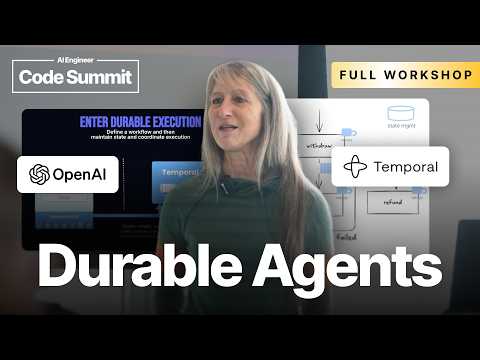
The industry is moving from "Agent as a Script" to "Agent as a Durable Service" where state management is handled by the infrastructure.
Wrap your existing API tools in the `activity_as_tool` function to gain automatic retries and execution history.
Reliability is the only moat in the agentic economy. If your agent cannot survive a server restart during a three-day task, it is not ready for the enterprise.
The Macro Trend: The move from fragmented content libraries to integrated health systems where AI synthesizes biomarkers and movement.
The Tactical Edge: Construct internal LLM tools to categorize qualitative feedback. This turns thousands of raw reviews into a precise roadmap.
The Bottom Line: Building a $100M ARR consumer app requires mastery of both growth loops and product retention. Solve for the daily habit to win the long game.
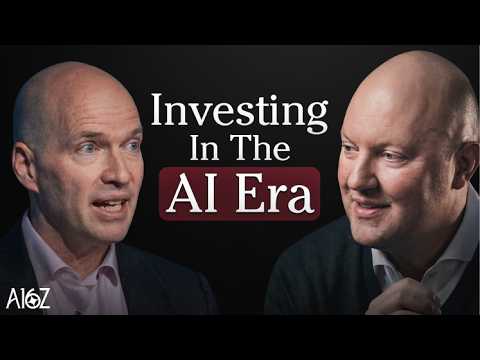
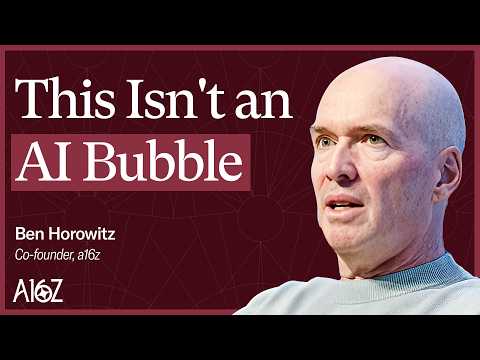
The transition from general-purpose AI to specialized application layers. As foundation models commoditize, value migrates to the "fat tail" of human-centric complexity.
Prioritize building or investing in "DNA of the future" companies that incumbents must eventually acquire to survive. Focus on winning the "point of attack" by staying deep in the technical details.
We are in a unique market where demand growth justifies high valuations. Success over the next year depends on identifying founders who are the absolute best in the world at one specific thing.
Global liquidity is high, but capital is reallocating from speculative crypto to traditional stores of value and, paradoxically, to DeFi platforms offering RWA exposure. This signals a maturation where utility and transparency are gaining ground over pure hype.
Identify protocols with demonstrable revenue generation from real-world use cases, like Hyperliquid, as potential outperformers. Focus on platforms that offer transparency and accountability, as market structure shifts towards more regulated and predictable venues.
The crypto market is undergoing a structural reset, moving away from a retail-driven, speculative cycle. Investors must adapt to a landscape where fresh capital is scarce, institutional flows favor gold, and DeFi's next frontier involves real-world assets.
The convergence of AI agents and programmable money is creating a new frontier for digital commerce and liability. This shift demands a proactive re-evaluation of regulatory frameworks, moving beyond human-centric definitions of accountability and transaction.
Builders should design AI agent systems with cryptographically embedded controls, allowing for granular policy enforcement (e.g., spending limits triggering human review) and leveraging stablecoins for microtransactions in decentralized agent-to-agent economies.
The next 6-12 months will see increasing pressure to define AI agent liability and payment rails. Investors should prioritize projects building infrastructure for secure, auditable agent commerce, while builders must integrate compliance and control mechanisms from day one to navigate this evolving landscape.
The economy is shifting from human-centric labor and scarcity to AI-driven abundance, where machine intelligence itself becomes the primary unit of economic exchange, challenging traditional monetary and employment structures.
Investigate and build "proof of control" solutions using crypto primitives (like ZKPs, TEEs, decentralized compute/storage) to secure AI agents and data.
The next 6-12 months will see increased demand for verifiable control over AI systems. Understanding how crypto enables this, and how human value shifts from transactional jobs to unique human interaction, is crucial for navigating this new economic reality.
AI's productivity boom is redirecting capital from financial engineering (buybacks) in large-cap tech to physical infrastructure (data centers, hardware).
Reallocate capital from over-concentrated, buyback-dependent large-cap tech into AI infrastructure plays (hardware, energy), commodities, and potentially regional banks, while actively managing duration risk in bonds.
The market's underlying structure is cracking. Passive investment in broad tech indices will likely yield poor real returns.
Global liquidity expands, but new investment narratives (AI, commodities, tokens) grow faster. This "dilution of attention" pulls capital from speculative crypto, favoring utility or established brands.
Focus on Bitcoin and revenue-generating crypto, or explore spread trades (long Bitcoin, short altcoins). Institutional interest builds in regulated products and yield strategies for Bitcoin.
The market re-rates crypto assets on tangible value, not speculative hype. Expect pressure on altcoins without clear revenue, while Bitcoin and utility-driven projects attract smart money.
DeFi is building sophisticated interest rate derivatives that provide predictive signals for broader crypto asset prices. This signals a maturation of onchain financial markets, moving closer to TradFi's analytical depth.
Monitor the USDe term spread on Pendle, especially at its extremes (steep backwardation or contango), to anticipate shifts in Bitcoin's 90-day return skew and underlying yield regimes.
Understanding Pendle's USDe term structure provides a powerful, data-driven lens to forecast crypto market sentiment and interest rate movements, offering a strategic advantage for investors navigating the next 6-12 months as onchain finance grows more complex.