**Ride the Wave, Don't Fight It.** Exponential forces like Moore's Law and network effects will overwhelm any product tactic. Your first job is to identify the fundamental technological or social current you're riding.
**Build a Tool, Then a Network.** Defensibility in consumer tech often comes from network effects, but you can’t start there. Solve a user’s problem in single-player mode first to build the critical mass needed for an unbeatable network.
**Explore the Fringe.** The future is being prototyped in niche subreddits and hobbyist communities. To find the next big thing, look for small groups of hyper-enthusiastic people working on things that seem like toys today.
Find the "Death War." Cuban's biggest wins come from identifying industries where competitors are forced to spend billions to survive (like AI today or streaming media rights a decade ago). These moments create massive opportunities for suppliers and disruptors.
Sell a Better Life, Not an Ideology. Whether in politics or business, success comes from solving people’s immediate, tangible problems. Abstract goals and ideological purity don't sell.
The Real Moat is Domain Expertise + AI. The next generation of billion-dollar companies will be built by founders who can apply AI to specific, overlooked business processes, creating hyper-efficient, customized SaaS solutions.
Stop Regulating Ghosts. Policy should target concrete, illegal uses of AI under existing laws, not hypothetical future harms that require licensing regimes and kill startups before they can compete.
Compliance is a Competitive Moat. Regulations designed for trillion-dollar companies are a death sentence for startups. A 50-state patchwork of rules would be the final nail in the coffin for a competitive AI ecosystem.
Innovation Needs a Political War Chest. The pro-innovation camp has been outmaneuvered by well-organized "safetyism" advocates. Building political gravity through organized efforts like PACs is now essential to ensure America wins the AI race.
**The Agent is the Moat.** Ridges’ success with cheaper models demonstrates that the true differentiator in AI coding is the agent architecture, not just the underlying LLM. This focus on efficiency creates a sustainable business model where competitors burn cash.
**Alpha-to-Equity Creates a Capital Bridge.** This model directly ties the token's value to profit-sharing equity, creating an arbitrage loop for crypto and traditional funds. It offers a powerful alternative to typical tokenomics by capturing the value of the underlying business.
**The Future of Software is Supervisory.** The ultimate goal is not just a better coding autocomplete, but a tool that elevates developers and product managers to supervisors of AI engineering teams, fundamentally changing how software is created.
The Market is the Economy. The old wall between Wall Street and Main Street has crumbled. The high degree of financialization means they are now a single, symbiotic entity.
Your Portfolio is a Utility. The stock market is becoming a public utility for distributing national wealth, with ownership becoming nearly universal. This trend is set to accelerate.
Capital is the New Labor. This system provides the foundation for an AI economy by creating a mechanism to pay people from capital returns, solving the problem of mass unemployment before it begins.
**Stop Confusing Hardness with Reality.** Theoretical computer science focuses on worst-case scenarios. Real-world success hinges on exploiting messy, latent structure that we can’t even formally define yet.
**Intelligence is Tool-Making.** Humans aren't just powerful processors; we're tool-users who extend our cognitive workspace. AI will remain limited until it can recognize its own limitations and build the tools it needs to overcome them.
**Demand Transparency Over Explainability.** For high-stakes decisions like criminal justice or medical diagnoses, proprietary black boxes are unacceptable. The right to confront your accuser extends to the algorithms that judge you.
Decentralized Training is Unlocked. The SparseLoCo optimizer makes training massive (70B+ parameter) models over the internet practical. This is Bittensor’s direct answer to the centralized AI training monopoly.
The Future is Value-Added Compute. Raw decentralized compute is a commodity game. Covenant’s strategy with Basilica is to win by building unique, high-margin services on top, like verifiable inference and hardware efficiency amplification.
The Full Stack is the Moat. By integrating pre-training (Templar), intelligent compute (Basilica), and post-training (Grail), Covenant is building a flywheel. This synergy creates an end-to-end pipeline that is more than the sum of its parts.
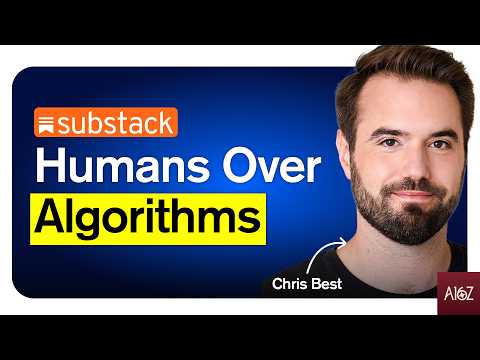
**The Media War is Attention vs. Intention.** The future isn't about more content; it's a battle between algorithmically-generated "slop" designed to hijack your attention and curated culture that serves your long-term interests.
**True Platform Power is Granting Freedom.** Substack's most defensible moat is counterintuitive: giving creators the power to leave. This forces the platform to innovate and earn its keep, fostering genuine loyalty over lock-in.
**Creators Are the New Founders.** The unbundling of talent from media institutions mirrors VC's impact on tech. Independent creators are becoming "ambitious media founders," building new ventures on platforms that align value creation with value capture.
The Great Rotation is On. The post-summer period is signaling a major shift from over-extended large-cap tech into small caps (IWM) and hard assets. Improving market breadth and historical parallels suggest this rotation has legs.
Inflation is Structural. Political pressure on the Fed, coupled with labor gaining power over capital, is cementing a new, higher inflation regime. Do not expect a return to the disinflationary 2010s.
AI's Capex Boom Faces a Reality Check. The AI narrative is fueling a massive debt-driven capex cycle. If revenues don't keep pace, a bust is inevitable. Crypto, having already deleveraged, appears much earlier in its cycle.
Ethereum's L1 scaling redefines L2s from pure throughput solutions to specialized platforms, while AI agents introduce a new, autonomous layer of on-chain activity.
Investigate L2s that offer unique features or cater to specific enterprise needs beyond just low fees.
The future of crypto involves a more performant Ethereum L1, specialized L2s, and a burgeoning agentic economy.
The rapid rise of autonomous AI agents demands a decentralized trust layer. Blockchains, initially an "internet of money," are now becoming the foundational "internet of trusted agent commerce," providing verifiable identity and reputation essential for multi-agent economies. This shift moves beyond simple payments to establishing a credible, censorship-resistant framework for AI-driven interactions.
Integrate ERC-8004 into agent development. Builders should register their AI agents on ERC-8004 to establish verifiable on-chain identity and reputation, attracting trusted interactions and avoiding future centralized platform fees or censorship.
The future of AI commerce hinges on decentralized trust. ERC-8004 is the foundational primitive for this, ensuring that as AI agents become more sophisticated and transact more value, the underlying infrastructure remains open, fair, and resistant to single points of control. This is a critical piece of the puzzle for anyone building or investing in the agent economy over the next 6-12 months.
Agentic AI is not just a tool; it's a new layer of abstraction for decentralized networks. It shifts the barrier to entry from deep technical and crypto-specific knowledge to strategic prompting and resource allocation, accelerating network participation and value accrual.
Experiment now. Deploy a hosted agentic AI like OpenClaw (via seafloor.bot) with a small budget to understand its capabilities in a controlled environment. Focus on automating complex setup tasks within decentralized AI protocols like Bittensor to gain firsthand experience before others.
The rise of agentic AI agents will fundamentally reshape how individuals and organizations interact with and profit from decentralized AI. Those who master agent orchestration and "skill" development will capture disproportionate value as these systems become the primary interface for programmable intelligence and capital.
AI's gravitational pull on talent and capital is forcing crypto to mature beyond speculative tokenomics, transitioning focus from "meme value" to demonstrable product-market fit and real-world utility.
Identify and invest in projects building at the intersection of crypto and AI, or those creating "net new" applications that abstract away crypto complexity for mainstream users, especially in areas like identity or fintech.
This bear market is a necessary, albeit painful, reset. It's a time for builders to focus on creating tangible value and for investors to seek out projects with genuine utility, as the era of easy speculative gains is over.
The commodification of AI compute, driven by decentralized networks, is shifting power from centralized data centers to globally distributed, incentive-aligned miners. This creates a more efficient, resilient, and cost-effective foundation for intelligence.
Explore building AI agents and applications on Shoots' expanding platform, leveraging their TEEs and end-to-end encryption for privacy-sensitive use cases. The "Sign in with Shoots" OAuth system offers a compelling way to integrate AI capabilities without upfront compute costs.
Shoots is not just an inference provider; it's building the foundational infrastructure for a truly decentralized, private, and intelligent internet. Over the next 6-12 months, expect to see a proliferation of sophisticated AI agents and applications built on Shoots, driven by its unique blend of incentives, security, and global compute.
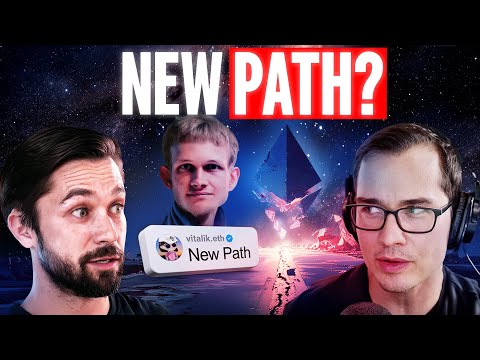
The Macro Shift: Ethereum pivots from a "rollup-centric" vision to a multi-faceted approach: a powerful, ZKVM-scaled L1 coexists with a diverse "alliance" of specialized L2s. This adapts to technical realities and renews L1's core focus.
The Tactical Edge: Builders should prioritize differentiated L2 solutions or contribute to L1's ZKVM scaling. Investors should evaluate L2s based on distinct utility and symbiotic relationship with Ethereum.
The Bottom Line: Ethereum's market leadership remains, but this pivot signals a pragmatic roadmap. The next 6-12 months will see rallying around L1 ZKVM scaling and clearer L2 roles, demanding sharper focus on where value accrual and innovation occur.