10 Hours of Listening.
5 Minutes of Reading.

Deep dives into the conversations shaping the future of AI, Robotics & Crypto.

Save hours of your time each week with our podcast aggregator
🔍 Search & Filter
Thank you! Your submission has been received!
Oops! Something went wrong while submitting the form.

AI Podcasts

February 12, 2026

OpenClaw: The Viral AI Agent that Broke the Internet - Peter Steinberger | Lex Fridman Podcast #491

Lex Fridman

AI
Key Takeaways:
  1. The rise of autonomous AI agents will fundamentally reshape the app economy, rendering many single-purpose applications obsolete as agents integrate and automate tasks across systems. This forces companies to either become agent-facing APIs or risk irrelevance.
  2. Cultivate "agent empathy" by understanding how models perceive codebases and problems. This skill, combined with a willingness to experiment and "play," is crucial for effectively guiding agents to build and refactor software.
  3. The agentic AI era demands a shift from traditional programming to a builder mindset, where human creativity and strategic guidance become paramount. Investors should seek platforms enabling this shift, and builders must adapt to a world where natural language is the new code.
See full notes
February 11, 2026

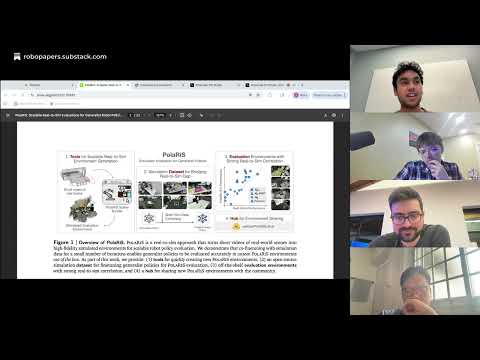
Ep#62: PolaRiS: Scalable Real-to-Sim Evaluations for Generalist Robot Policies

RoboPapers

AI
Key Takeaways:
  1. Robotics is moving towards generalist policies, demanding scalable, high-fidelity evaluation tools that mirror the real world, away from task-specific benchmarks.
  2. Adopt PolaRiS for rapid policy iteration and generalization testing, especially for pick-and-place tasks, leveraging easy environment creation and proven real-to-sim correlation.
  3. PolaRiS provides critical infrastructure for accelerating robot learning, enabling builders to quickly validate policies against real-world performance without prohibitive cost.
See full notes
February 12, 2026

OpenClaw: The Viral AI Agent that Broke the Internet - Peter Steinberger | Lex Fridman Podcast #491

Lex Fridman

AI
Key Takeaways:
  1. AI agents are transforming software development from a manual coding craft into an "agentic engineering" discipline, where human builders orchestrate and guide autonomous AI systems. This shift means the value moves from writing boilerplate code to designing agent-friendly architectures and providing high-level strategic direction.
  2. Embrace agentic engineering by learning to "empathize" with AI models, understanding their context limitations, and guiding them with concise, clear prompts. Experiment with open-source agents like OpenClaw to build new tools or automate existing workflows, focusing on the what and why rather than the how.
  3. Personal AI agents will commoditize many existing apps and services, forcing companies to either become agent-facing APIs or risk obsolescence. Investors should identify platforms and infrastructure that enable agent interoperability, while builders should focus on creating agent-native experiences and tools that augment human creativity, rather than replicating existing app functionality.
See full notes
February 11, 2026

Ep#62: PolaRiS: Scalable Real-to-Sim Evaluations for Generalist Robot Policies

RoboPapers

AI
Key Takeaways:
  1. Robotics is moving beyond isolated tasks to generalist policies, demanding scalable, correlated evaluation methods. This mirrors the LLM world's need for diverse, generalization-focused benchmarks.
  2. Utilize PolaRiS's open-source tools and Hugging Face hub to quickly create and share new evaluation environments. This crowdsourcing approach accelerates community-wide progress in robot policy development.
  3. Investing in tools like PolaRiS that bridge the real-sim gap with high-fidelity visuals and minimal sim co-training is crucial. This enables faster policy iteration and more reliable real-world deployment for the next generation of generalist robots.
See full notes
February 11, 2026

Ep#62: PolaRiS: Scalable Real-to-Sim Evaluations for Generalist Robot Policies

RoboPapers

AI
Key Takeaways:
  1. The macro shift: Generalist robot policies need generalist evaluation. The shift is from hand-crafted, task-specific sim environments to easily generated, real-world-correlated simulations that test zero-shot generalization, mirroring the rapid benchmark development in LLMs. This allows for a holistic understanding of policy capabilities across diverse, unseen scenarios.
  2. The tactical edge: Adopt PolaRiS for rapid policy iteration. Builders should use its browser-based scene builder and Gaussian Splatting to quickly create new, diverse evaluation environments from real-world scans, then fine-tune policies with small, unrelated sim data to achieve high real-to-sim correlation. This accelerates development cycles and reduces costly real-world testing.
  3. The future of robotics hinges on scalable, trustworthy evaluation. PolaRiS provides a critical tool today to bridge the sim-to-real gap, enabling faster, more reliable development of generalist robot policies. Expect a community-driven explosion of benchmarks, pushing robot capabilities faster than ever over the next 6-12 months.
See full notes
February 11, 2026

Ep#62: PolaRiS: Scalable Real-to-Sim Evaluations for Generalist Robot Policies

RoboPapers

AI
Key Takeaways:
  1. The robotics community needs to move beyond task-specific benchmarks with provided training data towards a diverse suite of generalization-focused evaluations, mirroring the LLM ecosystem. PolaRiS provides the tools to crowdsource and rapidly deploy these new benchmarks, fostering a more holistic understanding of robot policy capabilities.
  2. For robot policy developers, prioritize tools like PolaRiS that offer high real-to-sim correlation with minimal setup. Leverage its browser-based scene builder and the "visual vaccination" co-training method to quickly iterate on policies for pick-and-place and articulated object tasks, then validate on real hardware.
  3. Scalable, correlated simulation is the missing piece for accelerating generalist robot AI. Over the next 6-12 months, the adoption of tools like PolaRiS will enable faster policy iteration, more robust benchmarking, and ultimately, a quicker path to deploying capable robots in diverse, unstructured environments.
See full notes
February 11, 2026

Ep#62: PolaRiS: Scalable Real-to-Sim Evaluations for Generalist Robot Policies

RoboPapers

AI
Key Takeaways:
  1. The robotics community is moving from hand-crafted, task-specific simulations to generalist policies that demand scalable, real-world correlated evaluation. PolaRiS enables this by making it cheap and easy to create diverse, high-fidelity sim environments from real scans, allowing for generalization testing akin to LLM benchmarks.
  2. Implement PolaRiS for rapid policy iteration. Use its real-to-sim environment generation and minimal, unrelated sim data co-training to quickly validate robot policies against real-world performance, reducing costly physical robot time.
  3. PolaRiS offers a critical infrastructure upgrade for robot AI development. By providing a fast, reproducible, and highly correlated simulation environment, it allows builders to iterate on generalist robot policies at software speed, significantly de-risking and accelerating the path to real-world deployment and broader robot capabilities over the next 6-12 months.
See full notes
February 11, 2026

Ep#62: PolaRiS: Scalable Real-to-Sim Evaluations for Generalist Robot Policies

RoboPapers

AI
Key Takeaways:
  1. The drive for generalist robot policies demands scalable, reliable evaluation. PolaRiS pushes robotics toward the community-driven, diverse benchmarking common in LLMs, accelerating the path to truly capable robots.
  2. Adopt PolaRiS for rapid policy iteration and generalization testing. Leverage its easy environment creation and proven real-to-sim correlation to quickly validate new robot behaviors before costly real-world deployment.
  3. PolaRiS is a critical tool for any team building robot policies. It cuts evaluation costs, speeds up development, and provides a trustworthy signal for real-world performance, making it a must-have for your robotics roadmap over the next 6-12 months.
See full notes
February 11, 2026

Ep#62: PolaRiS: Scalable Real-to-Sim Evaluations for Generalist Robot Policies

RoboPapers

AI
Key Takeaways:
  1. Builders should prioritize hybrid real-to-sim evaluation tools like PolaRiS for rapid policy iteration.
  2. Use minimal, out-of-domain sim data to align policies to the simulation environment, ensuring your sim results accurately predict real-world performance.
  3. Investing in tools that democratize benchmark creation and ensure strong real-to-sim correlation will accelerate robot policy development.
See full notes

Crypto Podcasts

March 31, 2025

Why Stablecoins Are Crypto's Biggest Opportunity | Charlie Noyes & Bam Azizi

Empire

Crypto
Key Takeaways:
  1. Infrastructure is the Play: With issuer economics concentrated and competition fierce, the real opportunity lies in building the "picks and shovels" – APIs, UX layers, and interoperability solutions (like Mesh) – that make stablecoins usable at scale.
  2. Fragmentation is Inevitable (and an Opportunity): Expect a proliferation of stablecoins from banks, fintechs, and others. This increases complexity but creates demand for aggregators and middleware that simplify the ecosystem.
  3. Regulation Unlocks Institutions: Clearer regulations are the primary catalyst needed for risk-averse institutions to embrace stablecoins, potentially triggering a wave of adoption akin to cloud migration.
See full notes
March 30, 2025

GameStop Goes Full Saylor: Bitcoin or Bust, Lads?

blocmates.

Crypto
Key Takeaways:
  1. **Debt-Fueled Gamble:** GameStop's $1.3B Bitcoin buy using convertible bonds is a high-risk bet entirely dependent on BTC price appreciation for success and debt repayment.
  2. **Stock Price Over Operations:** The primary goal seems to be inflating the stock price via Bitcoin exposure, rather than fixing the underlying retail business.
  3. **Saylor Strategy Goes Mainstream:** This move signals the "Saylor Strategy" is spreading, potentially pushing more non-tech companies towards Bitcoin treasury reserves, amplifying both adoption and systemic risk.
See full notes
March 30, 2025

Finding Successful Investments

The Rollup

Crypto
Key Takeaways:
  1. Bet on Established Networks or Speculate on Potential: Choose Bitcoin/Ethereum for proven network effects or new L1s/L2s/Meme Coins for higher-risk, potential-driven bets.
  2. Community is the First Utility: Strong communities are the initial network effect in web3; projects building utility (games, L2s) on this base signal deepening value.
  3. Meme Coins Evolve: Watch for meme communities launching games or infrastructure (L2s/L3s) as a sign of longevity and network effect expansion.
See full notes
March 28, 2025

How to Become a Millionaire Crypto Insider (FREE 5 STEP GUIDE)

Taiki Maeda

Crypto

Key Takeaways:


1. Beware the Playbook: Recognize the cynical cycle of hype, VC validation, token launch, strategic pumping, and insider dumping.


2. Airdrops Aren't Free Lunch: Understand that airdrop campaigns primarily benefit projects via free marketing and liquidity, with insiders potentially gaming the system.


3. Demand Better: The crypto space needs greater transparency and accountability; the current incentive structure rewards manipulative behavior until it becomes unprofitable.

See full notes
March 28, 2025

Why MegaETH Trusts Ethereum’s Escape Hatch

The DCo Podcast

Crypto

Key Takeaways:


1. Trust Ethereum, Not Just the Rollup: MegaETH's security model fundamentally relies on users trusting Ethereum's liveness and escape hatch mechanism to guarantee fund safety and eventual transaction correctness, acknowledging its own lack of *real-time* censorship resistance.


2. Focus on Practical Guarantees: The emphasis shifts from the abstract ideal of "decentralization" to concrete properties like liveness and the *ability* to exit (censorship resistance), even if delayed via Ethereum settlement.


3. Modular Security is the Trend: MegaETH exemplifies the modular blockchain thesis where Layer 2 solutions inherit security from a robust base layer (Ethereum), with future developments likely deepening this integration (e.g., base/native rollups).


See full notes
March 27, 2025

Hash Rate - Ep 102: Lyn Alden - 'Broken Money'

Hash Rate pod - Bitcoin, AI, DePIN, DeFi

Crypto

Key Takeaways:

  1. Technological advancements significantly impact the monetary system, creating both opportunities and risks.
  2. The current dollar system, based on circular logic and continuous expansion, faces systemic fragility.
  3. Bitcoin's ability to offer fast, decentralized settlements represents a potential solution, but scalability and the quantum threat need to be addressed.
See full notes