The Macro Shift: Context management is the new compute. As models get smarter, the winning architecture will be the one that most efficiently partitions and feeds relevant data to sub-agents.
The Tactical Edge: Prioritize reviewability. When building or using agents, focus on tools that provide clear diffs and tours of changes rather than just raw code generation.
The Bottom Line: The developer's role is evolving from a writer to an orchestrator. Success in the next 12 months depends on mastering the skill of agentic review rather than manual syntax.
The Macro Shift: Engineering is moving from a headcount-driven Opex model to an infrastructure-driven autonomy model where validation is the primary capital asset.
The Tactical Edge: Audit your codebase against the eight pillars of automated validation. Start by asking agents to generate tests for existing logic to close the coverage gap.
The Bottom Line: Massive velocity gains are not found in the next model update. They are found in the rigorous internal standards that allow agents to operate without human hand-holding.
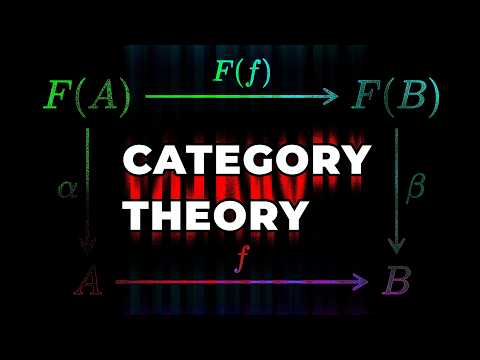
[Algorithmic Convergence]. The gap between symbolic logic and neural networks is closing through category theory. Expect architectures that are "correct by construction" rather than just "likely correct."
[Audit Architecture]. Evaluate new models based on their "algorithmic alignment" rather than just parameter count. Prioritize implementations that bake in non-invertible logic.
The next year will see a shift from scaling data to scaling structural priors. If you aren't thinking about how your model's architecture mirrors the problem's topology, you are just an alchemist in a world about to discover chemistry.
Strategic Implication: The future of software development isn't about *if* we use AI, but *how* we integrate human understanding and architectural discipline to prevent an "infinite software crisis.
Builder/Investor Note: Builders must prioritize deep system understanding and explicit planning over raw generation speed. Investors should favor companies that implement robust human-in-the-loop processes for AI-assisted development.
The "So What?": Over the next 6-12 months, the ability to "see the seams" and manage complexity will differentiate thriving engineering teams from those drowning in unmaintainable, AI-generated code.
Strategic Implication: The market for AI transformation services is expanding rapidly, driven by enterprises seeking to integrate AI for tangible business outcomes.
Builder/Investor Note: Focus on AI solutions with clear, practical applications for mid-market and enterprise clients. Technical talent capable of bridging research with deployment holds significant value.
The "So What?": The next 6-12 months will see increased demand for AI engineers who can implement and scale AI solutions, moving beyond proof-of-concept to widespread adoption.
Compensation Innovation: The traditional compensation playbook for engineers is outdated. New models that directly reward AI-augmented output will attract top talent and drive efficiency.
Builder/Investor Note: Founders should re-evaluate their incentive structures. Investors should seek companies experimenting with these models, as they may achieve outsized productivity.
The "So What?": The productivity gap between AI-augmented and non-AI-augmented engineers will widen. Companies that adapt their incentives will capture disproportionate value in the next 6-12 months.
Strategic Shift: Successful AI integration means identifying and solving *your* organization's specific SDLC bottlenecks, not just boosting code completion.
Builder/Investor Note: Prioritize psychological safety and invest in AI skill development. For builders, this means dedicated learning time; for investors, look for companies that do this well.
The "So What?": The next 6-12 months will separate organizations that merely *adopt* AI from those that *master* its strategic application and measurement, driving real competitive advantage.
Strategic Implication: AI integration is a company-wide transformation, not a feature. Organizations must re-architect processes, tools, and culture to compete.
Builder/Investor Note: Prioritize internal tooling that democratizes AI experimentation. Look for companies establishing "model behavior" as a distinct, cross-functional discipline.
The "So What?": The next 6-12 months will reward builders who bake AI security and user control into product design from day one, recognizing that technical mitigations alone are insufficient.
**Stablecoin Issuers are Cash Cows:** Companies like Circle (IPO soon) benefit massively from yield capture on reserves; regulation might even lock this in.
**DeFi Degens vs. TradFi Suits:** Expect ongoing clashes as institutional capital demands simpler structures, challenging crypto's complex governance/token models.
**Meme Coins Aren't Dying:** Despite drawdowns, platforms like Pump.fun show meme creation/trading has strong, persistent demand and revenue generation.
Crypto Has Lost Its Way: The industry's obsession with hype and speculation diverts resources and attention from building genuine, society-improving utility based on Web3 ideals.
Tech Matters, But Adoption is Slow: Superior technology (scalability, economic independence, coherence like JAM aims for) is crucial, but overcoming market inertia, hype-driven funding, and user stickiness takes significant time.
Web3 Urgently Needed for AI Era: Trust-minimized Web3 systems, especially robust Proof of Personhood, are critical defenses against the centralizing, trust-based nature of AI to maintain individual sovereignty and reliable information.
Content Becomes an Asset: Zora allows creators to transform any media into a tradable coin, capturing economic value directly tied to its perceived worth and audience engagement.
Engagement = Trading Volume: The primary metric for crypto-native engagement on Zora is trading volume, which directly translates into creator rewards in ETH and the content's specific token.
Own What You Love: Zora enables fans to directly own a piece of the content they value, creating a powerful alignment between creator success and audience investment.
Capitulation Near, But Timing Tricky: Close hedges now; consider tactical longs (calls) soon, but be ready to sell the bounce as it's likely a bear market rally.
Policy is the Pivot: Market relief likely requires Trump blinking on tariffs or significant fiscal stimulus announcements; don't wait for the Fed to save the day.
Watch Relative Strength: Bitcoin and Homebuilders show surprising resilience, offering potential clues or opportunities amidst the chaos. Commodities look oversold but need confirmation.
Stablecoins Reign: Forget moonshots; stablecoins are crypto's clearest win, providing real-world utility and attracting both corporate giants (Tether, Circle) and even government attention.
Macro Still Matters (Kind Of): While extreme tariff news rocked traditional markets, crypto's reaction was comparatively muted – expect continued volatility, but perhaps less direct correlation than stocks anticipate.
Watch Stablecoin Ecosystem Plays: While Tether and Circle dominate headlines, the narrative strength around stablecoins could create opportunities for related on-chain protocols (like Ethena, Maker) post-macro cooldown.
Decentralized Social, Realized: Farcaster offers a tangible example of an "at-scale" decentralized social network built on crypto rails (initially Ethereum).
Unlocking Social Data: The core innovation is the open, permissionless protocol, giving developers API access to build diverse applications on a shared social dataset.
Beyond Cloning: While the first app looks familiar (Twitter-like), the underlying protocol enables vastly different social applications, from niche integrations to entirely new platform paradigms.