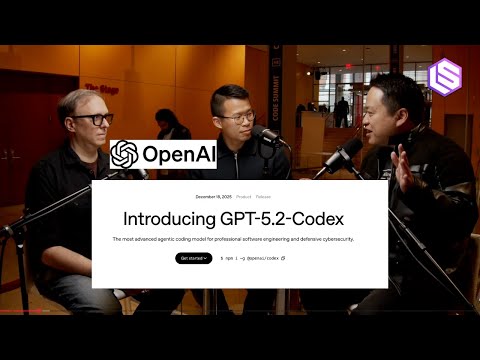
The Macro Shift: Agentic Abstraction. We are moving from Model-as-a-Service to Agent-as-a-Service where the harness is as important as the weights.
The Tactical Edge: Standardize your CLI. Use tools like ripgrep (RG) that models already have "habits" for to see immediate performance gains.
The Bottom Line: The next 12 months will see the end of manual integration engineering as agents become capable of navigating UIs and legacy terminals autonomously.
The commoditization of syntax means architectural judgment is the only remaining moat. As the cost of code hits zero the value of intent skyrockets.
Replace your manual refactoring workflows with a burn and rebuild strategy. Use agents to generate entirely new modules instead of patching old ones.
Seniority is no longer a shield against obsolescence. You must spend the next six months building your agentic intuition or risk being replaced by a PhD student with a prompt.
The Macro Evolution: Standardized communication layers are replacing custom API integrations. This commoditizes the connector market and moves value to the models that best utilize these tools.
The Tactical Edge: Standardize your internal data tools using MCP servers today. This ensures your company is ready for autonomous agents that can discover and use your resources without manual API integration.
The Bottom Line: The agentic stack is consolidating around MCP. Interoperability is no longer a feature; it is the foundation for the next decade of AI utility.
The Macro Shift: From Model-Centric to Eval-Centric. The value is moving from the LLM itself to the proprietary evaluation loops that keep the LLM on the rails.
The Tactical Edge: Export production traces and build a "Golden Set" of 50 hard examples. Use these to run A/B tests on every prompt change before hitting production.
The Bottom Line: Reliability is the product. If you cannot measure how your agent fails, you haven't built a product; you've built a demo.
The transition from chatbots with tools to agents that build tools marks the end of the manual integration era.
Stop building custom model scaffolding and start building on top of opinionated agent layers like the Codex SDK.
In 12 months, the distinction between a coding agent and a general computer user will vanish as the terminal becomes the primary interface for all digital labor.
The Capability-Utility Gap is widening. We see a divergence where models get smarter but the friction of human-AI collaboration keeps productivity flat.
Deploy AI for mid-level engineers or low-context tasks. Avoid forcing AI workflows on your top seniors working in complex legacy systems.
The next year will focus on reliability over raw intelligence. The winners will have models that require the least amount of human babysitting.
Tokenization is Strategic: BlackRock sees tokenizing assets as fundamental to improving market access and efficiency, dedicating significant focus to this path.
Bridging is Key: Practical solutions like ETPs and tokenized funds are crucial tools BlackRock is deploying to connect TradFi users and crypto-native institutions.
Transition Takes Time: The shift to tokenized markets will be gradual, requiring careful management of legacy systems and ensuring interoperability is maintained.
Altcoin Asymmetry: Lower-cap altcoins offer higher potential percentage gains (3-4x) with less required capital inflow compared to Bitcoin.
Bitcoin's Gravity: Bitcoin's massive size makes large multiple gains (like 3x) significantly harder, requiring vast capital injections.
Liquidity is King: Your bet hinges on future macro conditions; high liquidity environments tend to disproportionately benefit riskier, less liquid altcoins.
**The Trump Put is Real:** Market reactions demonstrably curb aggressive tariff policies; expect continued volatility but likely avoidance of worst-case tariff scenarios as Trump needs stable markets.
**Bitcoin Treasury Flywheel Spins Faster:** Expect more MicroStrategy clones globally, leveraging debt and equity markets to acquire Bitcoin. Monitor NAV premiums closely – their collapse is the model's Achilles' heel.
**Bitcoin's Narrative Strengthens:** Bitcoin's recent decoupling and resilience amid macro turmoil bolsters its digital gold thesis, attracting attention even from skeptics, while altcoins struggle to keep pace this cycle.
Bitcoin Stands Alone: Recognized globally, Bitcoin operates in its own macro league, detached from altcoin tech narratives.
Ethereum's Redemption Arc?: A pivot to user needs and L1 scaling is underway, but Ethereum must deliver concrete performance upgrades to compete effectively.
Execution is King: Solana leads the speed race but faces valuation/fee risks. The future favors chains offering the best, most sovereign execution environment, with modular plays like Celestia betting on a hyper-scaled world.
IBIT's Success Validates the Bridge: The Bitcoin ETP proved massive latent demand exists for accessing crypto via familiar, regulated wrappers, bringing many new investors into the fold.
Tokenization Targets Infrastructure First: Forget tokenizing illiquid JPEGs (for now); the real institutional action is using blockchains to fix inefficient TradFi plumbing, starting with cash and collateral.
Data & Standards are The Next Hurdle: Broader institutional adoption beyond Bitcoin requires solving the crypto data, standards, and valuation puzzle to enable reliable analysis and indexing.
Revenue Reality Check: Pumpfun's impressive revenue warrants investigation; sustainability is questionable if heavily reliant on bot activity or if it operates like a high-loss "casino" for users.
Platform Duality: Pumpfun serves as both a backend launchpad discovered via external platforms and a direct trading venue, with ~70% of pre-launch volume happening on-site.
High-Risk Environment: The platform operates like a "less fair casino," meaning users should anticipate significant risk and potential for loss.