The Macro Shift: Scaling laws are hitting a diminishing return on raw data but a massive acceleration in reasoning. The shift from statistical matching to reasoning agents happens when models can recursively check their own logic.
The Tactical Edge: Build for the agentic future by prioritizing high-context data pipelines. Models perform better when you provide massive context rather than relying on zero-shot inference.
The Bottom Line: We are 24 months away from AI that makes unassisted human thought look like navigating London without a map. Prepare for a world where the most valuable skill is directing machine agency rather than performing manual logic.
The transition from model-centric to loop-centric development. Performance is now a function of the feedback cycle rather than just the weights of the frontier model.
Implement an LLM-as-a-judge step that outputs a "Reason for Failure" field. Feed this string directly into a meta-prompt to update your agent's system instructions automatically.
Static prompts are technical debt. Teams that build automated systems to iterate on their agent's instructions will outpace those waiting for the next model training run.
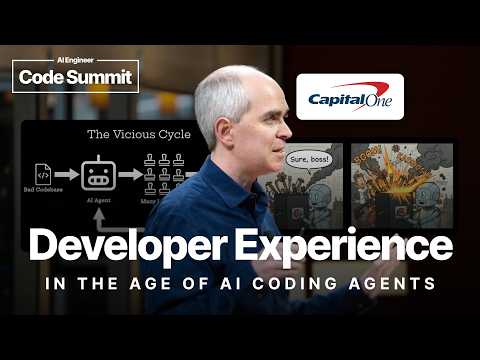
The Macro Shift: The transition from writing to reviewing as the primary engineering activity. As agents generate more code, the human role moves from creator to editor.
The Tactical Edge: Build CLIs for every internal tool to give agents a native text interface. This increases accuracy and speed compared to visual automation.
The Bottom Line: Developer experience is the infrastructure for AI. Investing in clean code and fast feedback loops is the only way to ensure AI productivity gains do not decay over the next 12 months.
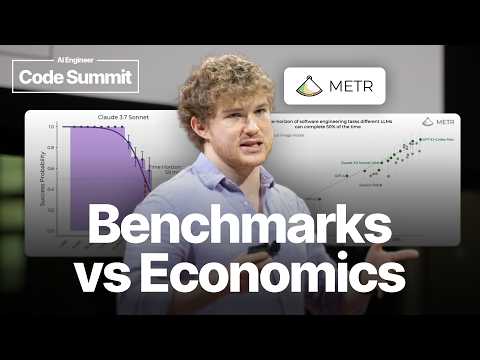
The Capability-Productivity Gap. We are entering a period where model intelligence outpaces our ability to integrate it into high stakes production.
Audit your stack. Identify tasks where "good enough" generation is a win versus high context tasks where AI is currently a net negative.
Do not mistake a climbing benchmark for a finished product. For the next year, the biggest wins are not in smarter models but in better verification loops.
The transition from simple Large Language Models to Reasoning Models marks the end of the stochastic parrot era.
Build agentic workflows that utilize high-context windows for recursive problem solving.
We are moving toward a world where intelligence is a commodity. Your value will shift from knowing things to directing outcomes over the next 12 months.
The Macro Pivot: Agentic Abstraction. As the cost of logic hits zero, the value of a developer moves from how to build to what to build.
The Tactical Edge: Adopt Orchestrators. Replace your standard editor with agent-first platforms today to learn the art of directing sub-agents before the 2026 deadline.
The Bottom Line: The next 12 months will reward those who stop writing code and start building the systems that write it for them.
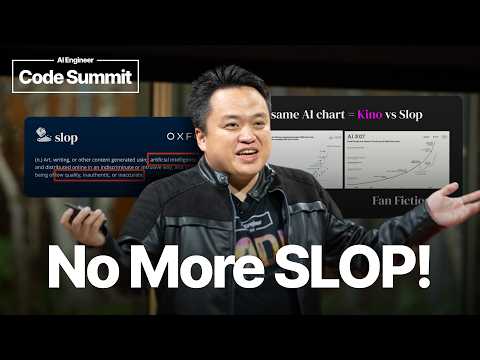
The Macro Movement: The Token Deflation. As compute becomes a commodity, the value of the "Human-in-the-Loop" moves from production to architectural oversight.
The Tactical Edge: Implement Code Maps. Use AI to index and understand your entire repository to ensure every generated line aligns with existing logic.
The Bottom Line: The next year belongs to the "Taste-Driven Developer." If you optimize for volume, you produce slop; if you optimize for accountability, you build a moat.
The Macro Shift: Software development is moving from human-led logic to agent-led verification.
The Tactical Edge: Use sub-agents to isolate testing from creation to prevent context pollution.
The Bottom Line: The technical barrier is evaporating. In the next 12 months, the winning platforms will be those that require the fewest technical decisions from the user.
ETH's Valuation Paradigm Shift: Value ETH based on Total Value Secured (TVS), not diminishing transaction fees, as it aims to secure trillions in global assets.
L1+L2 is the Winning Formula: Ethereum's strategy of scaling L1 alongside a diverse L2 ecosystem (offering political/business model diversity) is designed to onboard the world.
Coordination & BD are Crucial: Renewed focus on cohesive narrative, business development (like Etherealize), and community alignment are vital to executing Ethereum's ambitious roadmap.
Brace for Capital Controls: The US is likely to implement capital controls over politically unpalatable tariffs to rebalance its economy, fundamentally changing global capital flows.
Money Printing is Non-Negotiable: Regardless of political rhetoric, the US will print money to manage the fallout from capital flight and fund government spending, massively benefiting hard assets.
Bitcoin & Gold are Your Life Rafts: In an era of devaluing fiat and financial repression, Bitcoin and gold are critical for wealth preservation and growth. Ditch long-term bonds.
ZKPoW is a Novel Force: Nockchain's ZK Proof of Work directly builds valuable ZK proving capacity, turning mining into a productive, network-enhancing activity.
Hardware Revolution Looms: The mining competition will drive innovation in ZK-specific hardware (FPGAs, ASICs for polynomial math), creating a new hardware market distinct from Bitcoin's.
Intent-Driven Future: Nockchain's architecture points towards a future of composable "micro-apps" and verifiable services, where on-chain logic focuses on proof verification, potentially enabling new decentralized AI/ML applications and "computational commodities."
**Fiscal Dominance is Here:** Government spending, not just Fed policy, is the primary driver of the current inflationary pressures and will likely lead to an 8% GDP deficit.
**Prepare for Intervention:** Expect capital controls (like remittance taxes) and yield curve control as governments grapple with the consequences of their spending.
**Store-of-Value is King:** In an environment where traditional savings (e.g., 4% on bonds) can't match 15% inflation in essential costs, assets like tech stocks and Bitcoin become non-negotiable for wealth preservation.
Fiscal Doom Loop: The US is locked in a fiscal spiral of growing deficits and debt that it seems unwilling or unable to escape, making dollar debasement a significant long-term risk.
Macro is King: Geopolitical trends, capital flows, and policy decisions (like buybacks and potential yield curve control) are now more critical drivers of asset prices than individual company fundamentals.
Bitcoin's Ascent: In a world of "Ponzi schemes," Bitcoin stands out as a rational hedge and potentially the "generational trade" against failing monetary and fiscal policies.