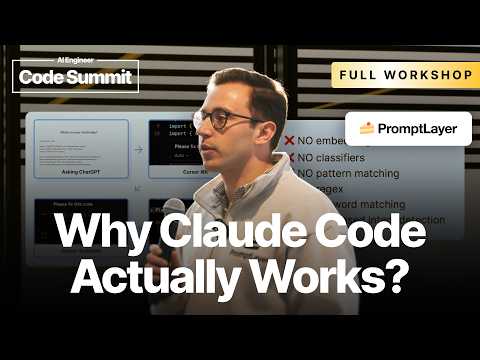
The Macro Shift: Agentic Abstraction. We are moving from Model-as-a-Service to Agent-as-a-Service where the harness is as important as the weights.
The Tactical Edge: Standardize your CLI. Use tools like ripgrep (RG) that models already have "habits" for to see immediate performance gains.
The Bottom Line: The next 12 months will see the end of manual integration engineering as agents become capable of navigating UIs and legacy terminals autonomously.
The commoditization of syntax means architectural judgment is the only remaining moat. As the cost of code hits zero the value of intent skyrockets.
Replace your manual refactoring workflows with a burn and rebuild strategy. Use agents to generate entirely new modules instead of patching old ones.
Seniority is no longer a shield against obsolescence. You must spend the next six months building your agentic intuition or risk being replaced by a PhD student with a prompt.
The Macro Evolution: Standardized communication layers are replacing custom API integrations. This commoditizes the connector market and moves value to the models that best utilize these tools.
The Tactical Edge: Standardize your internal data tools using MCP servers today. This ensures your company is ready for autonomous agents that can discover and use your resources without manual API integration.
The Bottom Line: The agentic stack is consolidating around MCP. Interoperability is no longer a feature; it is the foundation for the next decade of AI utility.
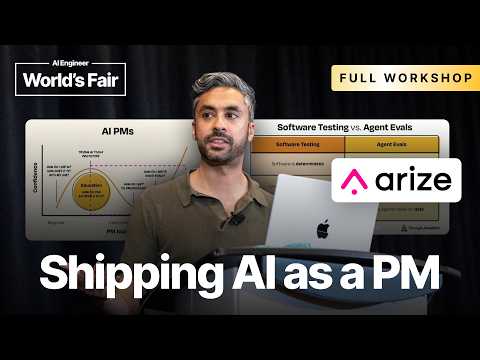
The Macro Shift: From Model-Centric to Eval-Centric. The value is moving from the LLM itself to the proprietary evaluation loops that keep the LLM on the rails.
The Tactical Edge: Export production traces and build a "Golden Set" of 50 hard examples. Use these to run A/B tests on every prompt change before hitting production.
The Bottom Line: Reliability is the product. If you cannot measure how your agent fails, you haven't built a product; you've built a demo.
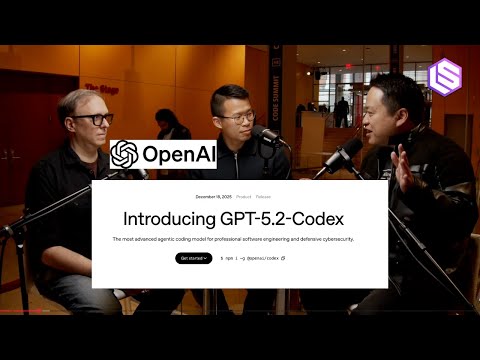
The transition from chatbots with tools to agents that build tools marks the end of the manual integration era.
Stop building custom model scaffolding and start building on top of opinionated agent layers like the Codex SDK.
In 12 months, the distinction between a coding agent and a general computer user will vanish as the terminal becomes the primary interface for all digital labor.
The Capability-Utility Gap is widening. We see a divergence where models get smarter but the friction of human-AI collaboration keeps productivity flat.
Deploy AI for mid-level engineers or low-context tasks. Avoid forcing AI workflows on your top seniors working in complex legacy systems.
The next year will focus on reliability over raw intelligence. The winners will have models that require the least amount of human babysitting.
ETH's Valuation Paradigm Shift: Value ETH based on Total Value Secured (TVS), not diminishing transaction fees, as it aims to secure trillions in global assets.
L1+L2 is the Winning Formula: Ethereum's strategy of scaling L1 alongside a diverse L2 ecosystem (offering political/business model diversity) is designed to onboard the world.
Coordination & BD are Crucial: Renewed focus on cohesive narrative, business development (like Etherealize), and community alignment are vital to executing Ethereum's ambitious roadmap.
Brace for Capital Controls: The US is likely to implement capital controls over politically unpalatable tariffs to rebalance its economy, fundamentally changing global capital flows.
Money Printing is Non-Negotiable: Regardless of political rhetoric, the US will print money to manage the fallout from capital flight and fund government spending, massively benefiting hard assets.
Bitcoin & Gold are Your Life Rafts: In an era of devaluing fiat and financial repression, Bitcoin and gold are critical for wealth preservation and growth. Ditch long-term bonds.
ZKPoW is a Novel Force: Nockchain's ZK Proof of Work directly builds valuable ZK proving capacity, turning mining into a productive, network-enhancing activity.
Hardware Revolution Looms: The mining competition will drive innovation in ZK-specific hardware (FPGAs, ASICs for polynomial math), creating a new hardware market distinct from Bitcoin's.
Intent-Driven Future: Nockchain's architecture points towards a future of composable "micro-apps" and verifiable services, where on-chain logic focuses on proof verification, potentially enabling new decentralized AI/ML applications and "computational commodities."
**Fiscal Dominance is Here:** Government spending, not just Fed policy, is the primary driver of the current inflationary pressures and will likely lead to an 8% GDP deficit.
**Prepare for Intervention:** Expect capital controls (like remittance taxes) and yield curve control as governments grapple with the consequences of their spending.
**Store-of-Value is King:** In an environment where traditional savings (e.g., 4% on bonds) can't match 15% inflation in essential costs, assets like tech stocks and Bitcoin become non-negotiable for wealth preservation.
Fiscal Doom Loop: The US is locked in a fiscal spiral of growing deficits and debt that it seems unwilling or unable to escape, making dollar debasement a significant long-term risk.
Macro is King: Geopolitical trends, capital flows, and policy decisions (like buybacks and potential yield curve control) are now more critical drivers of asset prices than individual company fundamentals.
Bitcoin's Ascent: In a world of "Ponzi schemes," Bitcoin stands out as a rational hedge and potentially the "generational trade" against failing monetary and fiscal policies.