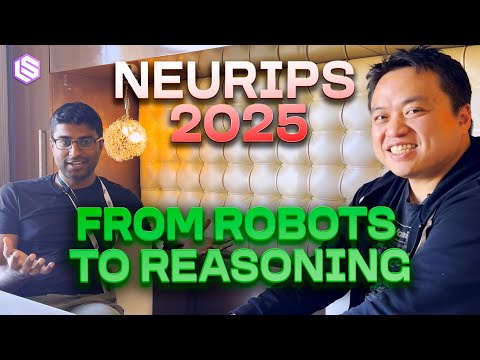
The Macro Pivot: Intelligence is moving from a scarce resource to a commodity where the primary differentiator is the cost per task rather than raw model size.
The Tactical Edge: Prioritize building on models that demonstrate high token efficiency to ensure your agentic workflows remain profitable as complexity grows.
The Bottom Line: The next year will be defined by the systems vs. models tension. Success belongs to those who can engineer the environment as effectively as the algorithm.
The transition from Model-Centric to Context-Centric AI. As base models commoditize, the value moves to the proprietary data retrieval and prompt optimization layers.
Implement an instruction-following re-ranker. Use small models to filter retrieval results before they hit the main context window to maintain high precision.
Context is the new moat. Your ability to coordinate sub-agents and manage context rot will determine your product's reliability over the next year.
The convergence of RL and self-supervised learning. As the boundary between "learning to see" and "learning to act" blurs, the winning agents will be those that treat the world as a giant classification problem.
Prioritize depth over width. When building action-oriented models, increase layer count while maintaining residual paths to maximize intelligence per parameter.
The "Scaling Laws" have arrived for RL. Expect a new class of robotics and agents that learn from raw interaction data rather than human-crafted reward functions.
The Age of Scaling is hitting a wall, leading to a migration toward reasoning and recursive models like TRM that win on efficiency.
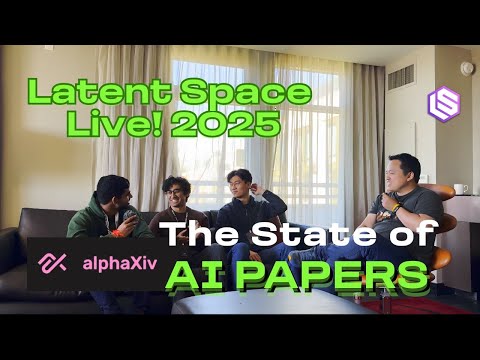
Filter your research feed by implementation ease rather than just citation count to accelerate your development cycle.
In a world of AI-generated paper slop, the ability to quickly spin up a sandbox and verify code is the only sustainable competitive advantage for AI labs.
The transition from Black Box to Glass Box AI. Trust is the next moat, and interpretability is the tool to build it.
Use feature probing for high-stakes monitoring. It is more effective and cheaper than using LLMs as judges for tasks like PII scrubbing.
Understanding model internals is no longer just a safety research project. It is a production requirement for any builder deploying AI in regulated or high-stakes environments over the next 12 months.
The transition from completion to agency means benchmarks are moving from static snapshots to active environments.
Integrate unsolvable test cases into internal evaluations to measure model honesty.
Success in AI coding depends on navigating the messy, interactive reality of production codebases rather than chasing high scores on memorized puzzles.
ETH's Valuation Paradigm Shift: Value ETH based on Total Value Secured (TVS), not diminishing transaction fees, as it aims to secure trillions in global assets.
L1+L2 is the Winning Formula: Ethereum's strategy of scaling L1 alongside a diverse L2 ecosystem (offering political/business model diversity) is designed to onboard the world.
Coordination & BD are Crucial: Renewed focus on cohesive narrative, business development (like Etherealize), and community alignment are vital to executing Ethereum's ambitious roadmap.
Brace for Capital Controls: The US is likely to implement capital controls over politically unpalatable tariffs to rebalance its economy, fundamentally changing global capital flows.
Money Printing is Non-Negotiable: Regardless of political rhetoric, the US will print money to manage the fallout from capital flight and fund government spending, massively benefiting hard assets.
Bitcoin & Gold are Your Life Rafts: In an era of devaluing fiat and financial repression, Bitcoin and gold are critical for wealth preservation and growth. Ditch long-term bonds.
ZKPoW is a Novel Force: Nockchain's ZK Proof of Work directly builds valuable ZK proving capacity, turning mining into a productive, network-enhancing activity.
Hardware Revolution Looms: The mining competition will drive innovation in ZK-specific hardware (FPGAs, ASICs for polynomial math), creating a new hardware market distinct from Bitcoin's.
Intent-Driven Future: Nockchain's architecture points towards a future of composable "micro-apps" and verifiable services, where on-chain logic focuses on proof verification, potentially enabling new decentralized AI/ML applications and "computational commodities."
**Fiscal Dominance is Here:** Government spending, not just Fed policy, is the primary driver of the current inflationary pressures and will likely lead to an 8% GDP deficit.
**Prepare for Intervention:** Expect capital controls (like remittance taxes) and yield curve control as governments grapple with the consequences of their spending.
**Store-of-Value is King:** In an environment where traditional savings (e.g., 4% on bonds) can't match 15% inflation in essential costs, assets like tech stocks and Bitcoin become non-negotiable for wealth preservation.
Fiscal Doom Loop: The US is locked in a fiscal spiral of growing deficits and debt that it seems unwilling or unable to escape, making dollar debasement a significant long-term risk.
Macro is King: Geopolitical trends, capital flows, and policy decisions (like buybacks and potential yield curve control) are now more critical drivers of asset prices than individual company fundamentals.
Bitcoin's Ascent: In a world of "Ponzi schemes," Bitcoin stands out as a rational hedge and potentially the "generational trade" against failing monetary and fiscal policies.