AI is transforming software development from manual coding to agent orchestration, making "building" accessible to anyone with an idea and language. This fundamentally reconfigures the value of traditional programming skills and the entire app economy.
Invest in or build tools that prioritize agent-friendly APIs and CLI interfaces over traditional graphical user interfaces. Future value will accrue to services that seamlessly integrate into an agent's workflow, not just human-facing apps.
Personal AI agents are not just a new tool; they are a new operating system. Expect rapid shifts in user behavior and market demand, favoring platforms and services that empower autonomous AI, making now the time to adapt or be left behind.
AI agents are moving beyond language to autonomous action, fundamentally altering how software is built and consumed. This shift gives individuals the power to create complex systems with natural language, but also demands a new level of security awareness and critical thinking from users.
Embrace agentic engineering by focusing on clear communication and context provision rather than rigid coding. Experiment with open-source agents like OpenClaw to understand their capabilities and limitations firsthand.
The future of software is agent-centric. Investors should eye companies building agent-facing APIs or infrastructure, while builders must adapt their skills to "lead" AI teams. Ignoring this shift means missing the next wave of digital transformation.
The digital world moves from discrete apps to an integrated, agent-orchestrated OS, shifting value to platforms enabling seamless agent interaction.
Builders must pivot to "agentic engineering," focusing on guiding and designing systems for AI agents, mastering prompt engineering and CLI-based tool integration.
Personal AI agents will reshape software and productivity over the next 6-12 months. Investors should back agent infrastructure/API-first services; developers must embrace agent collaboration.
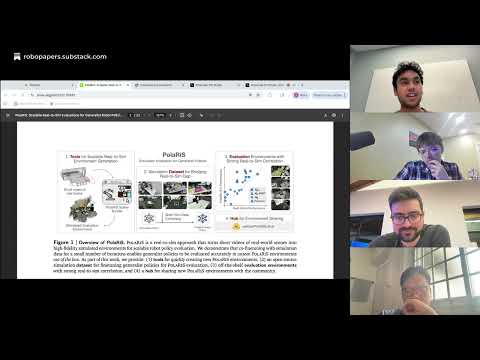
The push for generalist robot policies, akin to foundation models in other AI domains, demands evaluation tools that scale and generalize. PolaRiS directly addresses this by providing a framework for creating diverse, real-world correlated benchmarks, moving robotics beyond task-specific, overfitting evaluations towards true zero-shot generalization testing.
Implement PolaRiS's real-to-sim environment generation and "sim co-training" methodology. This allows for rapid, cost-effective iteration on robot policies with high confidence that improvements in simulation will translate to real-world gains, significantly accelerating development cycles.
For builders and investors, PolaRiS represents a critical infrastructure upgrade for robotics. It de-risks policy development by providing a reliable, scalable testing ground, making the path to deployable, generalist robots faster and more capital-efficient over the next 6-12 months.
The era of "agentic engineering" is here, moving software creation from explicit, line-by-line coding to high-level guidance of autonomous AI agents.
Experiment with agentic workflows now. Set up a local OpenClaw instance, even with free models, and use it to automate tedious tasks or prototype ideas.
Personal AI agents with system-level access are not just productivity tools; they are a new operating system layer that will consume and redefine existing applications.
Invest in companies demonstrating deep vertical integration in AI, custom silicon, and software-defined vehicle architectures. Prioritize those building proprietary data flywheels from large, active fleets.
The automotive industry is undergoing a fundamental re-architecture, moving from hardware-centric, domain-based systems to software-defined, AI-powered platforms. This shift will consolidate market power among vertically integrated players who control their data, compute, and software stack.
Autonomy will be a must-have feature by 2030, akin to airbags today. Companies without a robust, in-house, neural-net-based autonomy strategy and a software-defined architecture will struggle to compete at scale, leading to significant market share shifts in the coming years.
The shift from explicit coding to agentic orchestration means human creativity moves up the stack. Instead of writing every line, builders define intent, guide agents, and curate outcomes, making software creation more accessible and focused on problem-solving.
Invest in understanding agent-native design patterns. Prioritize building CLI-first tools and services that expose clear, composable interfaces, as these will be the foundational blocks for the next generation of AI-driven applications, making your products "agent-friendly" and future-proof.
Personal AI agents are not just productivity tools; they are a new operating system layer. Over the next 6-12 months, expect a rapid re-evaluation of traditional app value, a surge in agent-first infrastructure, and a critical need for robust, user-centric security frameworks as AI moves from language to action, directly impacting your digital strategy and investment thesis.
The rise of autonomous AI agents with system-level access is fundamentally reshaping the software landscape, moving value from traditional app interfaces to underlying APIs and data, and making building accessible for non-programmers.
Invest in infrastructure and tooling that facilitates agent-to-agent communication and robust CLI-based skill development, as this will be the new battleground for software functionality and integration.
The next 6-12 months will see increased adoption of agentic workflows, compelling companies to re-evaluate their product strategies towards API-first designs and human-centric "delight" to stay relevant as AI agents handle most functional tasks.
Build Real, Not Just Rallies: Prioritize long-term, sustainable businesses with tangible revenue models over chasing fleeting crypto trends.
Utility Tokens Trump Speculation: Design tokens to solve core project problems or incentivize user behavior, not merely for market hype.
Solana's Next Wave: Infrastructure for Reality: Leverage crypto as a backend for innovative solutions to real-world problems, targeting broader, non-crypto native audiences.
Trust is Quantifiable: AI investors can build dynamic trust scores by systematically paper-trading community signals, effectively rewarding proven alpha generators.
Beyond Wallet Snooping: "Social copy wallet" systems can unearth expert insights without needing direct access to individual wallet addresses, thus broadening the discoverable talent pool.
Community as a Vetted Oracle: The collective intelligence of crypto communities, when filtered through a performance-based trust layer, can power sophisticated AI investment decisions.
ETH: Trade the Chart, Doubt the Core. Ethereum’s technicals may offer a trading setup, but deep-seated skepticism about its fundamental delivery persists.
Worldcoin Warning: The massive FDV and emission schedule for Worldcoin scream "sell pressure," making it a risky long-term hold despite any hype.
Invest with Edge: Focus on revenue-generating altcoins and areas you understand; it's okay to miss out on trades where you lack a clear advantage.
Fund Smarter, Not Harder: Tau's SNS tokens let Bittensor subnets raise capital by tokenizing a slice of future emissions, not their core alpha tokens, sidestepping immediate sell pressure.
DTA Means Business: The Dynamic TAO model is a crucible, compelling Bittensor subnets to graduate from emission-chasers to product-driven, revenue-focused ventures.
Unlocking Subnet Investing: SNS tokens, via LayerZero, promise to simplify access to subnet investments, potentially onboarding a wave of new capital and users to the Bittensor ecosystem from other chains.
Bitcoin's Bullish Trajectory: Bitcoin is on a path to potentially reach $150k-$200k, supported by a low-hype, strong-setup environment and a more sophisticated investor base.
Strategic Altcoin Hunting: Focus on revenue-generating altcoins with solid fundamentals (check DeFiLlama) and consider measured exposure to the burgeoning AI crypto sector.
Prioritize Self-Custody: Given exchange vulnerabilities, holding your assets offline in cold storage is more critical than ever.
L1 is HQ: Ethereum's "pivot" reasserts the L1's central role, supported by L2s that offer crucial business model diversity and customization for the world coming on-chain.
Value Accrual via Security & Confidence: ETH's valuation is increasingly tied to the total economic value it secures and the market's confidence in its future, not just direct fee revenue.
Business Development is Crucial: To compete and grow, Ethereum requires a significantly more robust and proactive go-to-market strategy to attract users, institutions, and developers.