Intent Over Implementation: The value in software creation shifts from low-level coding to clearly defining intent and design, with AI handling the technical execution.
Rapid Prototyping: Builders can now rapidly prototype and deploy complex, full-stack applications, significantly compressing development cycles and lowering entry barriers.
New Creator Economy: Expect a surge in non-technical creators building sophisticated applications, driving innovation in UI/UX and personalized content.
Strategic Shift: The "factory-first" mindset is a strategic reorientation towards physical production, enabled by AI, extending beyond traditional manufacturing to all large-scale infrastructure.
Builder/Investor Note: Focus on companies applying modular design, AI-driven process optimization, and automation to sectors like housing, energy, and mining. Data centers are a leading indicator for these trends.
The "So What?": Rebuilding America's industrial capacity through these methods offers a competitive advantage, impacting defense, consumer goods, and commercial sectors in the next 6-12 months.
Strategic Implication: The future of AI agents hinges on practical utility and adaptive reasoning, not just raw scale. Models that integrate expert feedback and iterative thinking will outperform those focused solely on benchmarks.
Builder/Investor Note: Builders should prioritize robust generalization through diverse training perturbations. Investors should seek models that demonstrate real-world adoption and cost-effective scalability for multi-agent architectures.
The So What?: The next 6-12 months will see a shift towards smaller, highly specialized, and deeply integrated AI models that function as reliable co-workers, driving efficiency in developer workflows and complex agentic tasks.
Strategic Shift: The industry is moving from code generation to code orchestration. The value lies in guiding AI, not just prompting it.
Builder/Investor Note: Invest in tools that enhance "vibe engineering" (real-time steering, context management) and education for senior developers. Avoid strategies that solely rely on AI to replace junior talent without skilled oversight.
The "So What?": Over the next 6-12 months, the ability to effectively "vibe engineer" will become a critical differentiator, separating high-performing teams from those drowning in AI-generated "slop."
Strategic Implication: The next frontier in AI involves a fundamental shift from statistical compression to genuine abstraction and understanding.
Builder/Investor Note: Focus on research and development that grounds AI in first principles, leading to more robust, efficient, and interpretable systems, rather than solely scaling existing empirical architectures.
The "So What?": The pursuit of mathematically derived, parsimonious, and self-consistent AI architectures offers a path to overcome current limitations, enabling systems that truly learn, adapt, and reason in the next 6-12 months and beyond.
Data Scarcity is a Feature, Not a Bug: Be wary of narratives built on incomplete data. Just because a dataset (on-chain, AI training) is all we have, doesn't mean it's representative.
Standardization is Survival: For any new technology (crypto protocols, AI models), robust "lexicography" and clear documentation are critical for long-term adoption and preventing fragmentation.
Question the "Received Law": Don't assume current "archaeological evidence" (e.g., current blockchain data, AI model limitations) tells the whole story. Look for the "perishable materials" that might be missing.
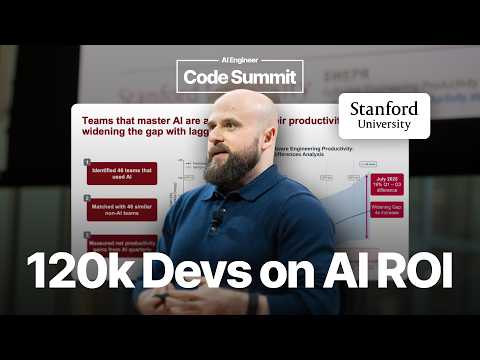
Strategic Shift: AI ROI isn't about adoption, it's about intelligent adoption. The gap between top and bottom performers will widen based on measurement sophistication and codebase health.
Builder/Investor Note: For builders, prioritize codebase hygiene and engineer training before or concurrently with AI rollout. For investors, scrutinize AI productivity claims; ask about code quality, rework rates, and specific measurement frameworks beyond simple usage.
The "So What?": In the next 6-12 months, companies that master AI integration by focusing on quality, measurement, and environment will compound their gains, while those chasing superficial metrics risk significant tech debt and negative ROI.
Strategic Implication: The next frontier of AI in software isn't just *generating* code, but *governing* its quality. This shift will redefine competitive advantage.
Builder/Investor Note: Prioritize investments in AI-powered quality gates, intelligent code review, and dynamic testing. For builders, feed your AI tools rich, comprehensive context. For investors, look for companies building these "picks and shovels."
The "So What?": The promised 2x-10x productivity gains are real, but they won't come from raw code generation alone. The next 6-12 months will see a scramble to implement agentic, context-aware quality workflows to unlock AI's true potential across the SDLC.
Strategic Shift: The competitive edge in AI agents is moving from clever architecture to superior model training data and robust RL environments.
Builder/Investor Note: Prioritize raw model capability over complex agent stacks. Builders should contribute to open-source RL environments; investors should seek companies focused on generating and leveraging high-quality training data.
The "So What?": The next 6-12 months will see a race to build and utilize real-world, outcome-driven benchmarks. Open initiatives like Client Bench could democratize model improvement and accelerate AI development significantly.
Bitcoin's Bull Run is Just Starting: Driven by broad adoption and macro uncertainty, Bitcoin has hit "escape velocity" with significant upside potential.
Regulatory Winds Have Shifted: The impending Genius Act and a more crypto-friendly SEC are set to unleash a wave of innovation and institutional participation.
Tokenization & AI are Converging: The tokenization of real-world assets, especially equities, and the build-out of AI infrastructure (often by crypto-related entities) are major growth vectors.
**Infrastructure is the New Frontier:** Prioritize crypto ventures using blockchain as a foundational layer to innovate and compete with Web2, moving beyond purely crypto-centric applications.
**Solve Real Problems, Not Chase Hypotheses:** True PMF stems from addressing tangible user pain points; market creation is often a byproduct of successful problem-solving, not an initial goal.
**Large Markets Fuel Pivots:** While a sharp focus is vital, building within a substantial market provides the necessary runway and adjacent opportunities critical for navigating the path to PMF.
UX is King: Seamless, integrated user experiences (like Hyperliquid's or a desired "Robin Hood for crypto") will win, as fragmentation (EVM L2s) breeds user frustration and churn.
Solana's Ascent: Alpenlow’s 150ms finality and zero voting costs significantly enhance Solana's competitive edge, driven by an "underdog" culture of relentless improvement.
ETH's Identity Search: Ethereum needs decisive leadership and a unified technical/narrative strategy to counter fragmentation and challengers; price pressure often serves as its main catalyst for action.
**Hyperliquid (Hype) is King:** Flood states, "It's the only asset that matters in crypto other than Bitcoin... Nothing else makes money," citing its strong fundamentals and mispricing.
**L1s are Uninvestable Commodities:** Focus on applications and frontends that directly serve users; L1s are a race to the bottom on fees and vulnerable to tech disruption.
**Builder Codes Fuel an Ecosystem:** Hyperliquid's permissionless monetization will attract a wave of development, creating a moat through network effects and specialized user experiences.
Treasury Tactics: The "treasury company" model is the new "low float, high FDV" game, but relies on continued premium valuations and favorable debt markets; watch out for stress when debt matures.
Sui's Pragmatism: Sui’s handling of the Cetus hack signals that newer chains may prioritize decisive action and recovery over decentralization purity in crises, a trend likely to continue.
Solana's Evolution: Solana’s major consensus upgrade, developed by former critics, showcases a pragmatic, engineering-first approach focused on performance and validator accessibility, potentially strengthening its L1 position.
Crypto Delivers Utility: Stablecoins move trillions monthly, proving crypto's real-world value beyond speculation for fast, cheap global payments.
AI Rewrites Web Economics: AI's direct-answer capability breaks the old ad-traffic model. Crypto offers tools to build the new economic "covenant" required.
Bet on Category Kings: Tech markets are "winner-take-all." Focus on the dominant player in any credible category, especially those led by founders with unique, "earned secrets."